The Drawer
I was clearing out the bottom drawer of my desk last week — the one I avoid for years at a time — and I found a folded paper napkin from a small inn in Brevard. On the back, in my husband's handwriting: the name of a road, a phone number, and a single word, waterfall. I sat down on the floor with it. I don't remember the napkin. I remember the inn, and the woman at the front desk who recommended the road, and the way the late light came through the trees on our way back to the car. He wrote it down so we could find it again. We never did.
I smoothed the napkin flat on my knee, and then I went into the kitchen and made coffee, and then I opened my laptop and looked up the inn. It is still there. I have not booked anything yet. But I have been thinking about what it means to plan a trip when the person who used to plan them with you is no longer at the table — and that thinking is what this piece is about.
What Loss Does to Travel
In my years of sitting with families through the long seasons of caregiving and grief, I have watched travel change shape in people's lives. Not always for the worse. Different. The impulse to go somewhere becomes more deliberate, the way every decision becomes more deliberate after a major loss. Some people stop traveling altogether — they can't bear the empty seat, the half-used itinerary, the bed that is too big in a strange room. Some people travel more, and more urgently, as if to outrun the silence at home. Most people I have known eventually land somewhere in between: they go, but they go differently.
Marian came to our Tuesday circle at Seasons of Grace about a year after her husband died. She didn't say much for the first few weeks. Then one morning, near the end of the hour, she mentioned — almost in passing — that she was thinking about going back to Nags Head. They had spent a week there every June for thirty-one years. She hadn't been since he died. Her daughter was worried. Her son thought it would be too painful. Marian said, I think the painful thing is that I haven't gone yet. The room was quiet for a moment. Then another woman in the circle, who had been coming for two years and rarely spoke, said, Take a friend. Don't go on the anniversary week. Bring a book you've been meaning to read. That was all she said. Marian went the following October. She told me later that she walked the beach every morning, that she ate dinner alone at the place they used to go and the hostess remembered her, that she cried twice and slept better than she had in a year.
What I've found is that we who have loved and lost don't travel to escape the loss. We travel to carry it somewhere new — to set it down in a different light and see what it looks like there. The grief comes with us. The point is that we come too.
This is the part most of the destination guides leave out. They will tell you which cities have the smoothest sidewalks and which cruises have the best handrails. They will not tell you that the hardest part of the trip might be the moment you reach for the second pillow at night and remember. They will not tell you that the second hardest part — and this is real, and it surprises people — is sometimes the joy that breaks through anyway. A view that takes your breath. A conversation with a stranger on a train. A pastry so good you laugh out loud, alone, at a café table. You are allowed to feel that. The person you lost would want you to.
The Trip Back
There is a particular kind of travel that grief asks of us: the return. Going back to a place you shared with someone who is gone. People sometimes ask me if it is a good idea. I do not have a universal answer. I have an honest one: it depends on whether you are going to look or to listen.
If you go back to look — to find the same restaurant, the same view, the same room — you may find that the place has changed, or worse, that it hasn't, and the not-changing is harder than you expected. The pier is still there. The light still hits the water the way it did. And there you are, on the bench you sat on together, alone. That can knock you flat.
If you go back to listen — to let the place speak in its own voice, not as a museum of who you were together but as a real place still living its life — something else can happen. I know something about this. The first time I went back to a stretch of coastline he and I had loved, I went too soon, and I went looking. I came home worse than I left. The second time, I went four years later. I took a friend who had known him only a little, which turned out to be the right amount. We walked on the beach in the morning and read in the afternoon, and I let the place be a place, not a shrine. I cried, but not the way I had the first time. The grief had moved over a few inches and made room for something else to sit beside it.
Here is what I would say, if you are thinking about a trip back. Go with someone, or go alone — both are real and valid choices. If you go alone, build rest into the schedule the way you would build it in for someone recovering from surgery, because grief is a body event and travel is too. Plan less than your habits tell you to. Leave hours of your day empty so that the feeling, when it comes, has somewhere to land that isn't a tour bus. If you are returning to a national park, the America the Beautiful Senior Pass is $80 for U.S. citizens and permanent residents 62 and older, lifetime, and it covers entry to most federal sites — the small kindness of a federal program that knows older people might want to go back to a place more than once. Verify the current price at nps.gov before you go. Bring a journal if that is your way. Bring nothing if it isn't. The point is not to do the trip a certain way. The point is to be on it.
Going Somewhere New
There is also the other kind of trip — the one you take not to return but to go forward. The trip you couldn't take while you were caregiving, or while the illness was unfolding, or while the children were small. The trip your person always said you'd take together. The trip that was always next year, and then there was no next year.
I spoke with dozens of older adults during the long isolation of 2020, on the phone, sometimes for hours. One woman in her late seventies, in a small house in West Asheville, told me she had a folder in her file cabinet labeled Ireland. She had been adding to it for forty years. Articles, hotel brochures, a printed map. She had never gone. Her husband had wanted to. Then her husband had been ill. Then her husband had died. Then the world had closed. We talked about the folder for a long time on that call. When things opened again, her niece flew with her to Dublin. They rented a car and she drove on the wrong side of the road for nine days. She called me when she got home. She said, I should have gone twenty years ago, and I went exactly when I went. Both of those things were true.
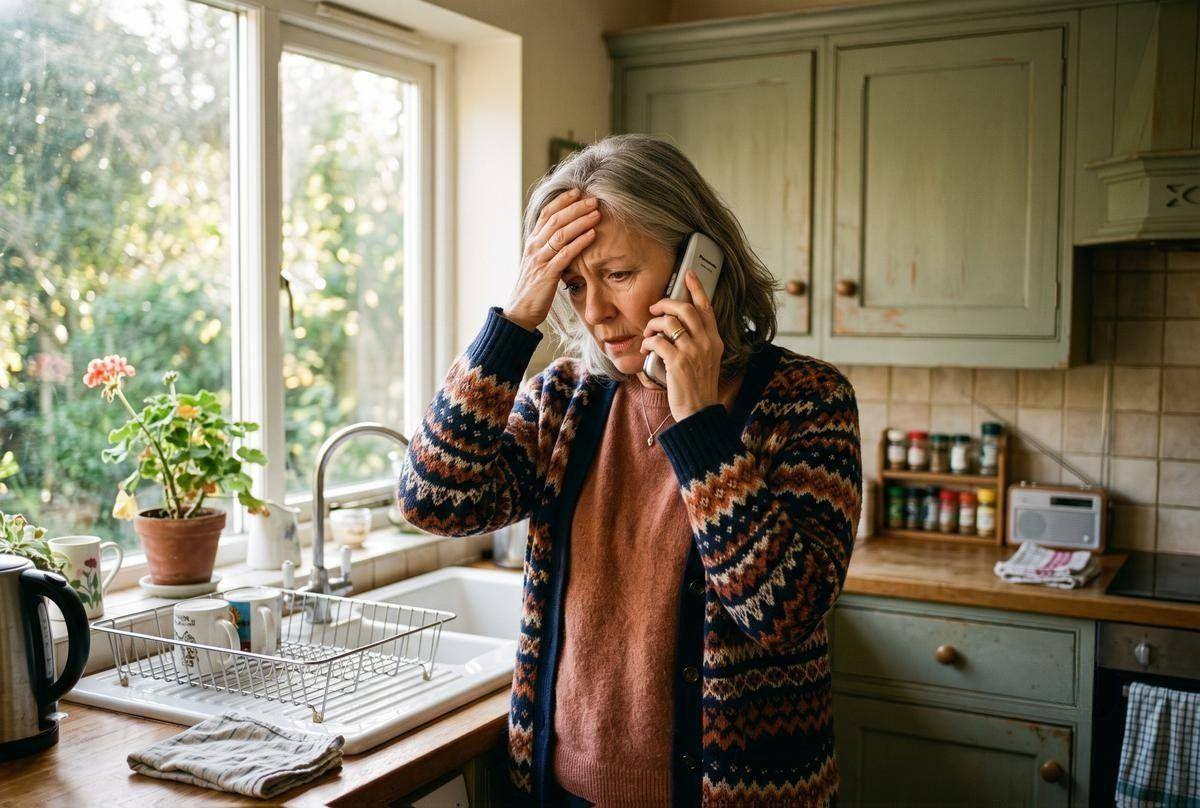
If you are thinking about a trip you've deferred — through caregiving, through loss, through the long season of putting yourself last — a few practical things bear saying. Medicare does not cover most medical care outside the United States. Travelers in this season of life need supplemental travel insurance, and the price is real but not prohibitive; we cover the specifics in our guide to solo senior travel in 2026, and the same insurance guidance applies whether you are going alone or with someone. The Eldercare Locator, at 1-800-677-1116 or eldercare.acl.gov, is a free federal resource that can connect you to elder services anywhere in the U.S. — useful if you are traveling domestically and want to know what is near you in case you need it. TSA Cares (855-787-2227) offers free assistance at the airport for travelers who need a hand with mobility, anxiety, or just the bewilderment of a terminal at 6 a.m. — call 72 hours ahead. These are small things. They take a phone call. They make the day easier.
Slow Travel as a Way of Paying Attention
The third shape of travel after loss, and the one I find I am drawn to most in this season of my own life, is the kind that stays. Ten days in one small place instead of five days in five cities. A neighborhood instead of an itinerary. Unpacking a suitcase into a dresser drawer and leaving it there. Buying milk at the same shop two mornings in a row, until the man behind the counter nods at you because you are becoming a small fact of his week.
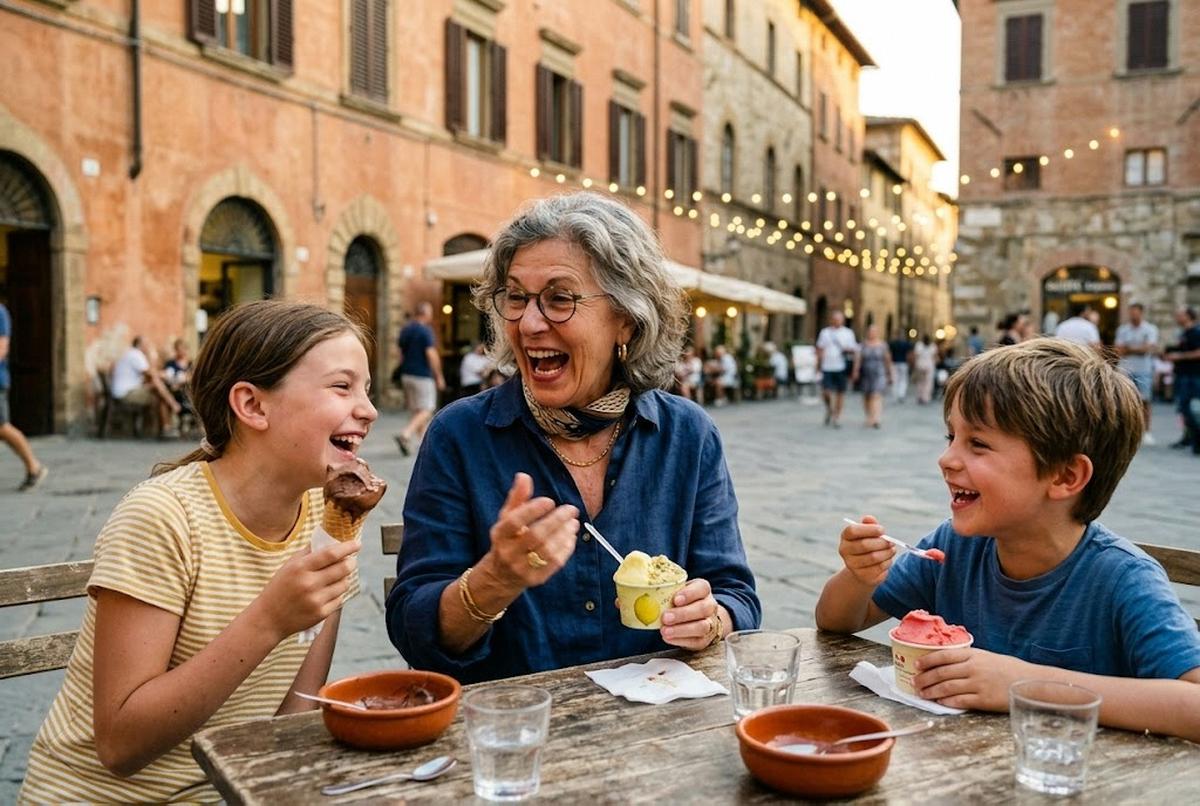
There is a teaching I love about washing the dishes in order to wash the dishes, not in order to have clean dishes. That is what slow travel is. You are not in Lisbon in order to have been to Lisbon. You are in Lisbon to be in Lisbon. To sit on a bench and watch the trams go by. To notice that the light at five in the afternoon does something to the tile facades that no photograph will ever catch. To eat the same custard tart three days in a row because they really are that good and you are old enough now to know that consistency is a form of joy.
This kind of travel is also, quietly, a form of accessibility — though no brochure will frame it that way. Older bodies travel better when they are not asked to make the 7 a.m. train. Older spirits travel better when they are not collecting evidence of having been somewhere. The pace is the point. You see more by staying put than you ever did by rushing. A neighborhood reveals itself slowly: which bakery the locals use, where the bench in the small park gets the morning sun, what the church bells sound like at noon and at six. A grand tour collects pins on a map. Slow travel collects a kind of belonging.
It is also kinder to grief, which has its own pace and does not respond to schedules. On a slow trip there is room for the morning you wake up heavy and need to read in bed until ten. There is room for the afternoon you suddenly want to walk for three hours and talk to no one. There is room for the evening when you sit at a small table outdoors and the waiter brings you a glass of wine you did not order and says, On the house, signora — you look like you are thinking, and you laugh, and you let yourself be seen for one small moment.
What to Carry (and What to Leave)
A few practical things, because this is still an article and you might be planning something. I will not give you a packing list. I will tell you what I have learned from watching travelers in this season of life carry the right things and the wrong things into their suitcases.
Carry your medications in the original bottles in your carry-on, plus a typed list with generic names and dosages — a card that fits in a wallet is enough. If you wear hearing aids or use a CPAP, pack extra batteries and the charger in the same bag, not split between two. Carry one good book and one bad book — you will want both. Carry a small framed photograph if you are going somewhere meaningful and want them with you; you do not have to explain it to anyone. Carry the names and numbers of two people back home who can be reached if something goes sideways — the second name matters more than people think.
Leave the expectation that this trip will fix something. It won't. It can change something, or shift something, or open a window — but trips don't fix grief, and the pressure to have a transformative week is its own kind of weight. Leave the apology for taking the trip alone, if you are going alone. Leave the worry about what people at home will think of how you are spending the money or the time. You earned the money. You earned the time. Both came from a life that included caring for someone who is no longer here.
And one more thing, the one most people leave behind when they should not: leave room in the trip for the person who is gone. Not as a haunting. As a companion. Some travelers carry a small object, a stone, a folded paper. Some travelers write in a journal at the end of each day as if writing a letter. Some travelers simply notice — at a vista, at a meal, at the moment the train pulls into a station — that the person they loved would have loved this too, and let the noticing be enough. You are not bringing them back. You are bringing them along.
The Drawer, Closed
I put the napkin from the inn in Brevard inside the cover of the journal I keep by my bed. I have not booked the trip yet. I think I will. Not as a return, exactly — neither of us is the person we were that fall afternoon when he wrote waterfall on a paper napkin and stuck it in his coat pocket. As something gentler. A drive up that road one Saturday this autumn, with a friend, or maybe alone, to see what the late light does to the trees now.
If you are sitting in your own version of that drawer — a folder of brochures you've been keeping, a postcard from somewhere you meant to go, a name on a napkin — I hope you take it out and look at it. I hope you set it on the kitchen table where you can see it. I hope you make a phone call this week. May your next trip, whenever and wherever it is, give you back a piece of yourself you thought you'd packed away for good. And may the road, when you find it, be the right one — whether or not it is the one you remember.
For more on the practical side of going alone, solo travel after 60 for women is the most honest companion piece I know. For the deeper conversation behind this one, grief after losing a spouse — what nobody tells you and simple ways to feel less alone after retirement cover ground this essay only touches. And if a slower kind of going-somewhere appeals to you, the destination notes in our journeying-into-joy guide hold real specifics for the planning stage. Take what is useful. Leave the rest.