I found myself in Harold's reading chair on a Sunday afternoon, which is something I almost never do. The light was wrong for it, too late in the day, the lamp throwing shadows where the morning sun usually falls. I'd picked up a book from my nightstand pile and ended up there without thinking. It was Atul Gawande's Being Mortal, which I'd read twice before but kept returning to the way you return to a hymn you know by heart. One passage stopped me cold. He writes about a woman with terminal cancer who tells her doctor she doesn't want to spend her final weeks in a hospital bed connected to machines. She wants to be home. She wants it to end on her terms.
The book settled in my lap and I sat with that sentence for a long time. Because I know that woman. Not her specifically. But I've sat beside her, held her hand, listened to her describe exactly what she wanted and watched a system unable to hear her.
On February 6, 2026, Governor Kathy Hochul signed the Medical Aid in Dying Act into New York state law. When it takes effect on August 5, New York will become the thirteenth state, along with the District of Columbia, to allow terminally ill adults to request life-ending medication from their physicians. The conversation this law opens is one I've been thinking about since the October afternoon Harold told me his diagnosis on our front porch, the maples turning gold along our street, a coffee mug growing cold in my hands.
What the Law Allows
The New York Medical Aid in Dying Act permits adults who are eighteen or older, residents of New York State, and diagnosed with a terminal illness expected to cause death within six months to request medication they can self-administer to end their lives. The patient must be mentally capable of making the decision. Nobody can administer the medication for them. The patient takes it themselves, or they don't.
Safeguards are built into every step. The process requires two oral requests and one written request, signed and witnessed by two adults with no family relation or financial stake in the patient's death. The first oral request must be audio or video recorded.
Two physicians must independently confirm the terminal diagnosis and six-month prognosis. After the attending physician writes the prescription, a five-day waiting period must pass before it can be filled. The original bill passed by the legislature included no waiting period at all; the five-day requirement was one of several amendments Governor Hochul negotiated before signing.
No one is required to use it. It creates an option. Whether a person reaches for that option is between them, their family, their physician, and whatever faith or philosophy guides their understanding of a life well-ended.
How New York's Law Is Different
Every state with a medical aid in dying law has its own version, and New York's includes safeguards no other state requires.
Most significant: a mandatory mental health evaluation for every patient, conducted by a licensed psychologist or psychiatrist. In Oregon, Washington, and most other states, a mental health referral only happens if the attending physician suspects the patient may lack decision-making capacity. In New York, every single person requesting aid in dying must be evaluated, regardless of whether their doctor has concerns. This was one of the amendments Governor Hochul required before signing.
Explicit opt-out protections exist for religiously oriented hospice providers. Faith-based hospice organizations can refuse to participate in the process without legal penalty. Individual physicians have conscience protections as well. No doctor can be compelled to write a prescription they believe is morally wrong. A physician who declines must transfer the patient's medical records to a willing provider, but their refusal is protected.
Audio or video recording of the first oral request is another layer other states haven't mandated. And financial disqualification rules prevent anyone who stands to benefit from the patient's death from serving as a witness or interpreter.
These aren't technicalities. For families walking through this, every safeguard is a handhold.
Thirteen States and Three Decades of Data
Oregon's Death with Dignity Act took effect in 1997. Nearly thirty years of data exist now, and the numbers tell a story worth hearing before fear fills in the blanks.
Across all states with medical aid in dying laws, more than 20,000 eligible individuals have received prescriptions over the past three decades. About 12,425 of them actually ingested the medication. Nearly half of the people who complete the full request process and receive the prescription never use it. For many, simply having the option provides a measure of peace.
In Oregon, medical aid in dying accounts for roughly one percent of all deaths in the state. The feared flood of people rushing toward this option never materialized. What materialized instead was a small number of people — mostly in their seventies and older, mostly with cancer, mostly enrolled in hospice — who wanted to know they had a door they could walk through if the suffering became unbearable.
Over 79 percent of people who use medical aid in dying die at home. Not in a hospital corridor under fluorescent lights. Home. In their own bed, with their people around them. That matters!
More than one in three Americans now live in a jurisdiction where medical aid in dying is authorized. Thirty-three percent of the country. Whether you support the practice or oppose it, this is no longer a fringe conversation.
Why People Support This Law
Althea was seventy-six when she came to one of my Seasons of Grace circles in the fall of 2019. Retired postal clerk, strong hands, direct in a way that made you pay attention when she spoke. Her husband Earl had died the previous spring — metastatic lung cancer. The last three weeks, she told our group, were something she could not make peace with. The pain management wasn't working. He was in and out of consciousness. He'd told her, months earlier, clearly and calmly: he didn't want it to end this way. She held his hand and could do nothing.
"He asked me to help him," she said, looking at the floor. "And I couldn't. Not because I didn't want to. Because there was no legal way."
Nobody in our circle had an answer for Althea. Not then.
Compassion & Choices, the national advocacy organization behind more than a decade of work to pass New York's law, frames the issue around patient autonomy. Their argument is straightforward: a terminally ill person facing certain death within months should have the right to choose a peaceful, self-administered death over prolonged suffering. The organization points to Oregon's data as evidence the practice is rare and used almost exclusively by people already receiving end-of-life care.
Death With Dignity, another advocacy group, puts it plainly: the law doesn't change who dies. Terminal patients die. The law changes how.
Why People Oppose This Law
We need to sit with the opposition carefully, because dismissing it would be dishonest, and the people raising these concerns are not wrong to raise them.
Consider the Center for Disability Rights, a New York advocacy organization that lobbied against the bill. Their concern is specific and serious: when a society tells terminally ill people they have the "right" to die, it can subtly pressure vulnerable people toward choosing death rather than burdening their families. Oregon's data reveals the most frequently cited reasons for requesting aid in dying: loss of autonomy, decreasing ability to participate in enjoyable activities, and being a burden on friends, family, and caregivers. That last one should give every one of us pause. "Being a burden" is not a medical symptom. It's a social failure.
New York's Catholic Conference opposed the law, retaining a lobbying firm specifically to fight it. Catholic teaching holds life is sacred from natural beginning to natural end, and suffering can carry redemptive meaning. You don't have to share the theology to respect the sincerity behind it. Over the years, sitting in hospital rooms with families whose faith was the only thing holding them together, I've learned you don't take that from anyone.
And the American Medical Association has maintained its opposition to physician-assisted death, though it acknowledges physicians may participate according to their own conscience without violating professional obligations. The tension within the medical profession is real. Some doctors see this as an extension of palliative care. Others see it as a fundamental contradiction of "first, do no harm."
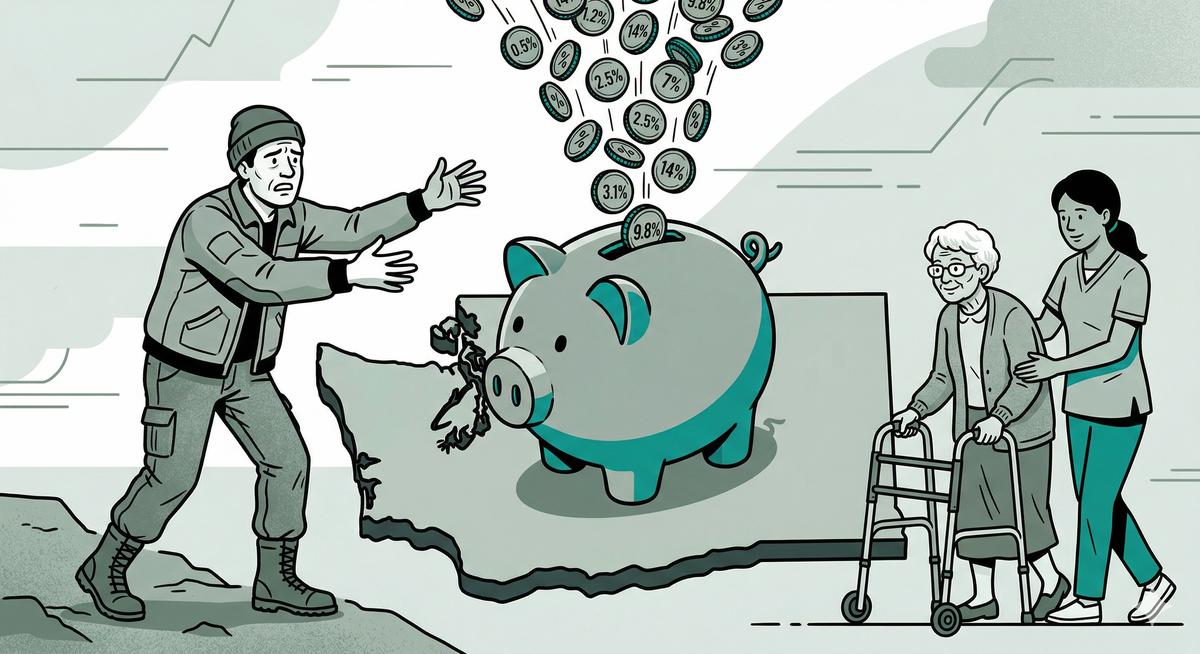
Not Dead Yet, a disability rights organization, has argued for decades against laws like this one, warning they devalue the lives of people with disabilities and chronic illness. Their position is not religious. It's civil rights — and it's worth hearing. They point out the same healthcare system offering aid in dying routinely fails to provide adequate home care, pain management, and support for caregivers. Fix the care before you offer the exit, they say. And they're not just talking in abstractions. They're pointing to wait lists for home health aides, to Medicaid programs so underfunded people go months without the support they were promised, to a country where dying with dignity often depends on your zip code and your bank account.
Hard to argue with that one.
What Families Need to Know, Practically
If you live in New York or have a loved one there, and this law is relevant to your family's situation, here is what the process looks like once the law takes effect on August 5, 2026.
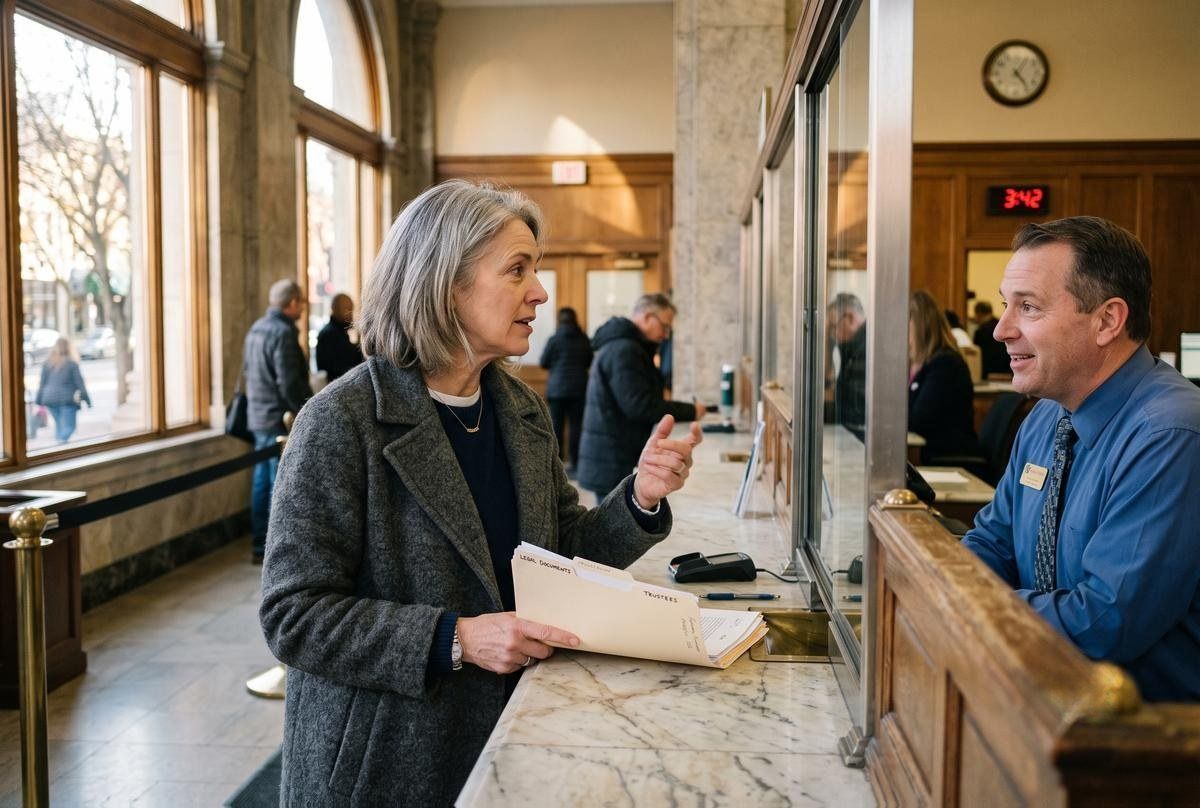
It begins when the patient makes an oral request to their attending physician. This request must be audio or video recorded. The attending physician evaluates the patient in person, confirms the terminal diagnosis with a six-month prognosis, and refers the patient to a consulting physician for independent confirmation.
Both physicians must determine the patient has decision-making capacity. The patient is then referred to a licensed psychologist or psychiatrist for a mental health evaluation, whether or not either physician has concerns about capacity. This evaluation assesses whether the patient is making a voluntary, informed decision free from coercion.
The patient makes a second oral request and submits a written request signed before two qualified witnesses. After the attending physician writes the prescription, five days must pass before a pharmacy can dispense it. In cases of imminent death, a hardship exception may shorten this waiting period.
From there, the medication is self-administered. The patient decides when, where, and whether to take it. If they change their mind at any point, the process stops. No one can be pressured, and the law includes specific penalties for coercion.
Families considering this option should also ensure their loved one has a medical power of attorney and advance healthcare directives in place. These documents matter regardless of whether medical aid in dying is part of the conversation. They matter because clarity, written down, protects everyone.
One more practical note: if your loved one receives hospice care from a religiously affiliated provider that has opted out, they may need to coordinate with a different healthcare organization for this specific process. The hospice can continue providing all other care. The opt-out applies only to participating in the aid-in-dying process itself.
The Conversation Nobody Wants to Have
Actually, the heading isn't quite right. It's not the wanting. It's the knowing how to start.
In four decades of grief counseling and working with families facing loss, the conversations that matter most are almost always the ones people put off the longest. Not because they don't care. Because they care so much the words feel impossible.
If this law raises questions in your family, even questions without answers, the kindest thing you can do is say so out loud. Not "what would you want if..." in the abstract. Specific. Honest. "I read about this new law. I don't know how I feel about it. How do you feel?"
Mabel, a woman in her early eighties who I worked with briefly in 2023, told me her daughter had tried to bring up end-of-life planning three times. Each time, Mabel changed the subject. The fourth time, her daughter said, "Mom, I'm not asking because I want you to die. I'm asking because I love you and I want to know what you need." Mabel finally talked!
This law changes nothing about the need for those conversations. It adds one more option to discuss, one more thing to know about what to say to someone facing the end. But the real work remains the same: sitting across from someone you love and being honest about the hardest thing either of you will ever face.
What Harold Taught Me
Harold died of pancreatic cancer in March of 2009. He was fifty-four years old. He was a high school history teacher and a basketball coach — the kind of man who argued about Reconstruction at tailgate parties and stole bites of my pecan waffle every Saturday morning at the Waffle House on Tunnel Road.
He did not have the option this law provides. Medical aid in dying was legal in two states in 2009, Oregon and Washington, and we lived in North Carolina. I don't know if he would have wanted it. We never had the conversation, and it's one of the regrets I carry.
What I do know is this: Harold's last weeks were not the weeks he wanted. The pain was managed, mostly. The hospice team was extraordinary. But there were hours — long hours — when he was caught between sedation and suffering, and I sat beside him and could not tell which was worse. I held his hand and sang hymns he probably couldn't hear. Told him it was okay to go, the way the hospice nurse had taught me, though I did not feel okay, and I would not feel okay for a very long time.
None of this is an argument for the law. The reason I'm telling you is because the distance between supporting medical aid in dying and opposing it is much shorter than either side admits. Both positions begin in the same place: love. The love that says, "I cannot bear to watch you suffer." The love that says, "I cannot bear to lose you one moment sooner than I must." Those are not contradictions. They live in the same chest.
Where the Path Goes From Here
Outside my window, the dogwoods along my walking trail are still bare this time of year, though if you look closely, the buds are swelling. They'll bloom in April. They bloom every April, whether the world is ready or not.
New York's law takes effect in August. Between now and then, the Department of Health will write regulations, hospitals and hospice providers will develop policies, and families across the state will begin asking questions they didn't have to ask before. Some will find comfort in having the option. Some will find the very existence of the option disturbing. Both responses are human. Both deserve a seat in the room.
I won't tell you what to believe about this. Too many families on too many sides of too many hard decisions have sat across from me for there to be a clean answer. The only thing worse than having this conversation is not having it. So talk to each other now. Not when the crisis comes. Now. Write things down. Say the hard thing. Ask the question you're afraid to ask.
And if you're sitting with someone you love who is running out of time, whether in New York or anywhere else, whether this law applies to you or not, be there. Not with answers. Just there. Harold taught me, in those last impossible weeks, that presence is the only thing we can always offer. Even when it isn't enough, it is never nothing.