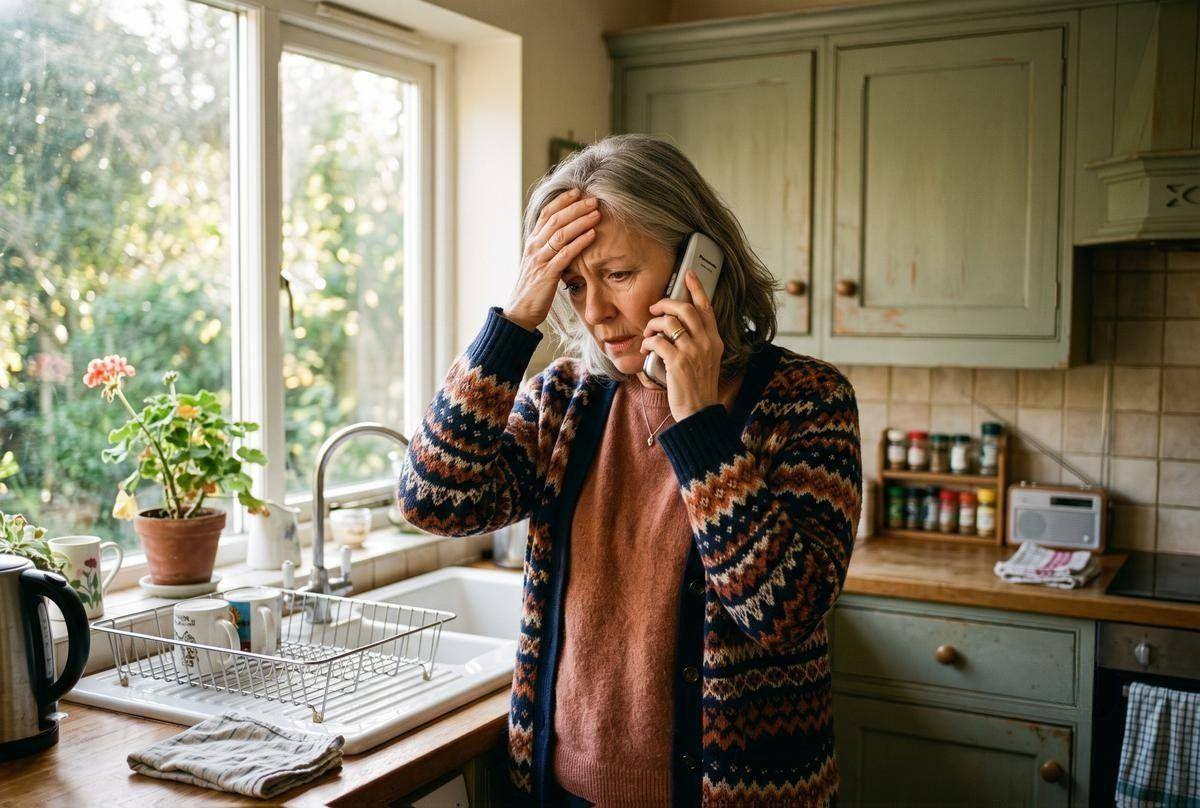
The phone rang on a Thursday evening, just past seven. I was rinsing clay off my hands after pottery class, still wearing my apron, when Cecelia's name lit up my screen. She'd been coming to Seasons of Grace for about six months by then, a retired postal clerk from Swannanoa with a quiet laugh and reading glasses she was always losing. But her voice that night wasn't quiet. Her daughter had entered a treatment facility in Charlotte, and Cecelia's two grandchildren, ages four and nine, were standing in her living room with garbage bags full of clothes.
"Eleanor, I have a two-bedroom apartment," she said. "I don't even have a bed for them."
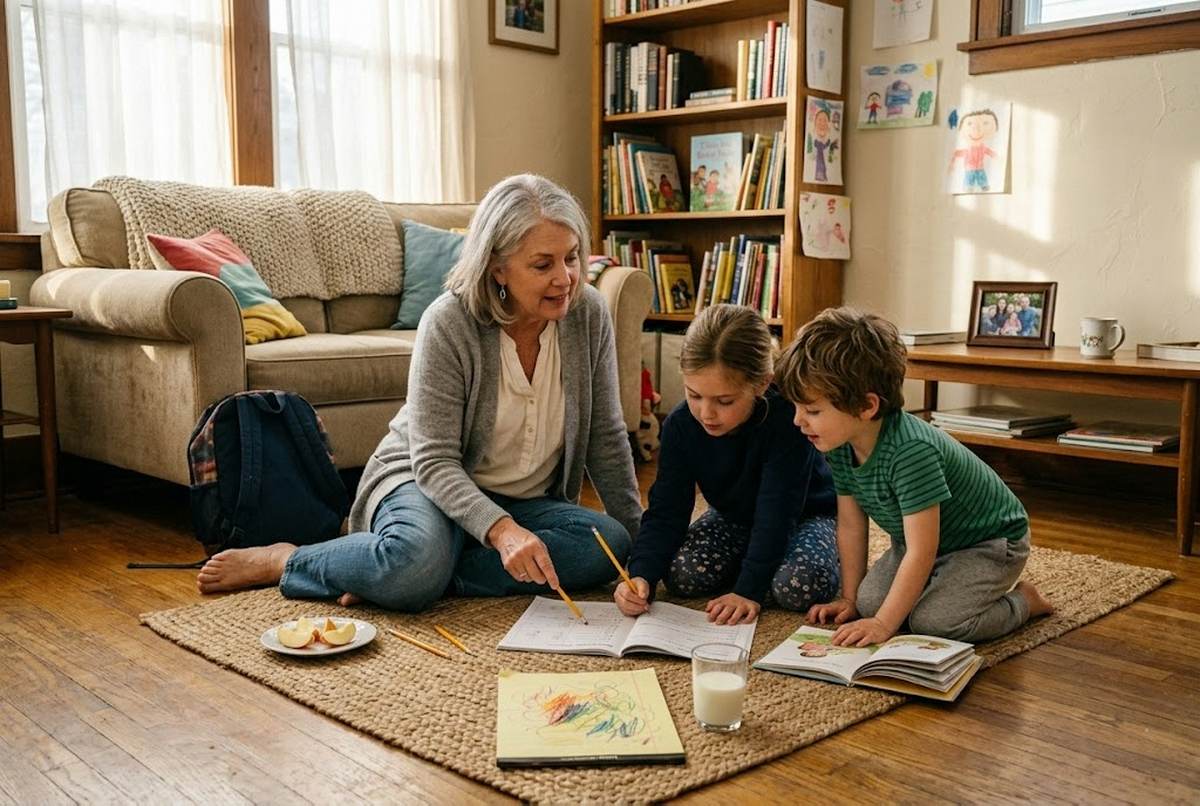
I hear versions of this call more often than most people would guess. A grandparent's life rearranges itself in a single evening. The retirement they'd planned around morning walks and library books suddenly involves school pickups, pediatrician appointments, and the bewildering question of where, exactly, everyone is going to sleep.
Grandfamily housing exists to answer part of that question. Not all of it. But a critical part, the part about having a safe, affordable, right-sized place to land when you're sixty-seven years old and raising children again. If you're in that situation, or if you love someone who is, I want to walk through what's available, how to find it, and what financial and legal steps can make the path a little less steep.
What a Grandfamily Is (And Why the Word Matters)
The term is newer than the reality. Grandparents have always stepped in. But "grandfamily" finally gave a name to households where grandparents or other older relatives are raising children without the parents in the home. The U.S. Census Bureau counts roughly 2.4 million children living in these arrangements right now. Some estimates push that number to 2.65 million when you include close family friends acting as kinship caregivers.
Why does the label matter? Because without a name, these families were invisible to the systems built to help them. Senior housing said: no children allowed. Family housing said: you don't qualify as a parent. Grandfamilies fell through a gap so wide you could lose a whole household in it.
Generations United, the nonprofit that has done the most sustained work on this issue, uses the term specifically to push for policy changes. A named problem gets funding. An unnamed one gets sympathy and not much else.
The Housing Gap Nobody Designed For
Have you ever tried to fit a car seat into a two-door coupe? That's roughly what it feels like to find housing as a grandparent raising grandchildren. The infrastructure wasn't built for you.
Most affordable senior housing developments, including those funded through HUD's Section 202 program, were designed for adults 62 and older living independently. Children aren't part of the model. The apartments are one-bedrooms. The common areas are quiet. The leases sometimes explicitly prohibit minors from residing on the premises.
On the other side, public housing and family-oriented developments assume a younger head of household. The application forms ask about employment income, not Social Security. The playground might be there, but the grab bars and first-floor units aren't.
A woman I sat with at a caregiver burnout workshop two winters ago told me she'd been denied by three different housing complexes in Buncombe County. One said her granddaughter couldn't live in a senior building. Another said her income, which was Social Security plus a small pension from the Biltmore Estate, was too high for family housing but too low for market rate. The third had a two-year waiting list. She was sleeping on a pull-out sofa in her own living room so her grandchildren could have the bedroom.
That in-between space, too old for one system and too young for another, is where grandfamilies live. And for years, almost nobody was building for them.
Actually, that's not quite right. A few people were. They just didn't get much attention until recently.
Grandfamily Housing: What It Actually Looks Like
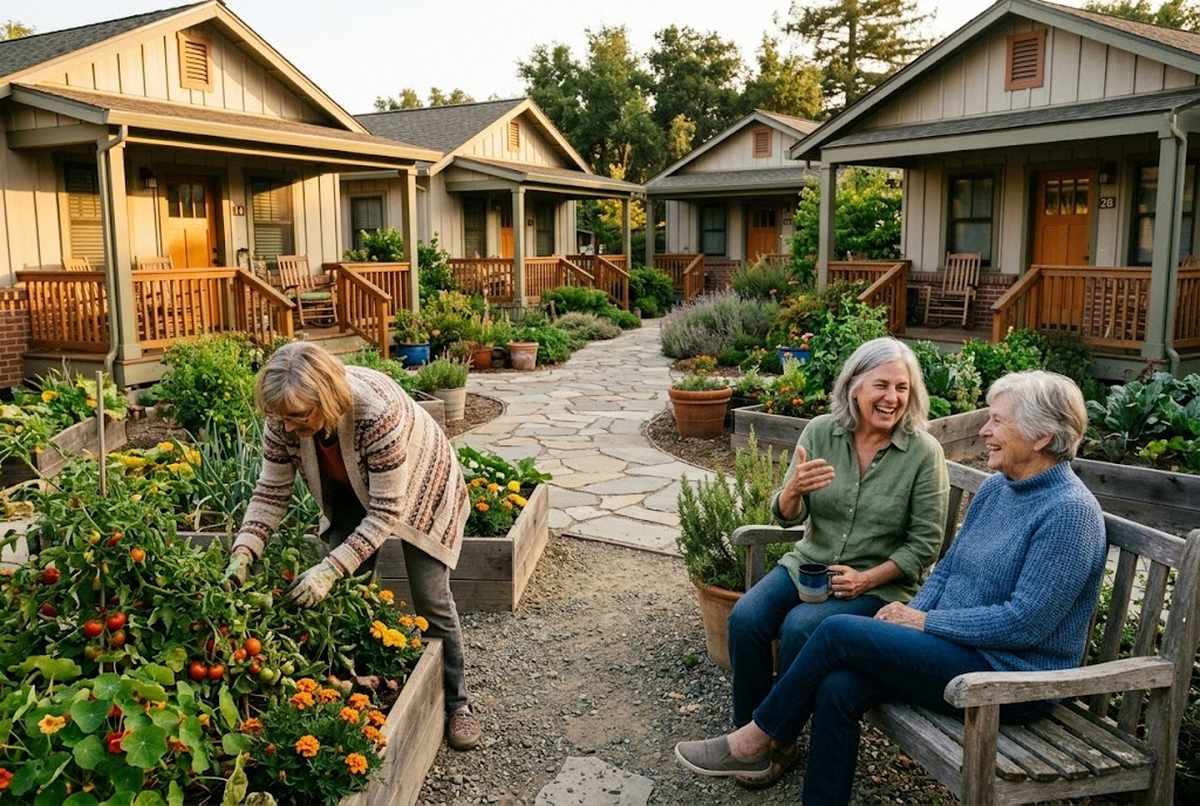
The first purpose-built grandfamily housing in the country opened in 1998 in Boston. GrandFamilies House, developed by Boston Aging Concerns — Young and Old United (BAC-YOU), was a 26-unit affordable housing complex designed specifically for grandparents raising grandchildren. The apartments had two and three bedrooms. The building included after-school programs, a computer lab, on-site social workers, and a playground visible from the community room. It was revolutionary, and for a long time, it was nearly alone.
Today there are more than two dozen specialized grandfamily housing developments across the country, according to Generations United. That's not many! But each one offers a blueprint for what works.
Villard Square in Milwaukee, which opened in 2011, includes a movie theater, a rooftop deck, a fitness center, a branch of the Milwaukee Public Library built right into the building, and an on-site supportive services liaison. In Phoenix, Hopes and Dreams offers two- and three-bedroom apartments with rents set at 30% of household income. In New Jersey, a development in Westampton built by Lutheran Social Ministries of New Jersey — the Grandparent Family Apartments — provides similar income-based housing with case management and tutoring.
What these places share matters more than what makes them different. They all provide:
- Apartments sized for multigenerational families, not studio-dwelling retirees
- Income-based rents, usually pegged to 30% of gross income
- On-site supportive services: counseling, tutoring, legal aid referrals, parenting resources
- A community of peers, other grandparents doing the same hard, beautiful thing
The peer community piece is one nobody talks about enough. Cecelia, the woman from Swannanoa I mentioned earlier, told me six months after she moved into a grandfamily-style apartment complex outside Hendersonville: "I stopped feeling like I was the only person in the world doing this." That sentence carries more weight than any policy brief.
How to Find Grandfamily Housing Near You
The honest answer is that it takes work. A few dozen developments serving a nation of 2.4 million children in grandfamilies means the math is brutal. But options beyond purpose-built housing exist, and knowing where to look makes a real difference.
Start here:
- Grandfamilies.org (run by the Grandfamilies & Kinship Support Network): Maintains a searchable database of housing developments and state-by-state resources. This is the single most useful starting point
- GrandFacts State Fact Sheets (available at grandfactsheets.org): Published through a partnership between AARP, Casey Family Programs, and the Brookdale Foundation, these sheets list every program, phone number, and legal resource in your specific state. Bookmark yours
- Your local Area Agency on Aging (AAA): Call the Eldercare Locator at 1-800-677-1116 and ask specifically about grandfamily or kinship housing. Many AAAs have kinship navigator programs that can connect you directly to openings
- 211: Dial 2-1-1 from any phone. Ask for kinship care housing resources in your county
- Generations United (gu.org): Their report "A Place to Call Home" maps every specialized development in the country and includes a toolkit for communities looking to build more
If there's no purpose-built grandfamily housing near you, don't stop. Many local public housing authorities (PHAs) have begun giving kinship families preference status for Housing Choice Vouchers. The Municipal Housing Authority of the City of Yonkers, for example, adopted a policy granting local preference to kinship families alongside veterans and persons with disabilities. Your PHA may have done the same. Ask.
Financial Help You May Not Know About
The money piece is where I've watched the most grandparents struggle, and where the most help goes unclaimed because people simply don't know it exists.
TANF Child-Only Grants. Every state offers Temporary Assistance for Needy Families child-only grants, and here is the part most grandparents miss: your income as the caregiver usually doesn't count. Eligibility is based on the child's income, which is almost always zero. The amounts vary painfully. National average sits around $328 per month for the first child. In some states, it's as low as $81. In Colorado, the per-child benefit is $141. Not enough. But not nothing, either, and many grandparents never apply because they assume their Social Security disqualifies them.
Kinship Foster Care Payments. If the children entered your care through the child welfare system, you may be eligible for foster care payments, which are significantly higher than TANF grants. In many states, kinship foster care pays $500 to $900 per month per child. This requires licensure as a foster parent, which involves a home study, background checks, and training hours. It's a process, yes. But the financial difference is substantial.
SSI for Grandchildren. If a grandchild has a disability, they may qualify for Supplemental Security Income regardless of the caregiver's income. Monthly SSI payments in 2026 can reach $967 for a qualifying child.
Housing Choice Vouchers (Section 8). Grandfamilies absolutely qualify. Adding grandchildren to your household can increase your voucher amount and, in some jurisdictions, move you up the priority list. Contact your local PHA. Wait lists are long, often years, but some PHAs have expedited processing for kinship families. Put your name on the list today even if the wait feels impossible.
Medicaid and CHIP. Your grandchildren almost certainly qualify for Medicaid or the Children's Health Insurance Program. In most states, enrollment is straightforward and not tied to your legal custody status.
I have seen grandparents leave thousands of dollars on the table because they didn't know these programs existed, or because they assumed their own retirement income made them ineligible. It usually doesn't.
The Legal Piece: Custody, Guardianship, and What Housing Programs Require
A retired teacher named Willard came to one of our Tuesday circles last spring and said something that silenced the room: "I've had my grandson for two years and I still can't enroll him in school without begging." He didn't have legal custody. He had a child sleeping in his spare bedroom and no paperwork to prove the arrangement was anything more than a long visit.
This is where helping a parent who refuses help meets the bureaucratic machinery of housing, schools, and benefits. Without some form of legal relationship, doors stay closed.
The three main options:
1. Temporary or emergency custody. Granted by a family court, often quickly, when a child's safety is at stake. This is enough for school enrollment and medical consent in most states. Some housing programs accept it.
2. Legal guardianship. A more permanent arrangement. The court conducts an investigation of your physical, mental, social, and financial fitness. Parental rights are not terminated, but day-to-day authority transfers to you. Most grandfamily housing programs and public benefits require guardianship or its equivalent. In many states, guardianship can be filed pro se, meaning without a lawyer, though I'd recommend legal aid if it's available.
3. Kinship foster care (formal). This goes through the child welfare system and provides the most financial support but the most oversight. Monthly home visits, required training, annual reviews. For some families, the structure is actually welcome.
Each state handles this differently. The GrandFacts fact sheets I mentioned earlier include state-specific legal options and links to free legal help. The Grandfamilies & Kinship Support Network at grandfamilies.org maintains a legal options guide that walks you through the decision.
Don't let paperwork paralysis keep you from acting. Start with your county courthouse's family division or your state's legal aid hotline.
What Grandchildren Need (Besides a Roof)
The sound of a screen door closing. A regular bedtime. Cereal they picked out themselves at the Ingles on Tunnel Road. What grandchildren in grandfamilies need is smaller and more specific than any program description can capture.
But the programs try, and the good ones get close.
The best grandfamily housing developments offer after-school tutoring, summer enrichment activities, mental health counseling for children processing separation from their parents, and connections to Big Brothers Big Sisters or similar mentoring programs. Some provide on-site child care, which matters enormously when the grandparent caregiver is sixty-eight years old and exhausted by 3 PM. If you're in that position, respite care can also provide temporary relief while you recharge.
After all these years, the thing I keep returning to is that the children need one thing above everything else: to see their grandparent not drowning. A child who watches their grandmother cry on the phone to the electric company every month absorbs that stress in their bones. A child who sees their grandfather feeling less alone, connected to other adults who understand, breathing a little easier, absorbs that too.
This is why grandfamily housing is not just about square footage. It's about wrapping the whole household in something sturdy enough that the grandparent can stop surviving and start creating a home that feels like home.
When the House Becomes Something More
One more thing, and then I'll let you go. Last month I drove down to Hendersonville to visit Cecelia. Her apartment is small. Two bedrooms, a galley kitchen, a balcony with a plastic chair and a pot of rosemary the nine-year-old grew from a cutting. The four-year-old, Janelle, was sitting on the living room floor surrounded by crayon drawings of what appeared to be purple horses.
Cecelia poured me coffee in a mug that said "World's Best Grandma" in chipped gold letters. She sat down across from me and said, "You know what nobody tells you? The hard part isn't the housing. The hard part is believing you're allowed to ask for help."
She's right. We come from a generation that handled things quietly. We figured it out. We made do. But making do with two children sleeping on an air mattress in your living room while you're drawing Social Security and paying for their school supplies out of a checking account that wasn't built for this — that isn't strength. That's a family in crisis that deserves every resource this country has built for exactly this moment.
So ask. Call the Eldercare Locator at 1-800-677-1116. Pull up your state's GrandFacts sheet. Walk into your county's Department of Social Services and say, "I'm raising my grandchildren and I need help with housing." Say it out loud! The words are harder than the paperwork, and the paperwork is hard enough.
If you're doing this work, you already know something most people learn only from living it: love is not a feeling. Love is showing up at the school open house when your knees ache and you'd rather be in bed. Love is learning to braid hair at sixty-three from a YouTube video. Love is the purple horse on the living room floor.
You are not alone in this. You were never supposed to be.