Last month at a Cactus Ridge HOA meeting (which I attend the way one attends a dental cleaning, with grim obligation and low expectations) a woman named Peg stood up during the open comments period and said she'd been reading about senior cohousing communities.
Silence. The particular silence of twenty-three retirees in folding chairs who have just heard a word they don't recognize.
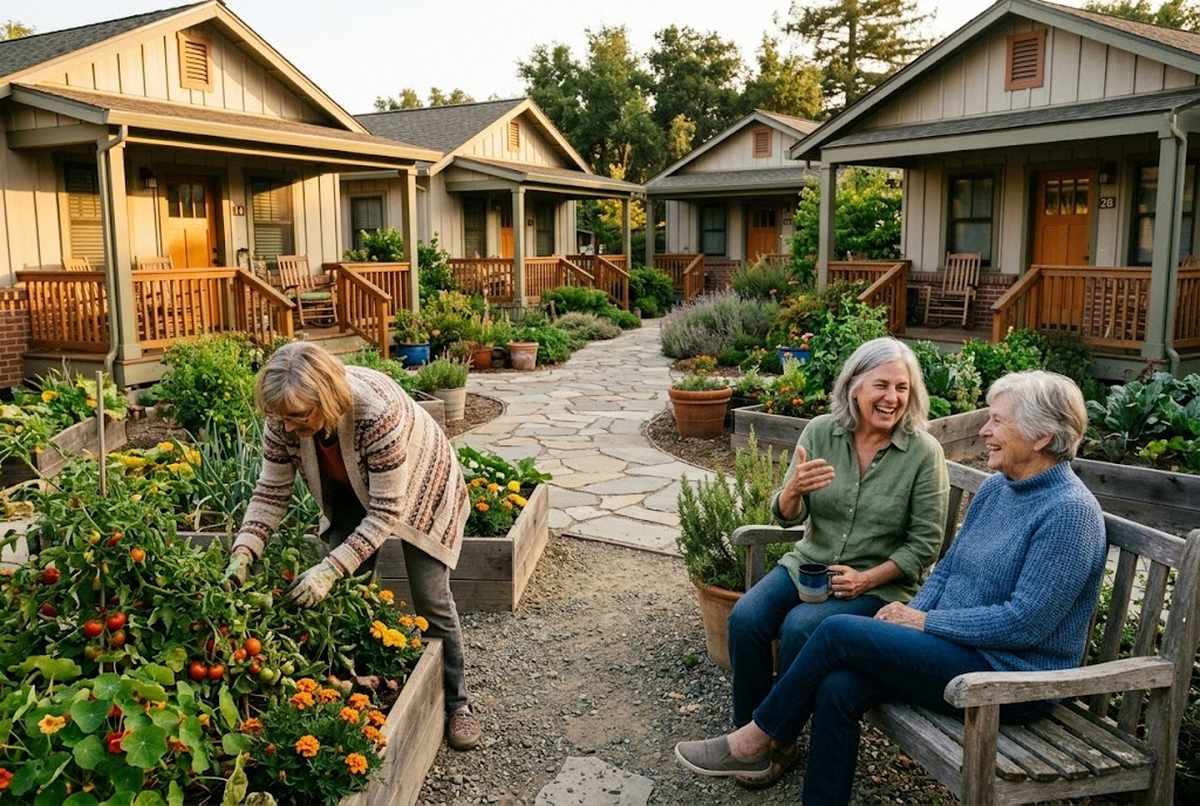
Peg explained. Private homes. Shared common spaces. A big communal kitchen where people cook dinner together a few nights a week. Walking paths. A garden. Neighbors who are not just geographically close but intentionally invested in each other's lives. "Like a village," she said, "but on purpose."
A man in the second row (Hal, retired something, always wears a vest) said, "Sounds like a commune."
Peg said, "It's not a commune, Hal. Nobody's sharing a toothbrush."
I went home and Googled it. Then I Googled it some more. Then I fell into a research spiral that lasted until 1 AM, which is how I know that cohousing is one of the fastest-growing alternative housing models in this country — roughly 170 communities active with another 140 in development — and that the senior-specific corner of it, the kind built for people over 55, is the part growing fastest, and I had somehow never heard of any of this despite writing about where seniors live and how they feel about it for three years.
So. Let me tell you what Peg already knew.
What Senior Cohousing Actually Is
Senior cohousing is a planned community where residents own or rent private homes (real homes, with your own kitchen and your own bathroom and your own door that locks) arranged around shared common spaces. The common house is the centerpiece: usually 3,000 to 5,000 square feet with a big kitchen, a dining hall, a library or lounge, sometimes a workshop or craft room or guest suite. Residents eat together several nights a week. Not every night. Nobody's making you.
The Cohousing Association of the United States tracks about 170 cohousing communities nationwide, with around 140 more in various stages of development. Only a slice of those are senior-specific — a few dozen built for adults 55 and older — but that's the fastest-growing part of the movement. Most of the senior communities run between 15 and 35 households. Most are managed by the residents themselves through participatory governance, which is a polite way of saying you and your neighbors will be making a lot of decisions together about landscaping budgets and whether the common house needs a new dishwasher.
The idea started in Denmark in the 1960s. An architect named Jan Gudmand-Hoyer wrote an article called "The Missing Link Between Utopia and the Dated One-Family House," which is the most Danish headline I've ever encountered. It took until the 1990s to catch on in America, and it took until about 2020 for the growth to get serious. The demographic math is doing the heavy lifting: adults over 65 are projected to reach 82 million by 2050, nearly a quarter of the U.S. population. A lot of those people are going to need somewhere to live that isn't an institution and isn't isolation.
Cohousing is betting it can be the third option.
Not a Nursing Home, Not a 55+ Development, Not a Commune
People confuse these. Understandably.
- Assisted living: Staff on-site. Help with bathing, dressing, medications. Average cost $4,500 to $5,000 a month. You're paying for care.
- 55+ community: Age-restricted neighborhood. Pool, clubhouse, HOA fees of $200 to $600 a month. Nice amenities. No built-in social structure beyond a bulletin board and a holiday party. You're paying for a lifestyle.
- CCRC (Continuing Care Retirement Community): Buy-in model, often $100,000 to $500,000 entrance fee plus monthly charges. Covers independent living through skilled nursing. You're paying for a safety net.
- Cohousing: You own your home. You share common spaces. Nobody provides medical care. What you get is community, the intentional, show-up-for-each-other, I'll-grab-your-mail-when-you're-in-the-hospital kind. You're paying for neighbors who actually know your name.
The biggest difference? You help design it. Most cohousing communities are built by the future residents themselves.
Four Communities That Already Did It
"We wanted to grow old together on purpose," said one of the founders of ElderSpirit Community in Abingdon, Virginia, and I think about that sentence a lot. ElderSpirit opened in 2006 on 3.7 acres alongside the Virginia Creeper Trail. Mixed-income: 13 market-rate ownership units and 16 affordable rental apartments, which makes it one of the very few senior cohousing communities in the country not pricing out everyone below the median income. Total project cost was $3.6 million. They have a common house, shared meals, and a contemplative space for meditation. The community was designed to support both spiritual practice and practical mutual aid, which sounds contradictory until you remember someone still has to take out the recycling.
Silver Sage Village in Boulder, Colorado, opened in 2007, one of the first senior cohousing communities in the U.S. Eighteen households, twenty-eight members, homes arranged around a central courtyard with a shared common house. Some units sold for $119,000 to $143,000 for income-qualified buyers. Market-rate homes started at $375,000. Boulder prices being Boulder prices.
PDX Commons in Portland, Oregon, took the urban route. A contemporary four-story building on SE Belmont Street with 27 private single-level units ranging from 650 to 1,250 square feet, plus 5,000 square feet of shared space. Members started moving in during July 2017. It's walkable, it's in a neighborhood with coffee shops and bookstores, and my son Patrick lives four miles away, which means I've now spent an unreasonable amount of time imagining myself in a Portland cohousing community near a 38-year-old vegetarian who would probably bring me nutritional yeast as a housewarming gift.
Oakcreek Community in Stillwater, Oklahoma, went rural. Thirty members on 7.5 acres with forested walking trails along a creek. Common meals several times a week, weekly coffee hours, happy hours, a community garden, and homes built to ADA accessibility standards. They volunteer together at a local food pantry, which means they're solving both the "what do I do with my time" problem and the "how do I meet people" problem in one move. Smart!
What It Actually Costs
Depends wildly on where and how. Senior cohousing doesn't have a single price tag. It has a range wide enough to drive a moving truck through.
At the affordable end: ElderSpirit's rental apartments serve low-to-moderate-income seniors, and some subsidized cohousing units across the country go for under $500 a month. At the market-rate end: you're buying a home. In Boulder, that means $375,000 and up. In Portland, PDX Commons units are priced like Portland condos, which is to say more than you'd like. In smaller markets like Stillwater, costs come down significantly.
Monthly HOA-style fees in cohousing typically run $200 to $500 and cover maintenance of shared spaces, common house utilities, and a reserve fund. Comparable to a 55+ community and a fraction of assisted living.
The catch is the upfront investment of time. Most communities take three to seven years from idea to move-in. You're attending meetings, working with architects, hiring attorneys to form an LLC, figuring out zoning. If you want turnkey, keep looking. If you want something you had a hand in building, literally, it might be worth every committee meeting.
The Part That's Good for Your Brain and Your Heart
I got serious about this at 1 AM on my laptop while Frank slept upstairs making the sound that isn't quite snoring but also isn't not.
A scoping review in Public Health Reviews concluded cohousing decreases isolation, improves quality of life, and benefits both physical and mental health in older adults. Social isolation risk in cohousing communities drops from roughly 25 percent to less than 10 percent. Not a small number. The Surgeon General declared loneliness a public health epidemic in 2023, with isolation in seniors linked to higher rates of depression, heart disease, cognitive decline, and mortality.
Cohousing attacks isolation structurally. Not with programs or activities directors or a signup sheet on a bulletin board, but with architecture. When you walk to the mailbox and pass the common house where Brenda is making soup and Lyle is arguing with someone about the garden hose, you are being pulled into contact whether you planned on it or not. The design does the work. You just have to show up, and since your front door faces the courtyard, showing up is what happens when you step outside.
Researchers call this "positive neighboring." I call it having actual neighbors instead of people who happen to live near you.
If you're weighing your options for aging in your own home versus community living, the health data on cohousing is hard to argue with.
Here's the Thing: It's Not for Everyone
I would be a terrible cohousing resident. I want you to know this about me.
Not because I don't like people. I like people fine. I taught 150 of them a day when I was still at New Trier. The issue is consensus decision-making, which is how most cohousing communities govern themselves. No majority votes. No one person in charge. Decisions proceed only when nobody has a principled objection, which sounds beautiful in theory and in practice means a conversation about whether to replace the common house dishwasher can take (and I'm not exaggerating) three meetings.
Three meetings. About a dishwasher!
My book club can't agree on a novel in under forty-five minutes, and there are eight of us. Imagine thirty people deciding on a landscaping budget. Or a pet policy. Or whether the Thursday community dinner should accommodate Sheila's new gluten sensitivity, which she announced last week with the energy of someone delivering a TED Talk.
I asked Donna, my old colleague from New Trier who's been researching this for her own reasons since her daughter moved to Denmark, whether she could handle it. She said, "Victoria, I survived eighteen years of faculty meetings. I can survive anything."
Fair point.
The other downsides are real. Privacy can feel limited when your living room faces a shared courtyard and your neighbors know whether you came home at 9 PM or midnight. There's social pressure to participate — cohousing only works if people show up, which means the introvert tax is high. And the three-to-seven-year development timeline means you need to start planning this in your sixties if you want to move in while your knees still cooperate.
But the people who love it really love it. Every community I researched had waiting lists. Not short ones. The demand is outpacing the supply, which says something about what people are actually looking for when they picture getting older.
They're not looking for a facility. They're looking for a village.
How to Find One (Or Start One, If You're Braver Than Me)
The Cohousing Association of the United States at cohousing.org has a directory of every community in the country: completed, under construction, and forming. Filter by state, by age group, by whether they're accepting new members. It's the best starting point.
SAGE (Senior Cohousing Advocates and Group Exploration) at sagecohoadvocates.org is specifically for the 55-plus crowd and runs workshops on how to start a community from scratch.
If starting from scratch sounds like your thing, the general path looks like this: find three to five people who share the vision, form a core group, attend a cohousing workshop, hire a consultant (yes, this is a real profession), locate land, hire an architect, form an LLC, recruit members, secure financing, build. Simple! Except for every part of it.
Visit before you commit. Most communities welcome prospective members for a meal or a weekend. Eat the soup. Sit in the courtyard. Ask the residents what they argue about. The answer will tell you everything.
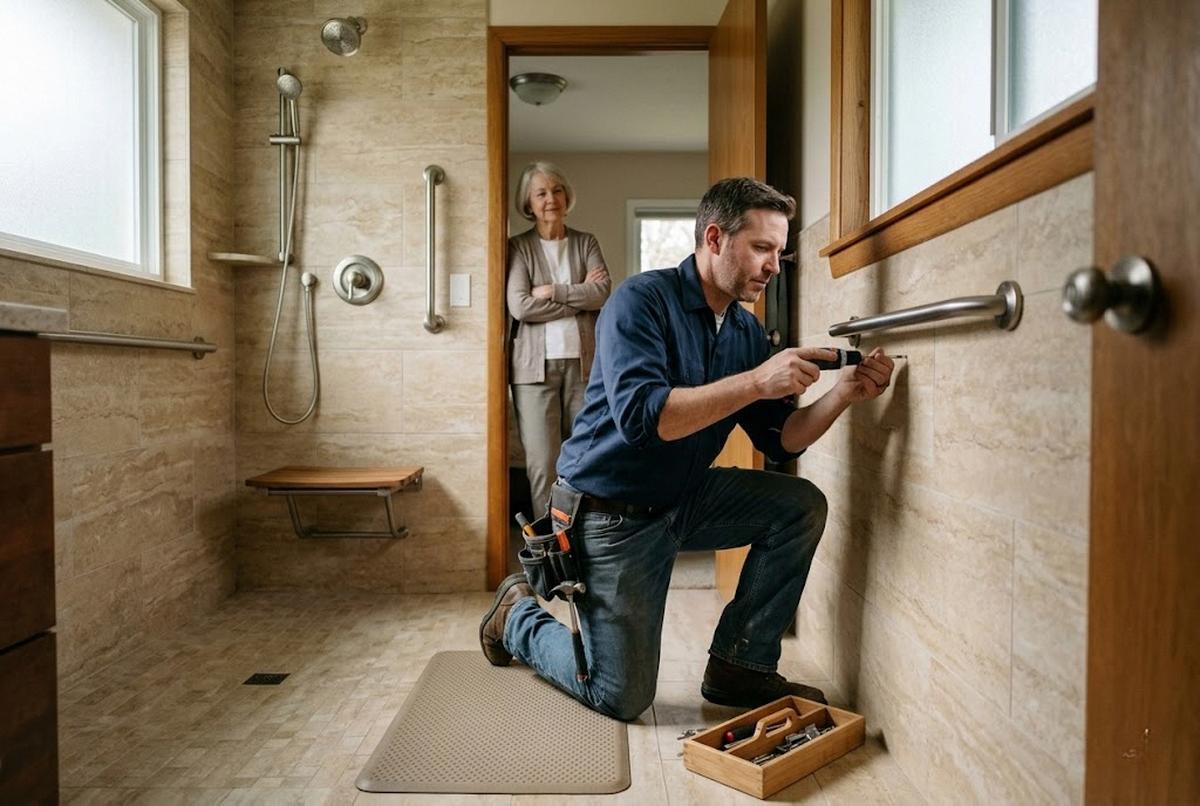
And if you're still in the early stages of figuring out what modifications would help you stay comfortable at home, cohousing is worth adding to the list of things you're considering — even if you file it under "someday" for now.
What I'm Going to Tell Frank
I'm not moving to a cohousing community. Probably. Almost certainly.
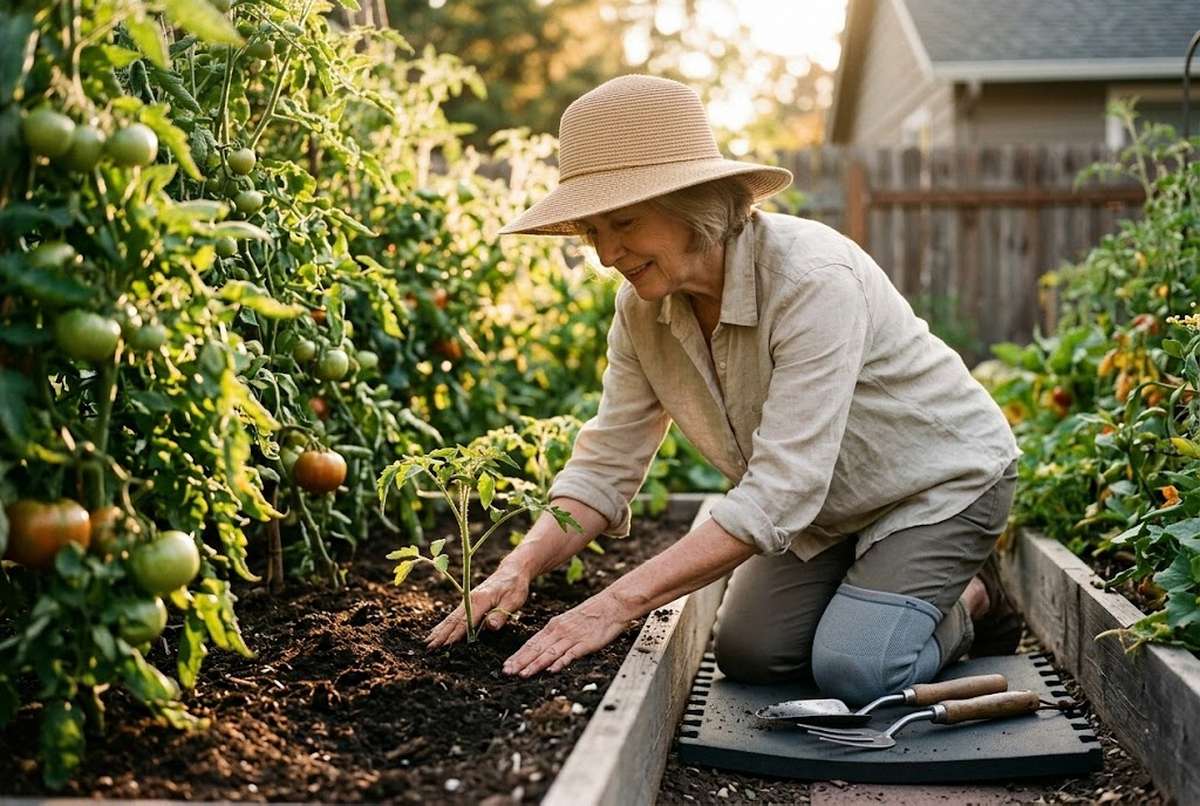
But I drove past a vacant lot on the way home from the grocery store yesterday and thought, for exactly four seconds, about what it would look like with fifteen small homes around a courtyard. A common house with a big kitchen. A garden where somebody (not me, I kill everything I plant, but somebody) grows tomatoes. Thursday night dinners where you don't have to cook and you don't have to eat alone and nobody asks if you're okay because they already know, because they saw you that morning walking to the mailbox.
Peg from the HOA meeting sent me a link to the Cohousing Association directory last week. I clicked it. I bookmarked three communities. I haven't told anyone.
Tonight, over whatever Frank has decided to make for dinner (and it will be something with too much garlic, because Frank has entered his garlic phase and I am powerless to stop it) I'm going to tell him about Peg's idea. Not as a plan. Just as a thought. Just to see what his face does.
Nearly half a century together, and I can still surprise the man. Worth something, I think.