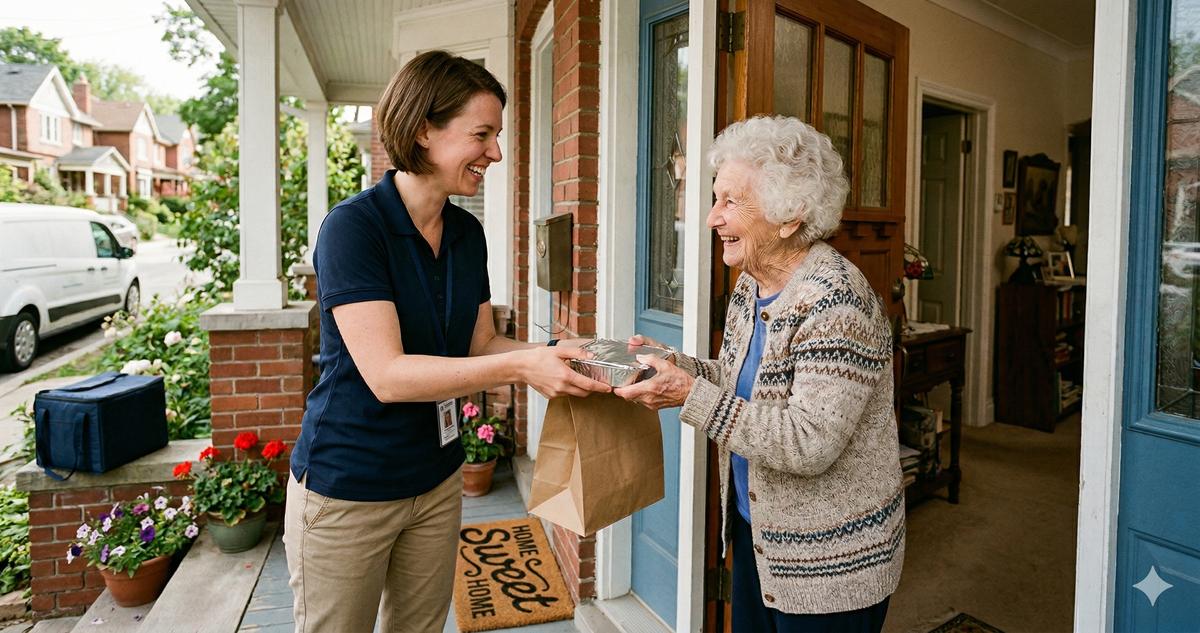
Frank and I were in the car last Thursday, him driving, me in the passenger seat with an audiobook I'd paused twenty minutes earlier because I had something to say, when he mentioned Dottie Kessler had signed up for Meals on Wheels.
Dottie lives on our street. Eighty-one years old. Retired school librarian. Still sharp enough to correct your grammar and mean it. Her husband Mitch passed in 2022, and since then she's been managing alone in that three-bedroom ranch house with a tabby cat named Chairman Meow and a determination I find both admirable and occasionally alarming.
"Good for her," I said. "She needs someone bringing food."
Frank glanced at me. "It's not just food."
"What do you mean it's not just food? It's Meals on Wheels. The name is literally about meals."
"Gail told me they do all kinds of things. Pet food. Home repairs. Someone comes and sits with her."
Gail is Dottie's daughter. Lives in Flagstaff. Calls Frank sometimes because Frank is the kind of man neighbors trust with information, probably because he responds to everything with the same calm nod whether you're telling him the roof is leaking or the world is ending.
I did what any reasonable person would do upon learning she's been wrong about something for decades. I went home and Googled it at 11 PM in my bathrobe.
Turns out Frank was right. Which I will admit in print exactly this once, so savor it, Frank, because it won't happen again in this marriage or any future ones I might consider if you keep leaving golf cleats by the back door.
The Organization Most People Misunderstand
Meals on Wheels America is the national coordinating body for more than 5,000 community-based programs across all 50 states. Those programs delivered roughly 244 million meals to 2.6 million seniors last year. The meal is the front door. What surprised me (and I'm not easily surprised after a career of teaching teenagers) is everything behind it.
The national network calls it "More Than a Meal." Normally I'd find that slogan a bit much. Except they mean it. Depending on your local program, Meals on Wheels can include medically tailored meals for diabetes, kidney disease, and heart conditions. Wellness checks during delivery. Pet food and veterinary assistance. Friendly visitor programs. Home safety modifications. Transportation to medical appointments. Grocery shopping help. Even assistance enrolling in benefits like SNAP, LIHEAP, and Medicare Savings Programs you might not know you qualify for.
One phone call. One program. A dozen services hiding behind a name advertising only one of them.
If you or someone you care about is weighing the logistics of staying independent at home, this is the kind of resource changing the math entirely.
Safety Checks That Actually Work
Pay attention, because this part made me put down my reading glasses.
Ninety-two percent of Meals on Wheels programs conduct routine safety checks during meal deliveries. Not a medical evaluation. Not a clipboard. A human being at the door, same time, same route, week after week, trained to notice what changes. Weight loss. Confusion. Mail stacking up on the porch. A person who was chatty last Tuesday and now can barely get to the door.
Volunteers learn to look for warning signs and alert the program coordinator when something seems wrong. If a senior doesn't answer, the driver tries again. Still nothing? Emergency contact gets a call. Some programs, like Meals on Wheels of North Central Texas, run structured check-in systems where seniors respond by phone or text twice a week. Miss the window and someone follows up.
A driver in Contra Costa County, California, found a client on the floor during a routine delivery. She'd fallen the night before and couldn't reach her phone. He called 911.
Not a meal delivery. A rescue!
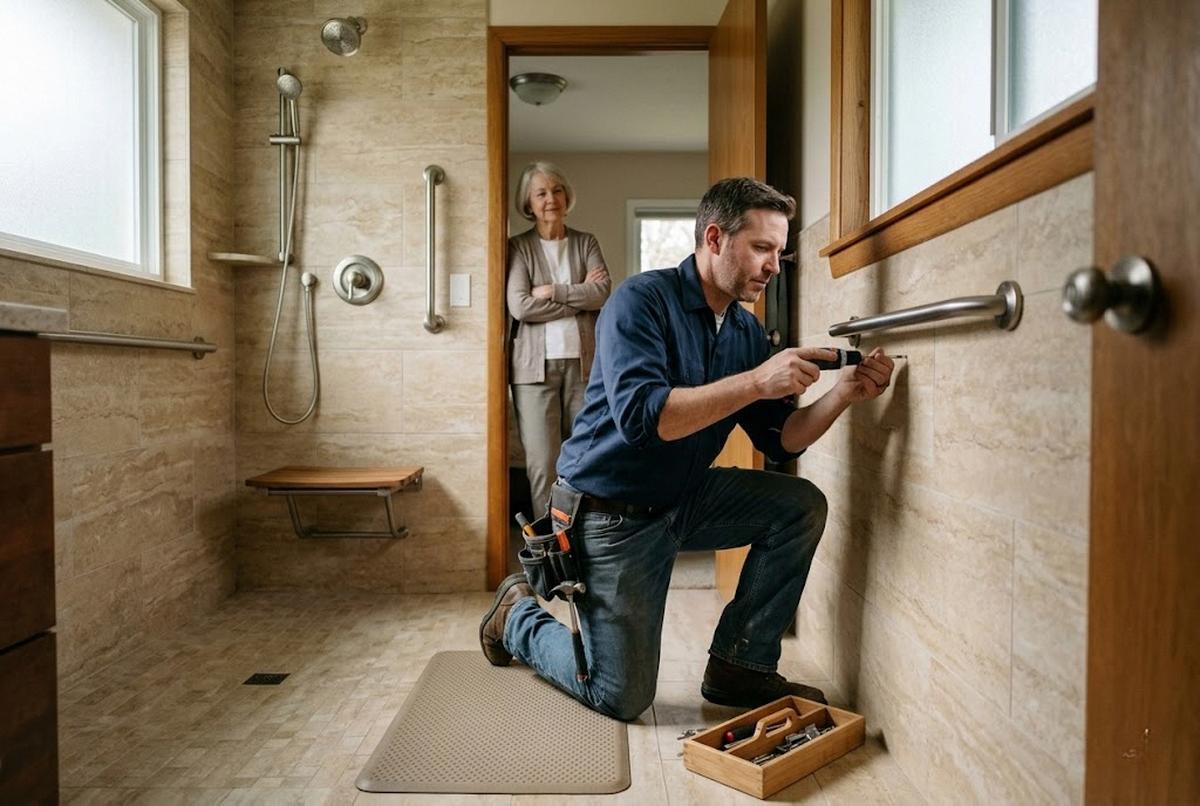
Dottie told Gail her regular volunteer, a retired plumber named Hank, asked her last week why she was gripping the doorframe when she answered. She said her knee was acting up. By Friday the program had called to schedule a grab bar installation in her hallway. Hank noticed the doorframe. That's the whole system — someone paying attention, consistently, to a person who might otherwise go unnoticed.
I taught high school for three decades. I know what paying attention to another person looks like. It looks like Hank asking about the doorframe.
Your Pet Eats Too
This is where I sat up straight in my bathrobe at 11:15 PM. (And where Frank earned further credit for being right, which I am distributing sparingly.)
Meals on Wheels runs a program called Meals on Wheels Loves Pets, funded partly through PetSmart Charities. It provides pet food delivery, supplies, and access to veterinary care for pets belonging to homebound seniors. The program operates in 33 states.
Ninety-seven percent of clients in the pet program say the support is what makes it possible to keep their animals. For a senior living alone, a dog or cat isn't a luxury item. It's a reason to get up. A warm body in the house. A creature that needs you when nobody else seems to on a given Tuesday.
Chairman Meow now gets kibble delivered with Dottie's meals. Before the program, Gail was shipping cat food from Flagstaff or worrying about what happened the weeks she couldn't make the drive. The cat doesn't know about the logistics. The cat just eats. But Dottie knows, and Gail sleeps better.
Meals on Wheels Central Texas runs a program called PALS — free pet food and veterinary care in the Austin area. Portland's Meals on Wheels People has a dedicated pet division. These aren't afterthoughts tacked onto the model because somebody had a spare bag of Purina. They're built in because someone understood you can't take care of a person without taking care of what they love.
Frank, who is not sentimental about animals despite talking to the hummingbird at our patio feeder every morning like it's a colleague, even he said, "Smart move." From Frank, that's a standing ovation.
Friendly Visitors, Home Repairs, and Everything Else Nobody Mentions
The friendly visitor program works like this: a trained volunteer shows up at a senior's home once a week, for about an hour, and just... visits. Cards. Conversation. Sitting on the porch complaining about whatever needs complaining about, which in Scottsdale is always the HOA and occasionally the heat and sometimes both at once.
The visits are free. Volunteers get matched based on shared interests. For a homebound person whose family lives in another state, or whose circle of friends has gotten smaller (which happens quietly to almost everyone eventually), one hour of genuine human contact per week is not a small thing. It's the difference between a day with a voice in it and a day without.
Then there's the home repair side, and this is where the real costs of aging in place start looking more manageable. Some local programs offer minor modifications at no charge: grab bars, handrail tightening, smoke detector installation, ramp construction. A $150 grab bar preventing a fall is a lot cheaper than the $9,000-a-month facility after the hip fracture. The math isn't complicated.
Transportation comes up too. Some programs provide rides to medical appointments, adult day programs, and community dining sites. Grocery shopping assistance is another one — a volunteer helps make the list, gets to the store, shops, and puts everything away. For anyone who's ever had a delivery app substitute cantaloupe for pineapple, a human being who also checks on you afterward is a significant upgrade.
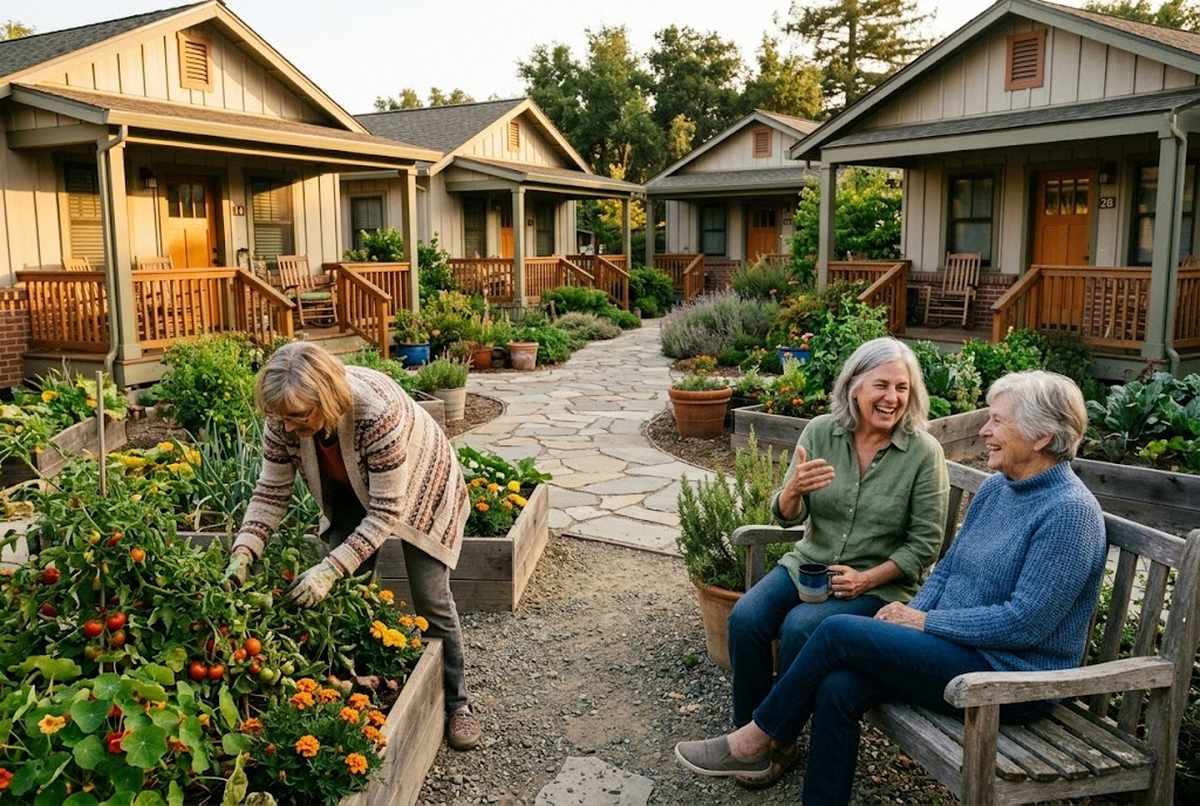
Is it just me, or does it feel like these programs are doing the work entire neighborhoods used to do? Meals on Wheels isn't reinventing community. It's rebuilding it, one door at a time. If you've been reading about other models for staying connected as you age, the common thread is the same: people need people.
Benefits enrollment. This one's quiet but powerful. Program coordinators connect seniors to SNAP, LIHEAP, Medicare Savings Programs, and other assistance they've been eligible for without knowing it. One intake call can uncover thousands of dollars in annual benefits just sitting there unclaimed because nobody said to ask!
And holiday meals. Thanksgiving, Christmas, Easter. Not a luxury. A recognition that eating alone on a holiday is a specific kind of silence nobody should have to sit in.
Who Qualifies and What It Costs
Here's the thing. Most people assume Meals on Wheels is strictly for low-income seniors or people who are completely homebound. Wrong on both.
General eligibility: 60 years or older and either homebound, at nutritional risk, or having difficulty preparing meals. Some programs serve spouses and dependents regardless of age. Some cover people temporarily homebound after surgery. There is no strict income cutoff for most programs funded under the Older Americans Act.
Cost varies. Meals typically run $5 to $9 each on a sliding scale based on ability to pay. Many programs charge nothing at all. And the line worth underlining: no senior is turned away because they can't pay. Period. Written into the program's foundation.
The harder truth is the waitlist. One in three Meals on Wheels programs currently has one, averaging about four months. Some stretch longer. Federal funding through the Older Americans Act has held flat at $1.059 billion — sounds enormous until you learn the network estimates it needs at least $1.6 billion to meet actual demand. Rising food prices and transportation costs squeeze that gap wider every year.
Apply early. Don't wait until it's urgent.
To sign up: call the Eldercare Locator at 1-800-677-1116. Free call, real person, and they'll connect you with your local Area Agency on Aging. You can also search by ZIP code at mealsonwheelsamerica.org. The intake assessment covers health, mobility, and financial situation. Your care coordinator may connect you with additional services you didn't know existed.
Referring someone else works the same way. Same number. Same website. If you're the daughter in Flagstaff or the son in Denver or the neighbor two doors down, you can make that call.
What I Didn't Expect to Feel
I've been thinking about Dottie all week.
Not because she's struggling. She's managing fine. She's a woman who named her cat Chairman Meow and once told the HOA board their revised parking enforcement policy was, quote, "constitutionally suspect." Dottie is handling things. Always has.
But handling things alone and handling things with support are different postures. One is clenched. The other has room to breathe.
I mentioned the friendly visitor program to Frank over dinner. Turkey sandwich — same as every day since roughly 1994. He listened the way he listens, which is fully and without interrupting.
"You'd be good at that," he said.
A lifetime of sitting across from people who didn't want to talk and getting them talking anyway. Students who were scared. Parents who were angry. Colleagues who were exhausted. I know how to be in a room with another person and make that room feel less empty. Turns out retirement didn't take that away. It just took away the room.
Thursdays are free. An hour a week.
I'm going to call. Not because I think I'm going to change someone's life over a game of gin rummy on a porch in Scottsdale. But because Hank noticed the doorframe. And Dottie's Thursday visitor just sits and talks. And somebody told Gail about the cat food, and Gail told Frank, and Frank told me in the car, and now I'm telling you.
That's how it works. One person mentions it to the next.
The number is 1-800-677-1116. Eldercare Locator. Free call. Real person.
Chairman Meow prefers the salmon kibble, but that's between him and Dottie.