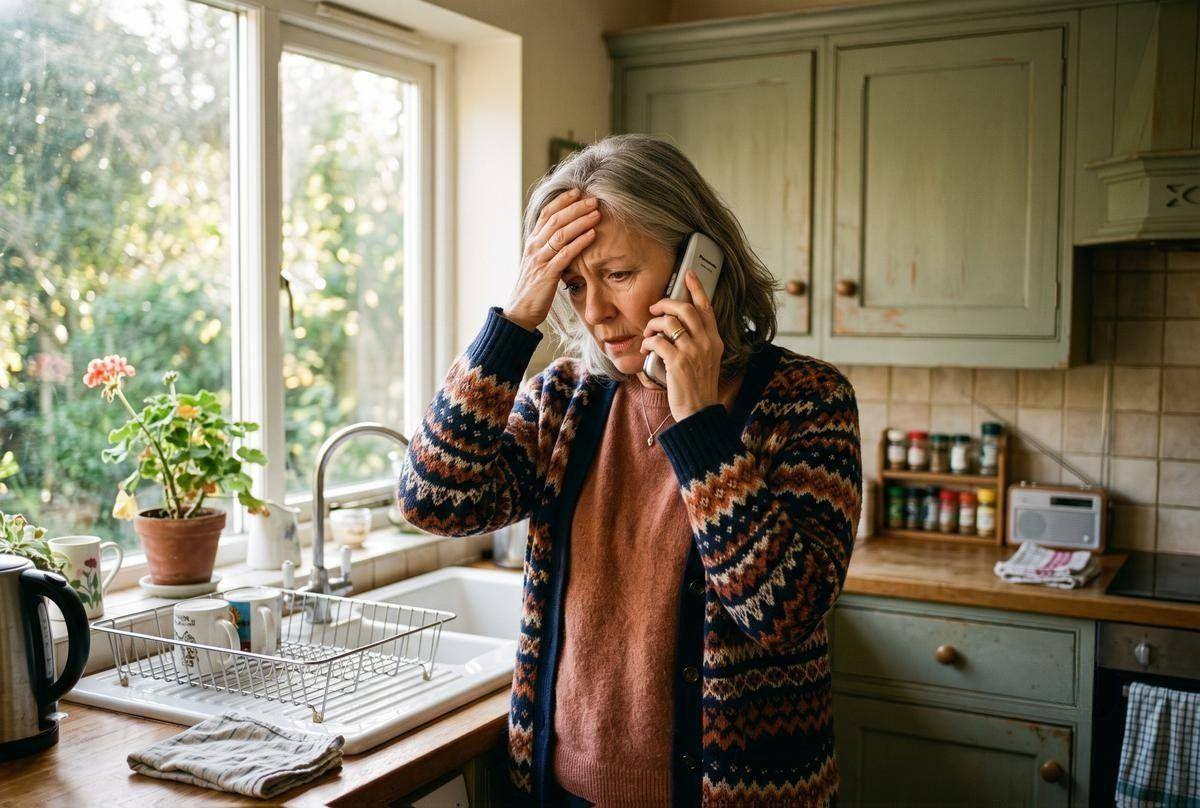
A woman in our Tuesday circle at Seasons of Grace sat for most of an hour without speaking. When she finally did, she said, "I think I have been caregiving for two years and I had no idea that's what it was called." She had been driving an hour each way to her father's house in Hendersonville, sorting his mail, talking his doctor through his medications, and standing in his kitchen at midnight wondering why he wouldn't eat. She thought she was just being a daughter.
She was, of course. She was also one of about fifty-three million Americans providing unpaid care for an older relative. That work, AARP and the National Alliance for Caregiving estimate, would run roughly $600 billion a year if anyone were paying for it. Most of that work is invisible until it isn't. Then the call comes from the emergency room, or the neighbor finds the front door open, or the pillbox has Thursday's pills still sitting in Tuesday's slot.
What I have learned in forty years of this work, first as a hospital social worker, then in hospice, then in the support circles I have led since 1988, is that nobody hands you a map. So I want to offer one. Not a ten-step checklist. The real shape of it.
The Conversation Before the Crisis
Most families do not talk about aging until aging forces them to. The hospital bed becomes the conference table. By then, the choices are narrower and the feelings are louder.
What I have found is that the families who do best are the ones who sat at a kitchen table years earlier, sometimes a decade earlier, and named the hard things out loud. Where do you want to live if you can't drive anymore. Who handles your money if you can't. What does a good day look like when a great day isn't possible. Who do you trust to make a medical decision if you cannot speak.
These conversations are not one conversation. They are a series, often over years, often interrupted by a parent saying, "I don't want to talk about this right now," and then bringing it up themselves three months later in the car. You are not closing a deal. You are leaving a door open.
The paperwork that follows is small but essential: a financial power of attorney, a healthcare power of attorney, an advance directive, a HIPAA release so doctors can actually speak to you, and a will or trust. The documents do not have to be elaborate. They have to exist. I have sat with too many families in emergency rooms where the right child was standing right there and could not legally make a decision because no one had signed a single piece of paper.
The Medicaid five-year lookback is another reason to start early. If long-term care may eventually be in the picture, an elder law attorney is worth a conversation well before you need one. Five years out, if you can manage it.
Watching the Body and the Brain
The second thing nobody warns you about is how much of caregiving is medical watching. Not nursing. Watching. Noticing the bruise on the forearm that wasn't there last week. Noticing that the kitchen smells faintly of gas. Noticing that Mom's stories are repeating sooner.
A few things help. One adult child should be the primary medical contact, not all of them. Doctors call one person. Pharmacies call one person. That person keeps the notebook, the medication list, the running questions for the next appointment. The other siblings can absolutely help, but the medical line of communication needs to be a line, not a web.
The medication picture matters more than people realize. Older adults often take eight, ten, twelve prescriptions, sometimes from three or four different prescribers who have never spoken to each other. Once a year, gather every bottle, every supplement, every over-the-counter pill into a paper bag and take it to one appointment. Pharmacists call this a brown-bag review. It is the single most useful hour of preventive medicine I know.
Learn the difference between an annual wellness visit and a full physical. They are not the same thing under Medicare. I wrote about that in our preventative checkups guide, and the distinction has saved families real grief. Learn the difference between normal age-related memory changes and early dementia, because the response is different. And know that for a parent over eighty, the rhythm of the next several years will likely include falls, hospitalizations, and the brittle week after discharge when most of the harm actually happens. Two to four such events a year is not failure on anyone's part. It is the shape of late life.
The Home That Has to Hold Them
Somewhere in the middle of all this, the house becomes the question. Can it still hold them. Are the stairs safe. Is the tub a trap. Has the driveway become a problem in winter.
Small changes do most of the work. Grab bars in the bathroom. Better lighting in the hallway at night. A shower seat. The throw rugs gone. A medical alert pendant they will actually wear, which usually means one they helped pick out. The pieces of aging in place are not glamorous and they are not expensive, but they need to happen before the fall, not after. Our falls prevention guide lays out the exercises that go with the home changes.
The driving conversation is usually the hardest one. I have watched grown children avoid it for years past the point where it should have happened. There is no painless version of telling your father he can't drive anymore, but there are kinder and crueler ways to have it. The kindest involves the doctor, the eye chart, the slow tapering, and a serious effort to replace the lost freedom with something. Uber, a nephew on Tuesdays, the senior van. You cannot just take away the keys. You have to give something back.
Wandering becomes a concern when memory begins to slip. Door sensors, a GPS tracker in a wallet or shoe, a registered medical alert with the local police. None of it is paranoid. It is the same instinct that put a baby monitor in your child's room thirty years ago.
The Money Conversation Nobody Wants
Money is the conversation American families dodge longest. Then the bills start arriving at the wrong house and you realize you have been dodging too long.
You do not need to take over your parent's finances at the first sign of trouble. You do need to know where things are. The bank accounts. The pension. The Social Security deposit. The Medicare supplement. The Part D plan. The mortgage, if any. The deeds. The safe deposit box. The username for the email. The password for the laptop. The name of their accountant. The name of their attorney, if they have one.
A single piece of paper with this information, kept somewhere agreed-on, can save a family weeks of detective work in a crisis. I have seen adult children rebuild a parent's financial life from a shoebox of paid bills because no one ever made the list.
The big money decisions come later, but they come. Whether a reverse mortgage is right for a house-rich, cash-poor parent — our reverse mortgage calculator gives a quick estimate of what the loan would actually pay out. Whether long-term care insurance is still in force. Whether the estate plan actually reflects what your mother wants now, not what she wanted twenty years ago when the kids were small. Whether Medicaid will eventually be part of the picture. These do not all need to be solved this month. They need to be visible.
When the House Stops Being Enough
There comes a point in many families when staying home is no longer the gentlest option. Not because the family failed. Because the body or the mind changed past what the house and one daughter and a part-time aide can hold.
The decision tree from there has several branches. A good home care agency can extend the home for a long time. Assisted living is appropriate for the parent who needs structure and help with daily tasks but not skilled nursing — and it's worth understanding who owns the big assisted living chains before you tour them. Memory care is its own track. Nursing homes, even after the recent rollback of federal staffing minimums, are sometimes the only option for the medically complex.
What I tell families is this: no setting is the right one forever. The right setting for this month is the one that keeps your parent safe and gives the family enough breath to keep going. You will likely move them again. That is not a failure. That is how late life works.
When the trajectory turns, palliative and hospice care become a different kind of gift. Hospice does not mean giving up. It means changing what we are aiming for, toward comfort, presence, and dignity rather than cure. Families who elect hospice earlier almost always tell me afterward that they wish they had done it sooner.
The Care of the Caregiver
About three quarters of the people doing this work are women. The average duration is around four years. The average week is about twenty-four hours of unpaid work, on top of jobs and children and households. About a quarter of caregivers in their forties and fifties are doing it for a parent and a child at the same time. Studies put depression rates among caregivers somewhere between forty and seventy percent. Highly strained caregiver-spouses have measurably higher mortality.
I tell you all of that not to frighten you but to give you permission. Permission to be tired. Permission to be angry sometimes. Permission to need help. Permission to grieve the parent who is still alive, because what you are losing is real and it is allowed to hurt.
The practical pieces of caring for yourself are not mysterious. Respite care, even a few hours a week, keeps people functional. Adult day programs and PACE programs exist for exactly this purpose. Support groups, especially the Alzheimer's Association ones and NAMI's Family-to-Family, are not soft offerings. They are the difference between making it through the next year and not. Therapy is not a luxury at this point in your life. It is maintenance. Sleep. Medical care for yourself. A walk that belongs to you.
I know the signs of caregiver burnout because I have lived them. There was a year, when my mother's Alzheimer's was advancing and my daughter was thirteen and Harold's diagnosis was still six years away, when I fell asleep at a red light driving home from Savannah. The light turned green. The driver behind me honked. I drove the last forty miles in tears, not because anything new had happened, but because the weight had finally registered. You cannot carry what I carried that year and stay whole without help. Neither can you.
The Relationship Inside the Caregiving
This is the part the practical guides skip, and it is the part that matters most.
The parent you are caring for is not only a patient. They are still the person who taught you to ride a bike or refused to come to your wedding or sang to you when you were sick or said the wrong thing for forty years. The relationship you had with them is in the room. The relationship you wish you had had is in the room. So is your eight-year-old self.
Honoring your parent does not mean agreeing with every wish your parent expresses. Sometimes safety and autonomy are in tension and you will have to choose, knowing that either choice costs something. You can love a parent fiercely and still refuse to let them drive. You can love a parent fiercely and still set a boundary about the phone calls at midnight. You can love a parent fiercely and still need to leave the room sometimes.
If your parent has dementia, you are grieving in a particular way. The long goodbye. The slow farewell of someone who is still here. The good days will surprise you. They will sing a hymn they have not sung in years. They will know your face for a Sunday afternoon. Hold those days. The bad days are not the real ones. The good days are not the real ones. Both are real.
Forgive what you can. Forgive yourself for what you cannot. Choose your battles. Show up. That is the actual work.
The Last Season and What Comes After
At some point, if you are caring for an older parent, you will be present for the end of their life. It is the hardest privilege I know.
Family conferences in the last months matter. A clear conversation about what your mother wants her last days to look like. Where. With whom. What kind of music. Whether she wants to hear scripture or silence. Whether the great-grandchildren should be in the room. These are not morbid questions. They are the questions that make a hard thing bearable.
Anticipatory grief is real. You may cry months before they die, and then feel strangely numb at the funeral. That is not coldness. That is exhaustion meeting depletion. Bereavement after long caregiving has its own profile. Often delayed. Often surprising you in the third or fourth month when the casseroles have stopped and the silence sets in. What people say to grieving caregivers often misses what we actually need, which is mostly just somebody who keeps showing up.
The house comes after that. The estate. The sibling dynamics. The decisions about your father's tools and your mother's china. These have their own weight, and they do not have to be resolved in a month.
What I Would Say at the Circle
If you came to our Tuesday circle and asked me what I have learned from forty years of this, what really matters when you are caring for an aging parent, I would tell you something close to this.
Caregiving is grief in slow motion. You are allowed to grieve before they die. You are allowed to feel resentment and love in the same breath. The relationship you have with your parent now is different from the one you had before. Both are real. You will not get it all right. You will get enough of it right that your parent will know they were not alone. That is what we are aiming for. That is enough.
You will need help. You were never supposed to do this alone. We were not built for that, and the wisdom of every generation before ours knew it. The myth of the heroic solo caregiver is recent and it is killing people.
Find your circle. It can be three friends who text on Sunday nights. It can be a support group at the church basement. It can be a sister you finally tell the truth to. It can be a counselor for one hour a week. It can be a neighbor who brings soup. You only need one. Then you need another. Then it becomes a way of life.
And on the mornings when you cannot find the strength, and there will be mornings, sit on the porch for a few minutes and let yourself be a daughter, or a son, or a wife, or a husband. Not a caregiver. Just the person who loves this person. The work will still be there in ten minutes. The love is what makes the work survivable.
You are doing one of the most sacred things a human can do. You are walking your parent home. May you be carried in turn. May you be held the way you are holding them. May the morning find you with the strength for one more day.