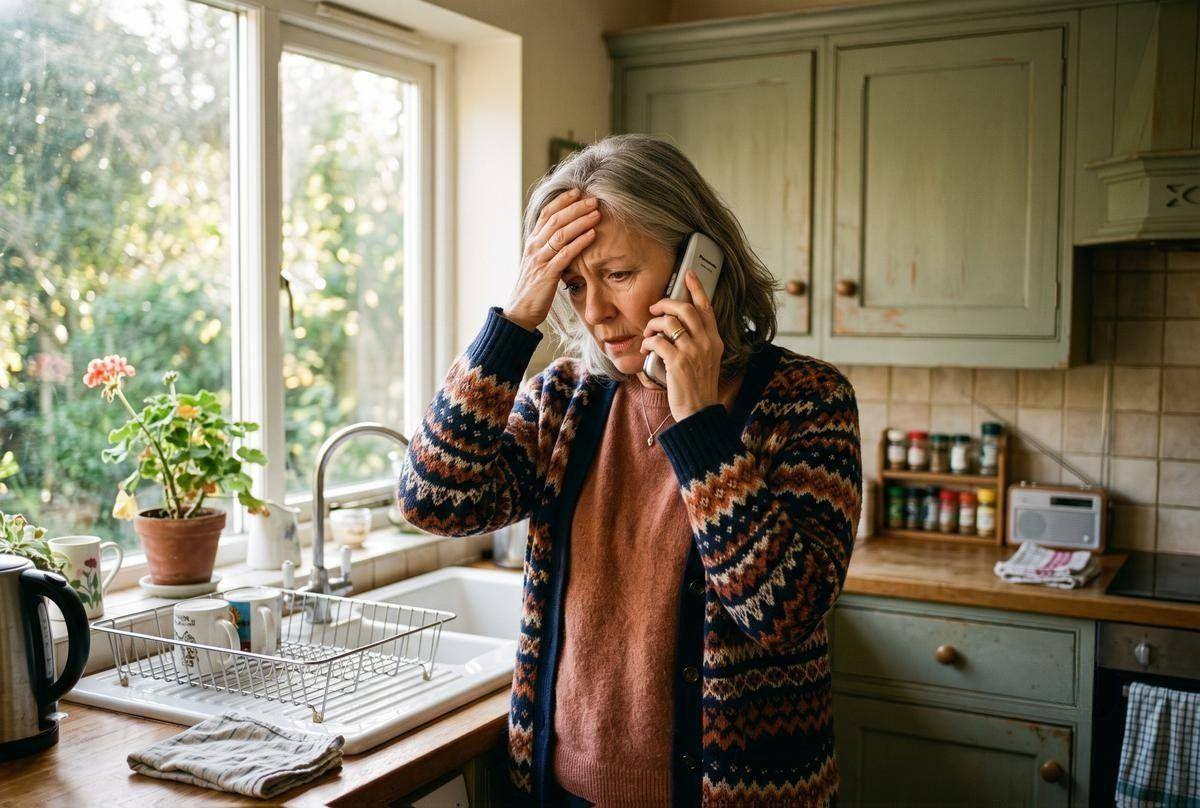
The wax on Della's kitchen floor was so thick I could see my reflection in it. I noticed it the moment I stepped inside her house on Merrimon Avenue, a Tuesday afternoon last November, cold enough to make your nose run before you've finished saying hello. Della was eighty-one, a retired seamstress who'd been hemming curtains and Sunday dresses for half the congregation at Grace Covenant Church for as long as anyone could remember. Her daughter had asked me to stop by because Della had been unsteady lately, gripping countertops, shuffling more than walking. The house smelled like Pine-Sol and something baking.
My stomach dropped the moment I saw that gleaming floor. Beautiful. Immaculate. Dangerous.
Della had survived eighty-one years of hard living and good work, and the thing most likely to take her down was the shine on her own kitchen tile.
The Number That Should Stop You Cold
Every 11 seconds, an older adult is treated in an emergency room for a fall. Every 19 minutes, one of them dies from it.
The Centers for Disease Control and Prevention reports falls as the leading cause of injury death among adults 65 and older. Not car accidents. Not choking. Not fires. Falls. In 2023, roughly 44,686 older adults died from fall-related injuries in the United States. More than 3 million visited emergency departments. The direct medical costs exceeded $50 billion annually!
The CDC estimates one in four adults over 65 falls each year. One in four. Among those who fall, more than half don't tell their doctor. They get up, they ice the bruise, they move a little more carefully for a week, and they don't mention it at their next appointment because they're afraid of what it means. Afraid someone will suggest they can't live alone anymore. Afraid the word "fall" will become the word that changes everything.
I understand that fear. That fear has sat beside me in living rooms and hospital corridors and the quiet aftermath of a hip fracture turning a person's entire life sideways in less than a second.
Why Our Bodies Betray Us After 60
The science behind falling isn't mysterious. It's cumulative.
Start with muscle. After age 30, we lose 3 to 8 percent of muscle mass per decade, and the rate accelerates sharply after 60. The medical term is sarcopenia, and its effects on balance are direct. The muscles in your ankles, calves, and thighs are what keep you upright when you step on an uneven surface or turn quickly to answer the phone. When those muscles weaken, the margin between catching yourself and hitting the ground shrinks to almost nothing.
Then add vision. By 65, most of us need three times more light to see the same objects we saw at 25. Depth perception fades. Cataracts, glaucoma, and macular degeneration blur edges and shadows. A flat-looking throw rug can hide a lip your foot catches.
The inner ear changes too. The vestibular system, the tiny structures responsible for your sense of balance and spatial orientation, degrades with age. Benign paroxysmal positional vertigo, or BPPV, affects roughly 9 percent of adults over 65 and causes sudden spinning sensations triggered by simple head movements like looking up at a shelf or rolling over in bed.
And then the medications. This one makes me angriest, because it's the most preventable. Blood pressure drugs, sedatives, antidepressants, antihistamines, sleeping pills that carry their own serious risks — each one can cause dizziness, drowsiness, or drops in blood pressure when standing. Take three or four together, which millions of older adults do, and the fall risk multiplies. Pair the medication review with a 25-question home safety walk-through — most of the highest-risk hazards are five-minute fixes if you spot them before someone falls.
The body doesn't betray us all at once. It sends signals. Grabbing door frames. Feeling unsteady after standing up. Avoiding stairs. The signals are there if we're willing to read them.
Walking Your Own Home Like a Stranger
Here is an exercise worth doing this week. Walk through your house as though you've never been inside it. Look at every room the way I looked at Della's kitchen floor.
Bathroom. The most dangerous room in the house for falls. Wet tile, low toilets, tubs you have to step over. Install grab bars near the toilet and inside the shower — not towel bars, which aren't anchored to support body weight. A grab bar rated for 250 pounds costs $15 to $35 at Home Depot or Lowe's. A raised toilet seat, $25 to $60, eliminates the deep squat catching so many people off-balance. Non-slip adhesive strips in the tub or shower floor cost under $10 and take five minutes to apply.
Kitchen. Move everyday items to countertop or lower cabinet level. The heavy ceramic bowl on the top shelf, the one requiring a step stool to reach? A fall waiting to happen. Replace any throw rugs with non-slip mats or remove them entirely. Check the floor finish. Della's immaculate wax was a skating rink. A matte-finish cleaner provides the same cleanliness without the gloss.
Bedroom. A clear path from the bed to the bathroom, lit at night. Motion-activated plug-in nightlights cost $8 to $12 for a pack of four. If you're getting up twice a night to use the bathroom, you need to see where you're stepping at 2 AM, period. Keep a phone within reach of the bed in case a fall does happen.
Stairs and hallways. Handrails on both sides, secured into studs. Light switches at the top and bottom of every staircase. No loose carpet edges. No shoes, mail, or pet toys on the steps.
Outside. Uneven walkways, wet leaves, cracked porch steps. The home modification grants available for seniors can help cover the cost of ramp installation, handrails, and exterior lighting.
The National Council on Aging estimates for every dollar spent on home modifications, $10 is saved in medical costs from prevented falls. Ten to one! The math isn't complicated.
Four Exercises That Build the Muscles You Actually Need
I want to be careful here. I'm not a physical therapist, and I'm not going to pretend a list in an article replaces professional guidance. But the evidence for exercise as fall prevention is so strong, and the exercises so accessible, that not sharing them feels irresponsible.
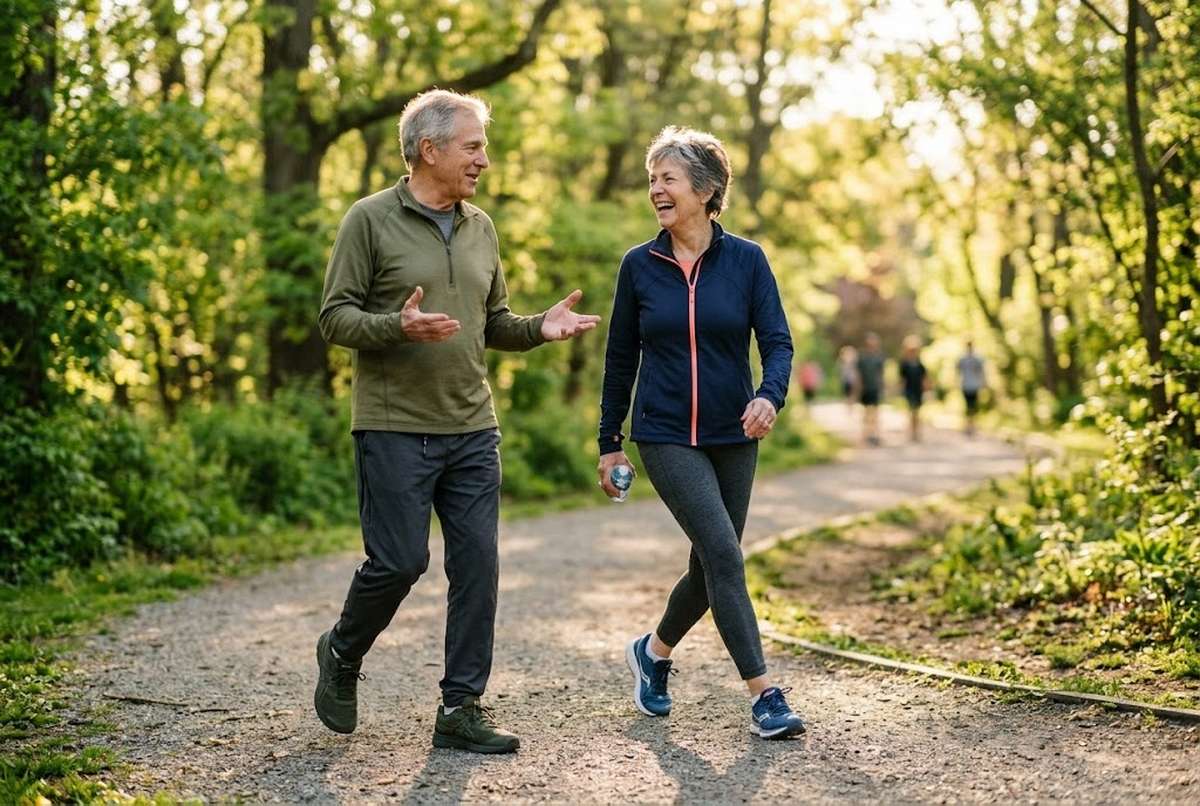
The Otago Exercise Programme, developed at the University of Otago in New Zealand, is the most studied fall prevention exercise program in the world. Randomized controlled trials show it reduces falls by 35 percent in adults over 65. It consists of strengthening and balance exercises done at home, three times a week, plus walking at least twice a week. A physical therapist teaches the program, then you do it on your own.
Four exercises from the program and similar evidence-based protocols:
Heel-to-toe walk. Place one foot directly in front of the other, heel touching toes, like you're walking a tightrope. Hold your arms out if you need to. Walk twenty steps along a hallway. Do this near a wall you can touch for support. It trains the proprioceptive system, the body's internal sense of where it is in space and how it moves through it.
Chair stands. Sit in a sturdy chair with your feet flat on the floor. Stand up without using your hands. Sit back down slowly. Repeat ten times. If you can't stand without hands yet, push off lightly and work toward doing it unassisted. This builds the quadriceps and glutes powering every transition from sitting to standing.
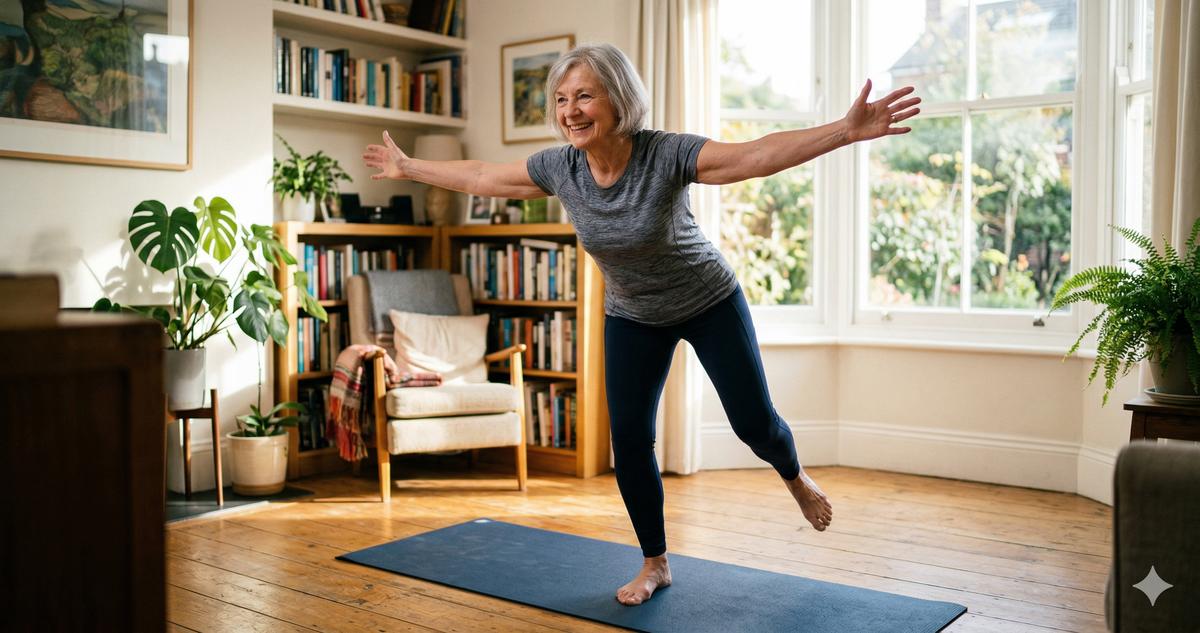
Single-leg stand. Stand behind a chair with both hands on the back. Lift one foot an inch off the floor. Hold for ten seconds. Switch legs. As balance improves, try one hand, then one finger, then no hands. Do this while brushing your teeth and you've built it into a habit without adding a minute to your day.
Calf raises. Stand behind that same chair, hands on the back. Rise onto your toes slowly. Hold for three seconds. Lower slowly. Fifteen repetitions. Your calves are your first line of defense against a stumble. When your foot catches on something, it's the calf muscles that fire to keep you upright.
None of these require equipment. None require a gym membership. What they require is consistency. Three times a week. Fifteen to twenty minutes. The boring truth? The most effective fall prevention program is the one you actually do.
The Fall After the Fall
Warren was seventy-three when he fell in his driveway last January getting the mail. Slipped on a patch of black ice, landed hard on his right side, cracked two ribs. He healed. The ribs knitted back together in about eight weeks. But something else didn't heal.
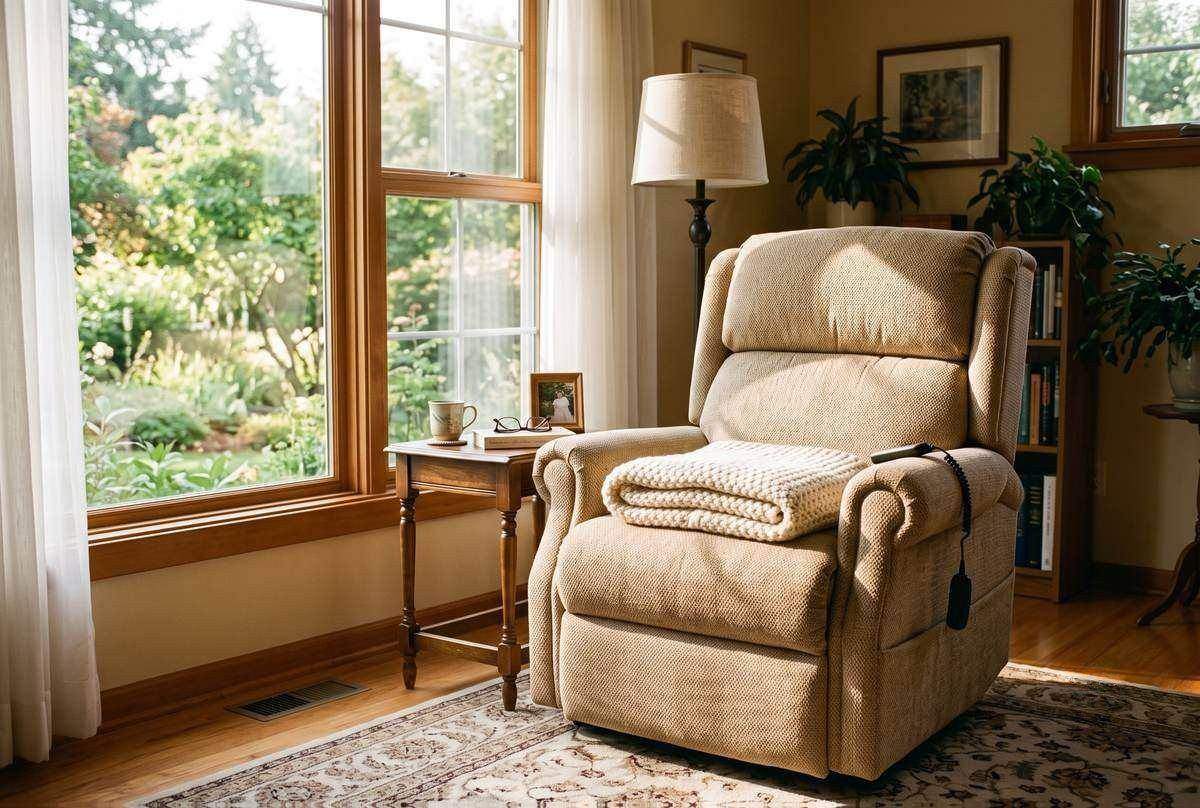
He stopped getting the mail. Then he stopped walking to the corner store where he'd bought his newspaper every morning for twelve years. Then he stopped going to the barber. His world contracted, room by room, until he was spending most of his days in a recliner watching television with the volume up too loud.
When his niece brought him to a community wellness event I was speaking at in March, he told me, quietly, standing near the back of the room with his coat still on: "I'm not hurt anymore. I'm just scared."
The fear of falling is its own diagnosis. Research published in the Journal of the American Geriatrics Society found 30 to 55 percent of older adults report a fear of falling, and among those who have already fallen, the number climbs higher. The cruel irony is the fear of falling leads to less activity, which leads to further muscle loss and deconditioning, which leads to more falls. It's a spiral, and once it starts, it feeds itself.
Breaking that cycle matters as much as preventing the first fall.
When to Bring Your Doctor Into It
Some falls need medical attention right away. Obviously. If you hit your head, can't get up, have severe pain, or notice confusion afterward, that's an emergency room visit. No debate. And if you live alone, the gap between falling and getting help is its own danger — a medical alert system puts a trained operator on the line in under a minute, which is exactly the window that matters most after a hard fall.
But the conversation I'm more concerned about is the one most people never have: the routine appointment where you mention you've felt unsteady, or you grabbed the counter to keep from falling last week, or you've been dizzy after standing up. Don't let a doctor wave this off as just aging. Falls are a medical issue deserving medical investigation.
Ask your doctor for a medication review. The American Geriatrics Society recommends any adult over 65 who has fallen or reports balance concerns should have their medication list reviewed for fall-risk drugs. Benzodiazepines, opioids, antidepressants, blood pressure medications, and antihistamines are the biggest culprits. Sometimes adjusting a dose or switching to a different drug makes the difference between steady and unsteady.
Actually, back up. Ask for a vitamin D level check first. A 2020 Cochrane review found vitamin D supplementation reduces falls in adults who are deficient. The recommended dose for adults over 70 is 800 IU daily, per the National Institutes of Health. Your doctor can test your levels with a simple blood draw.
Ask about a physical therapy referral. I'll say more about coverage in a moment, but a PT trained in fall prevention can assess your gait, your balance, your strength, and your home environment and build a program around exactly what you need. More specific than any printed exercise list.
And if you've fallen more than once in the past year, ask about a full fall risk assessment. This typically includes vision screening, blood pressure checks in multiple positions, a review of foot health and footwear, neurological evaluation, and gait analysis. Your primary care doctor can do much of this. A geriatrician can do all of it.
What Medicare Will Pay For
Medicare covers more fall prevention than most people realize, and I'm tired of watching people pay out of pocket for things their insurance already includes.
Your Annual Wellness Visit under Medicare Part B, which costs you nothing, includes a fall risk screening. If you haven't had yours this year, schedule it. Tell your doctor you want the fall assessment specifically. Not every provider includes it unless you ask.
Physical therapy is covered under Medicare Part B after you meet the annual deductible ($283 in 2026). You'll pay 20 percent of the Medicare-approved amount. A doctor's referral is required. Many Medicare Advantage plans cover PT with lower copays and some waive the deductible entirely.
Occupational therapy for home safety assessments and adaptive equipment training is covered under the same terms. An OT can come to your house, identify hazards, and recommend modifications.
Durable medical equipment like walkers, canes, and shower chairs is covered under Part B at 80 percent of the Medicare-approved amount when prescribed by a doctor. The supplier must be Medicare-enrolled.
One thing Medicare does not cover: most home modifications themselves. Grab bar installation, ramp construction, and bathroom remodeling come out of pocket unless you qualify for state or local grant programs. The Administration for Community Living and your Area Agency on Aging are your best starting points for finding those grants.
Programs That Actually Work
If you want structured support beyond what you can do alone, these evidence-based programs exist in communities across the country.
A Matter of Balance. Developed at Boston University, this eight-session workshop teaches seniors to view falls as preventable, set activity goals, make home safety changes, and practice exercises that increase strength and balance. Available through Area Agencies on Aging, senior centers, and faith-based organizations nationwide. Typically free.
Stepping On. A seven-week community-based program from the University of Wisconsin. Participants learn strength and balance exercises, home safety strategies, medication management, and how to navigate curbs, stairs, and outdoor hazards. A randomized controlled trial found Stepping On reduced falls by 31 percent. Contact your state's aging services division to find a session near you.
Tai Chi for Arthritis and Fall Prevention. Developed by Dr. Paul Lam, this modified tai chi program has been endorsed by the CDC as effective for fall prevention. Classes are offered through YMCAs, senior centers, and community health organizations. The slow, deliberate movements improve balance, leg strength, and confidence. Many participants describe it as the most enjoyable exercise they've ever done!
The Otago Exercise Programme. I mentioned this earlier. Your doctor or physical therapist can prescribe it, and a trained PT delivers the initial instruction. The program is free through many community health organizations and is covered by Medicare when delivered through PT services.
Call your local Area Agency on Aging at 1-800-677-1116 to find out which programs run in your area. Call this week. Not eventually. This week.
Standing Up on Purpose
Driving past Della's house on Merrimon Avenue last month stopped me short. I'd been thinking about her since I started writing this, wondering if the conversation we had that November Tuesday made any difference.
It did. Some of it.
She replaced the wax with a matte floor cleaner. Her daughter installed grab bars in the bathroom and a handrail on the three steps leading to her back porch. Della started doing chair stands during commercials while watching her stories in the afternoon. She told me, the last time we spoke, her legs feel stronger than they did a year ago.
But she also said something else I've been carrying around. She said, "I used to not think about my feet. Now I think about them every time I stand up."
And I said, "Good."
Because thinking about your feet when you stand is not worry. It's attention. It's the same attention I bring to the Blue Ridge trail at 5:30 in the morning when the rocks are wet and the light is still thin. You don't stop walking because the trail is slippery. You walk differently.
We are all walking on surfaces that weren't designed for how our bodies move at this age. The floor is too slick. The rug is too loose. The step is too narrow. Some of those things we can fix. Some of them we can't. But we can train the body, strengthen the legs, clear the path, and pay attention to the ground beneath us.
If you haven't fallen, do not wait until you do. Start the exercises. Walk the house. Schedule the visit. If you have fallen, you are not broken. You are informed. The fall gave you data. Use it.
My mother used to say, when I was a girl sitting on the front steps in Savannah, stubborn about something or other: "The ground doesn't move, Eleanor. You do." She meant it as a scold. I hear it now as an instruction.
Move. Deliberately. With your eyes open and your muscles ready and your people around you. We were not built to stand still, and we were not built to fall without fighting back.