A retired postal carrier and his wife came to my Westport office on a Wednesday afternoon last week. Stanley is 71. Beatrice is 69. They were each carrying the same letter, same envelope, same UnitedHealthcare logo at the top, telling them their Medicare Advantage plan would not be offered in their county for plan year 2027. They had three months until their plan ended. Beatrice had a folder. Stanley had a yellow legal pad with seven questions on it. The first one was, "What is the Plan Finder?"
I hear that question more than you'd think.
Medicare's Plan Finder, at medicare.gov/plan-compare, is the official tool for comparing every Medicare Advantage and Part D plan in your zip code. It's free. It's run by CMS, not an insurance company. And almost nobody opens it before October, which is exactly why I want to talk about it in June.
The Plan Finder is open year-round, with current 2026 pricing and network data sitting there right now, and most of you are going to ignore it until October. That's a mistake. Here's why a mid-year check beats the fall scramble, and how to actually run one.
Why June Is the Right Month, Not October
The Annual Notice of Change letters, what insurers call ANOCs, start hitting mailboxes in late September. Your 2027 pricing, formulary, and network changes are inside that envelope. Open enrollment runs October 15 through December 7. By the time you sit down to compare plans, you have maybe six weeks, the Plan Finder is being slammed by 50 million users, and you're trying to read fine print while the leaves are coming down.
In June, the Plan Finder is calm. Your current plan's data is accurate. The provider directory reflects who's actually in network this year. Drug prices are stable. You can run your real medication list through the tool without a stopwatch on it.
What does that get you? A baseline.
A baseline is the most underrated thing in Medicare planning. If you know, actually know, not guess, what your current plan looks like in June, then in October when the ANOC letter arrives, you can do a real comparison instead of starting from zero. You'll see the changes for what they are. A premium going from $0 to $34. A copay tier shift on your statin. Your cardiologist quietly dropping out of the network.
The other reason June matters: errors. Plan Finder data is built from feeds the insurance companies send to CMS. Those feeds are wrong more often than CMS would like to admit. A 2023 KFF analysis of Medicare Advantage provider directories found inaccurate listings in roughly half of the plans they audited. Half. Doctors listed who weren't in network. Doctors not listed who were. Phone numbers that rang to disconnected lines.
If you discover that error in October with three weeks to your enrollment deadline, you have no leverage. Discover it in June, you have time. Time to call the insurer, to call CMS, to switch through the inaccurate-directory Special Enrollment Period I'll explain in a minute. And if you're one of the roughly three million Medicare Advantage enrollees whose plan was discontinued for 2026, June is when you should already be shopping. Not December.
What the Plan Finder Actually Does
The tool itself is unglamorous. It looks like a government website because it is one.
Go to medicare.gov/plan-compare. Enter your zip code. You get two paths: continue without logging in (generic data) or log in with your Medicare account (your actual prescription list and your existing plan). Always log in if you can. The personalized version is far more useful than the anonymous one.
The tool gives you, plan by plan: monthly premium, annual deductible, primary care copay, specialist copay, hospitalization cost, drug formulary tier for each of your medications, estimated annual out-of-pocket cost based on your prescription list, network type (HMO vs. PPO vs. PFFS), and the CMS star rating. You can compare up to three plans side by side.
What it doesn't give you, and this matters: a guarantee that the data is current to the day. The provider directory data is uploaded by insurers and audited unevenly. The drug pricing reflects what insurers are reporting now, not what they'll report after October's filings. And the tool doesn't compare Medigap policies the way it compares Advantage and Part D. For Medigap, you use the separate Medigap policy search.
The Three Million Who Lost Their Plans
Let me be direct about the discontinuations, because the news coverage on this has been incomplete.
For 2026, insurers exited Medicare Advantage markets at a scale we haven't seen in over a decade. Roughly three million enrollees were forced off their plans. The reasons were specific: tighter CMS payment rates, the new Part D risk structure under the Inflation Reduction Act's drug-pricing changes, and several large insurers (UnitedHealthcare, Humana, Aetna) strategically pulling back from counties where they couldn't make the math work. Reuters reported in October 2025 that the Medicare Advantage market was contracting for the first time since the program's expansion in the early 2000s.
If you're in that group, your plan covered you through December 31, 2025, and you should already be on a new plan as of January 1, 2026. Most of you got assigned a default replacement or used the Special Enrollment Period that ran through February 28, 2026.
Here's the part that catches people. The default plan you were rolled into may not be the right plan for you. Carriers nudge you toward whichever of their products keeps you in their network, not whichever product covers your medications best, or includes your specialists, or has the lowest total cost given your actual usage. I'd estimate at least a third of clients I've seen in this situation ended up on a plan that's a worse fit than what they could have chosen if they'd had time to run the Plan Finder properly.
So if you're a 2026 displaced enrollee and you've been on your replacement plan for five months without checking it, this is your June assignment. Run the Plan Finder. Compare your current plan against the alternatives in your zip code.
The Other SEPs Most People Never Use
Open enrollment isn't the only window. Three additional periods deserve real estate on your calendar.
Medicare Advantage Open Enrollment Period (OEP) runs every year from January 1 through March 31. If you're already on an Advantage plan and realize, after a few weeks of using it, that the plan isn't the right fit, OEP lets you switch to a different Advantage plan once, or drop Advantage and return to Original Medicare with a standalone Part D plan. One change per OEP. It's the safety valve for the October-to-December decision that didn't land.
The 5-Star Special Enrollment Period lets you switch into any plan in your area that holds an overall CMS rating of 5 stars, at any point between December 8 and November 30 of the following year. The catch is that 5-star plans are rare and not available in every county. The Plan Finder marks them with a gold star symbol. If one exists in your zip code and your current plan is mediocre, you can move once during the year.
The Low-Income Subsidy (LIS / Extra Help) SEP is the one I most often see people miss. Anyone enrolled in Extra Help can change Part D or Advantage plans once per quarter during the first three quarters of each year — that's three free moves between January and September. Income limits for Extra Help expanded under the Inflation Reduction Act, so more dual-eligibles and lower-income Medicare beneficiaries qualify than realize. If your household income is below roughly 150% of the federal poverty level, check at ssa.gov/extrahelp before the year ends. The savings are meaningful, and the SEP that comes with it is a real lever.
The Inaccurate-Directory SEP Nobody Talks About
Most seniors think Medicare enrollment is locked once you're past the open enrollment window. It mostly is. But there are a handful of Special Enrollment Periods that let you switch plans outside the normal calendar, and one of them is criminally underused.
It's officially called the Special Enrollment Period for Misrepresentation by a Plan or Material Misrepresentation in Provider Directory Information. Mouthful. The plain version: if your Medicare Advantage plan's provider directory listed a doctor or hospital as in-network, and you joined the plan partly because of that listing, and the directory turned out to be wrong, you can switch to a different Advantage plan or back to Original Medicare with Part D. Outside open enrollment.
You call 1-800-MEDICARE, explain the situation, and request the SEP based on directory misrepresentation. The agent has authority to grant it on the spot if your circumstances clearly fit. If they don't, escalate.
Why does this matter in June? Because the only way to discover the error is to test the directory against reality before you need care. Pull up your plan's provider directory. Check that your primary care doctor, your cardiologist, your pulmonologist, whoever you actually see, are listed and accepting your plan. Then call each office and confirm. Five minutes per call. Twenty minutes total.
Discover the error in November because your specialist won't accept the plan, you're stuck. June is the time to test. A Kaiser Family Foundation analysis published in October 2025 found that despite years of CMS audit attention, provider directory accuracy in Medicare Advantage remains "persistently poor," with some directories showing error rates above 50%. The SEP exists precisely because the regulator knows the data is unreliable. Use it.
The 2026 Numbers You Should Have on Hand
Quick reference before you sit down with the tool.
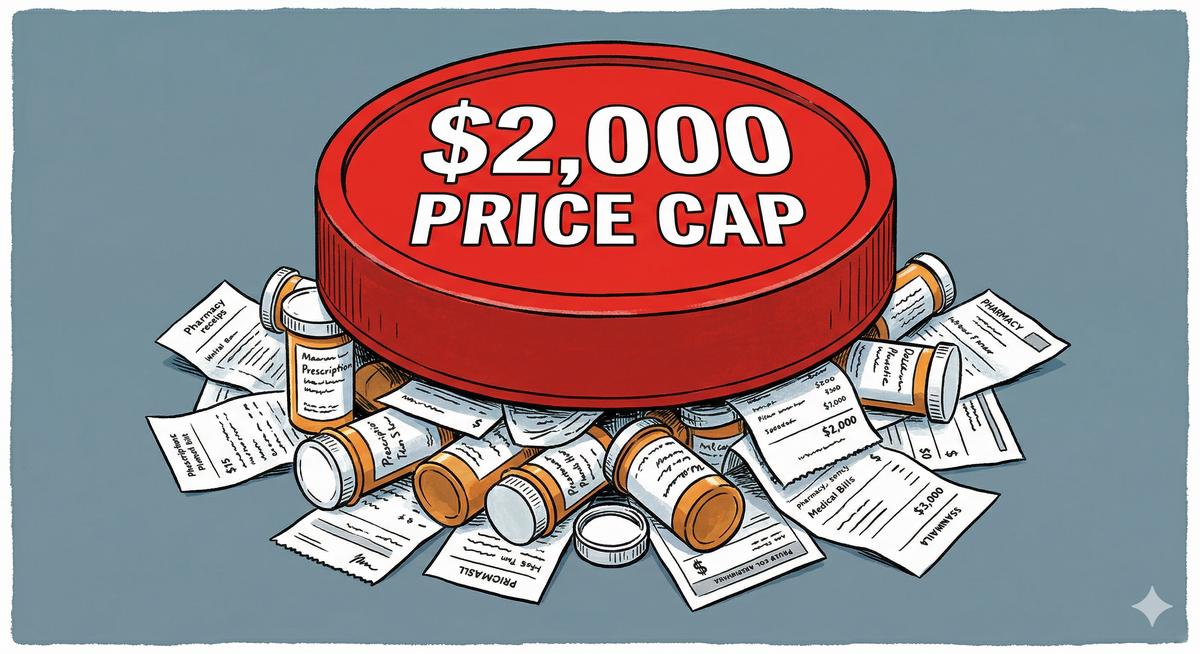
Part B premium for 2026: $206.50 per month. Part B deductible: $283. Part D out-of-pocket cap: $2,000. Standard Part D deductible maximum: $590.
Write these down. They're your floor.
Run the Plan Finder in 30 Minutes
Block thirty minutes. Make coffee. Don't try to do this with the TV on.
- Gather your inputs. Your Medicare card, every prescription medication you take with the dosage and frequency, names and zip codes of your three most-used doctors and your preferred pharmacy, and your current plan's name and ID number. The drug list is the part most people get wrong. If you take a medication on an as-needed basis, count it. If you take a 90-day supply, the tool needs to know.
- Log in at medicare.gov. No account? Create one. You'll need your Medicare number and a phone for two-factor authentication. About eight minutes.
- Open Plan Finder and confirm your current plan is loaded. It will show your enrolled plan at the top. Verify the prescription list. Add anything missing.
- Run the comparison. The tool will show every Advantage plan and every standalone Part D plan available in your zip code. Sort by "estimated annual cost." That's the most honest single number. The lowest premium isn't always the lowest total cost.
- Pick three to compare. Your current plan, plus the two next-best. The side-by-side view shows premiums, deductibles, primary care and specialist copays, hospitalization, drug tier placement for your specific medications, and the network type.
- Test the provider directory. For each of your three top plans, search for your three most-used doctors. Then call each doctor's office and verify they're actually in network for that specific plan and accepting new appointments under it. Yes, you have to call. The directory alone isn't reliable.
- Save your results. Print or screenshot the comparison. When the ANOC arrives in late September, you'll want this June baseline next to it.
Thirty minutes. Forty if you're calling doctor offices.
While you're at it, check your IRMAA bracket too. If your income from two years prior pushed you into a surcharge tier, you're paying more than the base.
What Changes in 2027 — And Why It Affects June
The Contract Year 2027 final rule from CMS was issued April 2, 2026. The headline number is the new Part D out-of-pocket cap: $2,100 for 2027, up from $2,000 in 2026. Indexed to drug spending growth, so it'll keep climbing.
The rest of the rule isn't headline-grabbing but matters more for plan design. Risk adjustment changes for Advantage plans. New marketing rules around third-party agents who've been pushing seniors into plans that pay them higher commissions. Tighter requirements on prior authorization. CMS estimated the rule's net impact on insurer margins at roughly negative 0.4%. Small in aggregate, large enough to drive more market exits in specific counties.
For you, this means three things.
First, expect another wave of Medicare Advantage discontinuations announced in late September for 2027. Probably not three million again, but meaningful. If your current plan is from a carrier that already pulled back this cycle, watch for the ANOC carefully. (Our fall enrollment prep guide walks through what to look for.)
Second, premiums and copays for the plans that remain will adjust. Some up, some down. The Plan Finder won't show 2027 numbers until October, but knowing your 2026 baseline now means you can spot the changes in real time when they post.
Third, if your plan has been quietly degrading (fewer providers, more prior auths, copay creep) June is when you can make an unhurried decision to leave. Not under enrollment-deadline pressure.
Tuesday Afternoon
Stanley and Beatrice sat in my office with the legal pad and the folder. We ran the Plan Finder for both of them right there at my desk. Took 38 minutes. Beatrice's pulmonologist was listed in only one of the three top alternatives. Stanley's diabetes medication had a Tier 3 copay in two plans and a Tier 2 in the third. They walked out with a one-page comparison sheet, a list of three offices to call, and instructions to come back in October when the 2027 ANOC arrived. They were calmer leaving than coming in. Which is what good planning is supposed to do.
You don't need to wait for a discontinuation letter. The Plan Finder is open. Run it this week. Save the results. When October arrives, you'll have a baseline, and that's a different position than the one most people are in.
Not a lot of work for a quiet Tuesday afternoon.