Last month a woman I'll describe only as a retired school secretary — she'd worked in the same district office for 29 years — told a friend of mine that she'd stopped running her air conditioner during the day. Not because it was broken. Because she'd seen her June electric bill and decided she couldn't afford July. She's in her seventies, she takes a medication that makes heat harder on her body, and she was sitting in a hot house in the middle of one of the worst heat waves this country has seen in years, doing math in her head.
What she didn't know — what most people don't know — is that there is a federal program built for exactly her situation. It helps pay your energy bill. It can help with summer cooling, not just winter heat. And here is the part that surprises people the most: it was nearly eliminated this year, and then it wasn't. It is funded. It is open. And a lot of folks are sitting in the heat assuming a door is locked when it's standing wide open.
I've spent 35 years helping older people find money they were entitled to and didn't claim. This is one of those cases. Let me walk you through it plainly.
Yes, LIHEAP Is Still Here in 2026
The program is called LIHEAP — the Low Income Home Energy Assistance Program. It's run by the federal government (specifically the Department of Health and Human Services) and the money is sent out to the states, which each run their own version. Think of it as a federal fund with fifty local front doors.
Here's why I'm leading with the reassurance. Earlier this year, the administration's budget request proposed getting rid of LIHEAP entirely. That made news, and understandably, a lot of people came away thinking the program was gone. But a budget request is a proposal, not a law. Congress went the other way and funded it — about $4 billion for the 2026 federal fiscal year. The federal government released about $3.6 billion in regular funds (plus $100 million in infrastructure-law funds) back on November 28, 2025, and then released a final $421,540,067 on April 17, 2026.
I include those exact figures for one reason: so you'll believe me. When I tell a client a benefit is real, they want to know I'm not guessing. The money is out the door and in the states' hands. The program is operating right now.
I've seen this pattern before — a headline says a benefit is being cut, panicked calls follow, and the people who most need the help are the ones who give up first. It's the same story I wrote about with the new SNAP rules for seniors: another program people leave on the table because they assume it's not for them, or not there anymore. Don't assume the door is locked. Check the handle.
Who Actually Qualifies
LIHEAP is income-based, and this is where I have to be honest about the frustrating part: there is no single national income number I can give you. Each state sets its own limit, within boundaries the federal government draws.
Here's the framework, and I'll keep the technical part short. A state may set its income ceiling at the greater of two figures — 150% of the Federal Poverty Level, or 60% of that state's median income — and it can't set the ceiling below 110% of the Federal Poverty Level. What that means in plain terms: the exact cutoff depends entirely on where you live, so the only number that matters is your own state's number. Anyone who quotes you a single national income limit is guessing.
Now, the part that matters most for the readers of this column. States are required to prioritize households with the highest energy needs, and they commonly give priority to households that include:
- A member aged 60 or older
- A person with a disability
- A young child
If you're a senior, or you're caring for one, you are often near the front of the line, not the back. I've watched people disqualify themselves in their own heads before they ever picked up the phone. Don't do the state's job for them. Let them tell you no. In my experience, "no" comes far less often than people fear.
If you've navigated other benefits — say you helped a parent figure out getting Medicaid help — you already know the rhythm here. It's the same logic: a federal skeleton, fifty different sets of local rules hanging on it. Frustrating, yes. But navigable.
What LIHEAP Actually Pays For
Most people picture a check in the mail. That's not usually how it works. In most states, LIHEAP is a once-a-year benefit paid directly to your utility company as a credit on your bill. You may never touch the money — it just shows up as a lower balance owed. For a lot of my clients, that's actually simpler, because there's no risk of the money getting spent on something else first.
Beyond that base benefit, states offer more:
- Crisis or emergency assistance. If you've already received a shut-off notice, or you've lost power, many states have a separate emergency track that moves faster. This is worth asking about specifically.
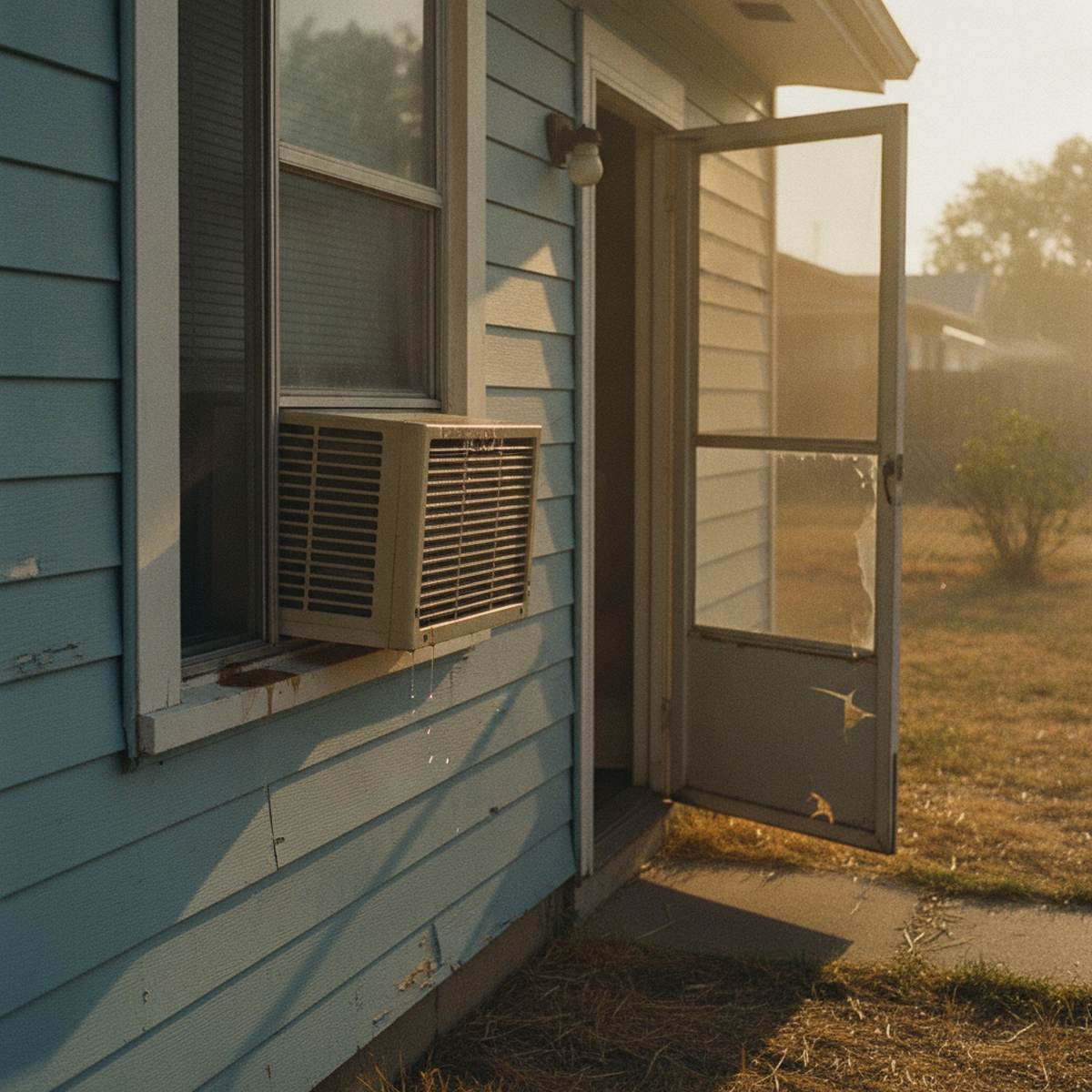
- Cooling equipment. Some states will help pay for a fan or a window air-conditioning unit. If you don't have a way to cool even one room of your home, say so when you apply.
- Weatherization referrals. Some states will refer you to have your home made more energy-efficient — sealing, insulation, that sort of thing — which lowers your bills going forward.
That last one connects to something I've written about before. There's real government money for home modifications that most people never hear about, and weatherization sits in the same family. If a caseworker offers to refer you, take the referral. It costs you nothing to be on the list.
I won't quote you a benefit dollar amount, because it varies enormously by state and I refuse to make up a number that sets your expectations wrong. What I'll say is this: even a partial credit on a summer electric bill, during a heat wave, in a house with an older person in it, is worth an afternoon of paperwork.
How to Apply — The Right Number and the Right Steps
Now the practical part. Write this number down, or better, save it in your phone:
National Energy Assistance Referral hotline: 1-866-674-6327
Weekdays, 9 a.m. to 7 p.m. Eastern. TTY for the hearing impaired: 1-866-367-6228.
I need to be very clear about one thing first, because it trips people up. That hotline does not take your application. It tells you where to apply. You apply through your state or local agency, not through the hotline. The hotline is your map, not the destination.
You also have a second front door that a lot of people forget exists:
Dial 2-1-1. It's free, it's nationwide, and a real human being will help you find your local LIHEAP office. If you remember nothing else from this article, remember those three digits.
Here are your options for actually getting in the door:
- Call the NEAR hotline at 1-866-674-6327 and ask them where your state and county process LIHEAP applications. If you'd rather write, you can email [email protected] — include your city, county, and state, or they can't route you. There's also a website, energyhelp.us.
- Dial 2-1-1 for the same purpose if the hotline is busy.
- Contact your local Community Action Agency. These are the local nonprofits that actually process most LIHEAP applications on the ground.
- If you're 60 or older, call your Area Agency on Aging. They exist specifically to help seniors connect with benefits like this one, and they'll often walk you through it.
- Use the official state-by-state map on acf.gov. The federal government (through the Office of Community Services) maintains an official LIHEAP contact map that lists your state's office, its deadlines, and its income limits. When you want the authoritative answer for your state, that's the place.
One clarification, because the numbers can get confusing. Some states run their own energy-assistance hotlines under their own program names — New York's HEAP line, for instance, is a different number from the national one. Those state lines are legitimate, but they only help if you live in that particular state. The one national referral number that works from anywhere, and gets you pointed to the right local office, is 1-866-674-6327.
When you apply, you'll typically need to gather a few documents. It varies by state, but come prepared with:
- Proof of income — recent pay stubs, or benefit letters like your Social Security award letter or a pension statement
- A recent utility bill
- A photo ID
- Social Security numbers for everyone in the household
- Proof of address
I tell every client the same thing I'll tell you: put those in one folder before you call. The application goes twice as fast when you're not hunting for a pension statement while someone waits on the line.
Why the Cooling Money Runs Out Before the Heating Money
Here's the piece almost nobody explains, and it's the whole reason I wanted to write this now rather than in October.
In most states, the summer cooling allocation is smaller than the winter heating allocation. Heat has historically been treated as the life-or-death season — pipes freeze, people can't survive a New England January without heat — so the bulk of the money is aimed at winter. Cooling gets the smaller pot. And a smaller pot empties faster.
What that means for you, in practice: cooling funds often run dry in the middle of summer. Some states run cooling as a limited program, or only as crisis assistance for people who've already gotten a shut-off notice. The lesson is simple and I'll say it plainly — apply early. Not in August. Now.
This matters more than usual this particular summer. The heat this year has been severe and widely reported, with tens of millions of people under heat alerts and heat-related deaths in the news. I'm not going to explain the warning signs of heat illness here, because we cover that carefully elsewhere and I'd rather you read the people who did it right — start with our guide on heat stroke versus heat exhaustion, and if you or someone you care for takes daily prescriptions, read about medications that raise heat risk in seniors, because some common drugs make a hot house far more dangerous than it looks.
What if your state's cooling window has already closed, or the funds are gone? Don't stop there. Call 2-1-1 anyway and ask about crisis or emergency assistance specifically — that's sometimes a separate track with money left in it. Ask your utility company directly about hardship programs and shut-off protections; many states have summer moratoriums on disconnecting power during extreme heat. And put your name in for next season now, so you're early instead of late twice.
A Few Real Situations
Let me make this concrete with a handful of scenarios I've seen shades of over the years.
Constance, 68, on a fixed income, no shut-off notice yet. She's not in crisis — she's just watching her electric bill climb and getting scared. This is the ideal time to apply, before it becomes an emergency. She calls 1-866-674-6327, gets pointed to her county's Community Action Agency, applies with her Social Security letter and last month's bill, and gets a credit applied to her account. The whole point is she called before the shut-off notice, not after.
Raymond, 74, already got a disconnection notice. He's past the regular-benefit stage — he needs the crisis track. When he dials 2-1-1, he says the words "shut-off notice" right away. That phrase moves him into emergency assistance, which is built to act faster than the standard application.
Walter, 81, and his daughter Loretta, who lives two states away. Walter won't ask for help — men of his generation often won't. Loretta can do most of the legwork for him. She calls his local Area Agency on Aging, learns his state's income limit and window, and gathers his documents on a video call. You do not have to be the person in the hot house to make these calls. Caregivers do this every day.
Elaine, 70, whose window unit died in June. She doesn't just need bill help — she needs a machine that blows cold air. When she applies, she asks specifically about cooling equipment assistance, because some states will help with a fan or a window unit. If her state doesn't, the caseworker may still refer her somewhere that does.
Different situations, same first step every time: pick up the phone.
What to Do This Week
If you take one thing from all of this, let it be a short list you can act on before Sunday:
- Today: Save the number 1-866-674-6327 in your phone, and write 2-1-1 on a sticky note by the landline if you keep one.
- Today or tomorrow: Gather your documents into one folder — proof of income, a recent utility bill, photo ID, Social Security numbers, proof of address.
- This week: Call the NEAR hotline (1-866-674-6327) or dial 2-1-1 and ask where to apply in your county. Or look up your state on the official contact map at acf.gov.
- When you call: If you've received a shut-off notice, say so immediately — it may move you into faster crisis assistance. If you need a fan or window unit, ask about cooling equipment specifically.
- If you're 60 or older: Also call your Area Agency on Aging — they specialize in exactly this.
- If funds are gone in your state: Ask about crisis assistance and utility hardship programs anyway, and get your name in for next season now.
And while you have benefits on your mind, this is the moment to check the other doors too — a surviving spouse may be owed VA Aid and Attendance benefits that go unclaimed for the same reason LIHEAP does: people don't know they're still there.
A Last Word
The thing that stays with me about that retired school secretary isn't that she couldn't afford her bill. It's that she'd already given up before she'd asked anyone. She'd tried the case in her own head, ruled against herself, and closed the file.
I've watched people do that for 35 years — decide the answer is no before anyone's had the chance to say yes. But the program is funded. The number works. And the worst that happens when you call is that someone tells you where to send your paperwork.
Make the call before the money runs out. It's your bill, your summer, and — this year especially — it's help that's actually there. The number is 1-866-674-6327. Dial it this week.