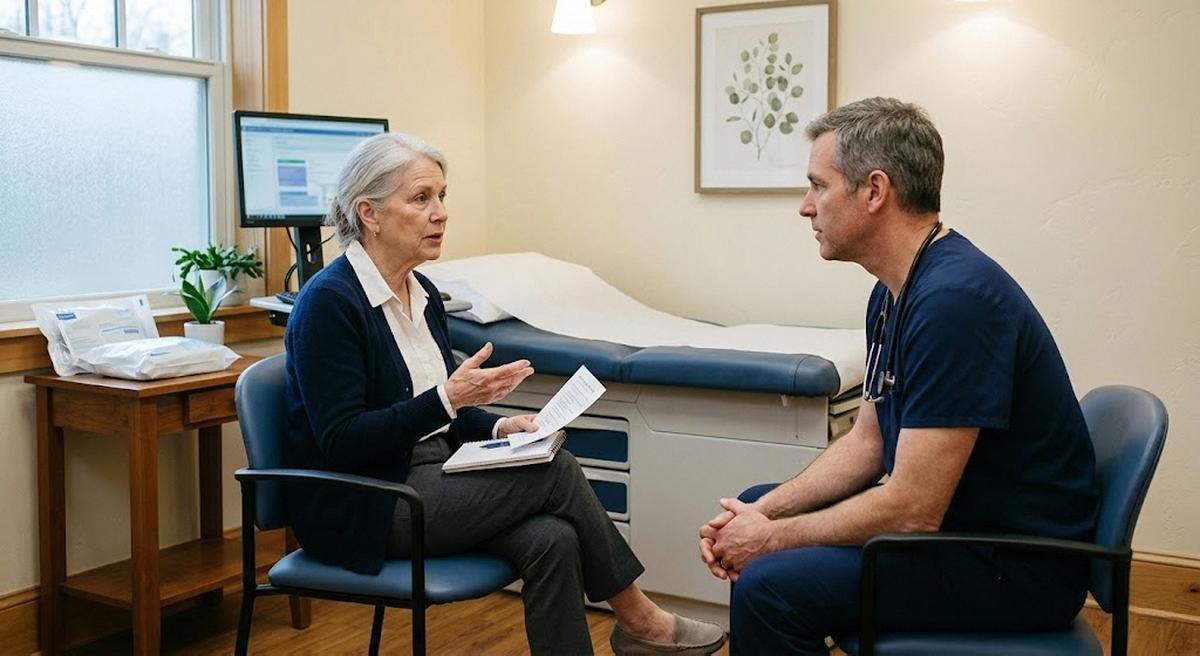
The letter arrived on a Thursday afternoon, tucked between a credit card offer and a utility bill. Agnes Petroski, 78, a retired school secretary from New Haven, had received a notice from her Medicare Advantage plan listing "expanded telehealth benefits" in a font so small she needed her reading glasses and a desk lamp. She brought it to my office the following Monday and set it on the desk. "Benjamin," she said, "I can barely get my email to work. Now they want me to see my doctor on a computer?"
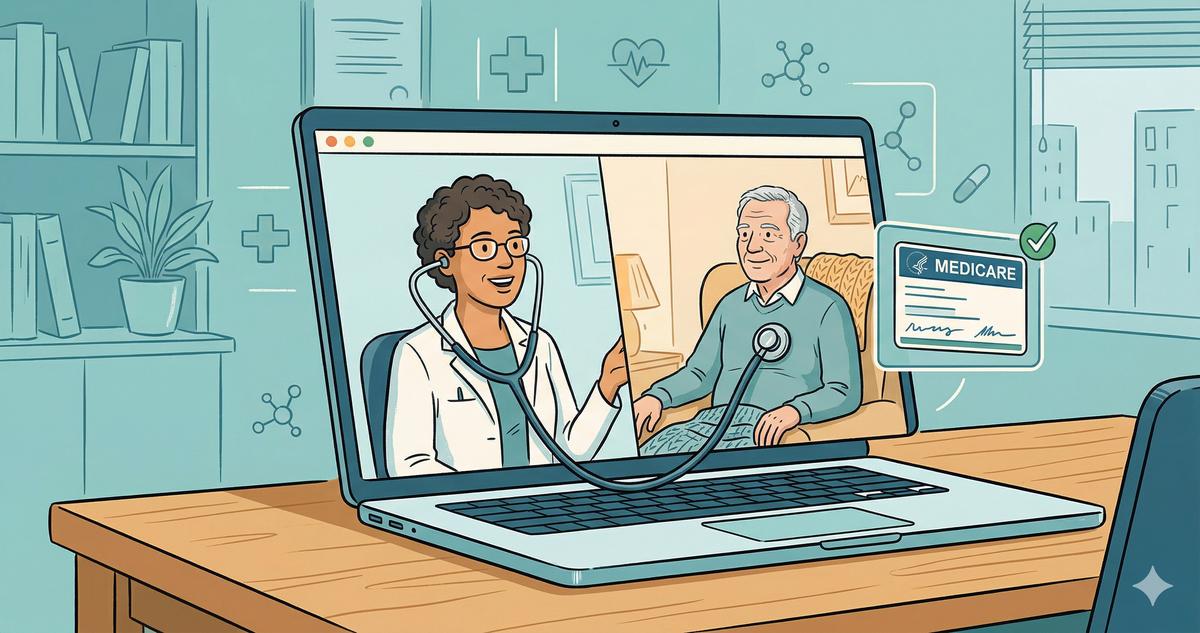
I hear some version of this every month. And the honest answer is: yes, Medicare does want you to see your doctor on a computer. Or a tablet. Or even just a phone. As of 2026, Medicare covers more telehealth services than at any point in its six-decade history, and the rules have shifted so dramatically since the pandemic that most of what you think you know about telehealth eligibility is probably outdated.
The good news? You don't need to be a tech wizard. You don't even need a webcam. But you do need to understand what's covered, what it costs, and how to avoid the gaps that catch people off guard. So here's what I'd tell Agnes — and what I'd tell you.
What Actually Changed in 2026
The Consolidated Appropriations Act of 2026, signed by President Trump on February 3, 2026, extended most of Medicare's pandemic-era telehealth flexibilities through December 31, 2027. Before the pandemic, Medicare telehealth was restricted almost entirely to people in rural areas who traveled to an approved medical facility — a clinic, a hospital, a doctor's office — to receive care via video link. Your living room didn't qualify.
That restriction is gone. Through 2027, you can receive telehealth services from anywhere in the United States, including your home, your daughter's guest room in Arizona, or a hotel in Savannah. No geographic limitation. No requirement to drive to a clinic to sit in front of someone else's screen.
The 2026 Physician Fee Schedule Final Rule went further. CMS permanently removed prior frequency limits on certain telehealth services — subsequent inpatient visits, nursing facility visits, and critical care consultations can now be delivered via telehealth without the old caps. Permanently. Not "until Congress extends it again." Actually permanent.
One more thing worth knowing: the CONNECT for Health Act of 2025, which has 69 Senate cosponsors and 201 House cosponsors as of early 2026, would make many of these temporary extensions permanent across the board. It hasn't passed yet. But 270 bipartisan cosponsors is not nothing.
Which Services Are Covered
The CMS Medicare Telehealth Services List now includes more than 250 billing codes. Not all of them will matter to you, but here are the categories that come up most often in my practice:
Primary care visits. Your annual wellness visit, follow-up appointments for chronic conditions, medication reviews — all eligible via telehealth through 2027.
Mental and behavioral health. This is where the expansion is most significant, and it's permanent. Medicare now covers therapy, psychiatric evaluations, counseling for substance use disorders, and behavioral health integration services via telehealth from your home. No geographic restriction. No sunset date. Audio-only is allowed if you can't use or don't want video.
Chronic care management. If you have two or more chronic conditions — diabetes and hypertension, say, or COPD and depression — your provider can bill Medicare for chronic care management services delivered remotely. These codes aren't even subject to the standard Section 1834(m) telehealth restrictions, which means they don't depend on the 2027 extension expiring or not.
Remote patient monitoring. Medicare covers devices and monitoring for conditions like high blood pressure, diabetes, and heart failure. The 2026 fee schedule expanded Remote Therapeutic Monitoring codes to allow shorter monitoring periods of 2 to 15 days, down from the previous 16-day minimum. That's a quiet change, but it matters if you're recovering from a procedure or adjusting medication.
Speech-language pathology and audiology. New for 2026: CMS permanently added select audiology and speech-language pathology CPT codes to the telehealth list, including codes for auditory osseointegrated devices.
What's not covered via telehealth? Physical examinations that require hands-on contact. Lab work, obviously. Imaging. Procedures. Most initial evaluations still need to happen in person — actually, I should clarify that. For mental health, Medicare has delayed the in-person visit requirement until January 1, 2028. So for behavioral health, you can start and continue care via telehealth without ever visiting the office in person. For everything else, your provider will likely want to see you at least once before switching to virtual follow-ups.
What It Costs You
Telehealth visits under Medicare cost exactly what in-person visits cost. No more, no less. Some people assume virtual care is cheaper. It isn't — at least not from Medicare's perspective.
Under Original Medicare (Parts A and B), here's what you'll pay in 2026:
- Part B deductible: $283 per year (up from $257 in 2025)
- After the deductible: 20% of the Medicare-approved amount for the visit
- If you have a Medigap plan: Your supplement covers part or all of that 20%, depending on the plan letter
So a telehealth visit billed at $150 would cost you $30 out of pocket after you've met the deductible — same as walking into the office. The savings come from not paying for gas, parking, or the three hours of your Tuesday you'll never get back.
If you have a Medicare Advantage plan, your cost-sharing depends entirely on your specific plan. Some MA plans charge $0 copays for telehealth visits. Others charge $20 to $50. UnitedHealthcare, the largest MA insurer, announced in October 2025 that it would maintain expanded telehealth benefits for in-home medical and mental health services through 2026. Check your plan's Evidence of Coverage document — page 4 or 5 usually has the telehealth copay listed, though I've seen plans bury it in the supplemental benefits section.
The Audio-Only Option Most People Don't Know About
This is the part I wish more of my clients understood. You do not need a computer, a tablet, or a smartphone with a camera to use Medicare telehealth. A regular telephone works.
For mental and behavioral health services, audio-only telehealth is now permanently covered by Medicare. Your therapist, psychiatrist, or substance use counselor can treat you over the phone, and Medicare will pay for it the same way it pays for a video visit. The only condition: your provider must document that video wasn't available or that you didn't consent to video.
For non-behavioral health services — a follow-up with your cardiologist, a medication check with your primary care doctor — audio-only is covered through December 31, 2027, when it's deemed clinically appropriate by the provider.
I had a client, Marjorie, 81, who lives alone in Waterbury and doesn't own a computer. Doesn't want one, either. She'd been skipping follow-up appointments with her endocrinologist because the bus ride to the office took 45 minutes each way, and her knees can't handle that anymore. When I told her she could do the appointment by phone, she looked at me like I'd just invented sliced bread. "You mean I just call her?" Yes. You just call her. (Well, she calls you, technically. But yes.)
Marjorie has had four phone appointments with her endocrinologist since September. Her A1C dropped from 8.1 to 7.4. Not because the phone call was magic — because she actually started showing up.
What You Need to Get Started
For a video visit, you need three things:
- A device with a camera and microphone. A smartphone (iPhone or Android), a tablet (iPad, Samsung Galaxy Tab), or a computer with a webcam. Most devices made after 2018 have everything built in. If you're using a desktop computer from 2012, you may need an external webcam — a Logitech C270 runs about $25 at Best Buy.
- An internet connection. You'll want at least 15 Mbps download speed for smooth video. Not sure what your speed is? Go to speedtest.net on your device and hit the big "Go" button. If the number is below 10, video visits will be frustrating. Consider upgrading your plan or using a location with better Wi-Fi — your local library, for instance, almost certainly has speeds above 50 Mbps.
- The right app or platform. Your provider will tell you which one. Common platforms include MyChart (used by most hospital systems), Doxy.me, Teladoc, and Amwell. These are HIPAA-compliant, which means FaceTime and Zoom's free version generally don't qualify for Medicare-covered visits. Your provider's office will usually send you a link by email or text before the appointment.
For an audio-only visit, you need a phone. That's it. A landline works fine.
One thing I tell everyone: do a test run before your first real appointment. Call the provider's office, ask for a technology check, and make sure your camera and microphone work. Finding out your webcam is broken at 10:02 AM when your appointment started at 10:00 is not the experience you want.
Medicare Advantage Plans: Often Better for Telehealth
Original Medicare's telehealth coverage is solid now, but Medicare Advantage plans often go further. MA plans have been allowed to offer telehealth as a supplemental benefit since 2020, and many have leaned into it aggressively.
What MA plans can offer that Original Medicare typically doesn't:
- $0 copay telehealth visits (some plans, not all)
- 24/7 nurse hotlines and virtual urgent care
- Integrated telehealth platforms with appointment scheduling, prescription management, and messaging — all in one app
- Broader provider networks for virtual care, including national telehealth companies like Teladoc and MDLive
- Remote monitoring devices shipped to your home at no cost for qualifying conditions
Not every MA plan offers all of these. And some plans that market flashy telehealth benefits have narrow in-person networks, which is a problem when you need care that can't happen through a screen. Read the Evidence of Coverage. All of it. I know it's 200 pages. Read it anyway — or at least the telehealth and supplemental benefits sections.
If your MA plan is ending this year — and roughly 3 million seniors are losing their plans in 2026 — telehealth benefits should be one of the criteria you evaluate when choosing a new plan. Not the only criterion, but a real one.
How to Find a Provider Who Does Telehealth Through Medicare
Not every doctor offers telehealth. Not every doctor who offers telehealth accepts Medicare. And not every doctor who accepts Medicare and offers telehealth is any good at it. Three hurdles.
Here's how to clear them:
Start with Medicare.gov. The Medicare physician comparison tool lets you search by provider, specialty, and location. Filter for providers who accept Medicare assignment — this means they agree to the Medicare-approved amount as full payment, which protects you from balance billing.
Ask your current doctor. Many providers added telehealth during the pandemic and still offer it. Call the office and ask: "Do you offer telehealth appointments covered by Medicare?" If the answer is yes, ask which platform they use and whether they do audio-only visits.
Try your plan's provider directory. If you have Medicare Advantage, your plan's website will have a searchable directory. Look for the telehealth filter — Aetna, Humana, and UnitedHealthcare all have one.
Consider telehealth-first platforms. Companies like Teladoc, Amwell, and MDLive contract with many Medicare Advantage plans. Some Original Medicare beneficiaries can use them too, though coverage varies. Check before you book.
For mental health specifically, the shortage of therapists who accept Medicare is well-documented. Telehealth helps here because your provider doesn't need to be in your town — they just need to be licensed in your state. A therapist in Hartford can treat a patient in New Haven without either of them driving anywhere. The SAMHSA treatment locator and Psychology Today's directory both let you filter by insurance and telehealth availability.
Mental Health: The Biggest Win
I want to spend a moment on this because it's the single most important telehealth expansion in Medicare's history, and I don't think enough people understand it.
Before the pandemic, Medicare covered mental health via telehealth only if you were in a rural area, at an approved originating site (not your home), and using a video connection. Audio-only didn't count. For a 75-year-old widow with depression who didn't drive and lived in suburban Connecticut, these rules meant telehealth might as well not have existed.
Now? Mental health telehealth from home is permanent. Audio-only is permanent. No geographic restriction — permanent. And the in-person visit requirement that was supposed to kick in has been delayed until 2028.
Lucille, a former client's mother, is 83 and was diagnosed with moderate depression after her husband died in 2024. She refused to see a therapist in person. Wouldn't go. Her daughter tried for months. When I mentioned that Medicare now covers therapy by phone — not even video, just a regular phone call — Lucille agreed to try it. She's been doing weekly sessions with a licensed clinical social worker for four months. Her daughter told me last week, "She sounds like herself again."
The numbers back this up. A 2024 KFF analysis found that telehealth accounted for more than 35% of all Medicare mental health visits, up from under 1% before the pandemic. People who wouldn't walk into a therapist's office will pick up the phone. And Medicare, for once, is paying for it.
If you're dealing with depression, anxiety, grief, substance use, or any behavioral health concern, ask your doctor about a telehealth referral. The Medicare changes guide has additional context on the mental health provisions. Don't wait for perfect — call.
Scams, Privacy, and What to Watch For
Any time Medicare expands coverage, scammers follow. Telehealth is no exception.
Common telehealth scams targeting seniors in 2026:
- Unsolicited calls offering "free Medicare telehealth consultations" and asking for your Medicare number. Legitimate providers don't cold-call you. Ever.
- Fake telehealth platforms that look professional but exist solely to harvest your personal information.
- "Providers" who conduct a brief phone call and then bill Medicare for services never rendered — you may not even know it happened until you check your Medicare Summary Notice.
How to protect yourself: never give your Medicare number to someone who calls you unsolicited. Always verify a provider through Medicare.gov or your plan's directory before your first visit. Review your Medicare Summary Notices quarterly — they're mailed to you, and you can also access them at Medicare.gov. If something looks wrong, call 1-800-MEDICARE (1-800-633-4227) or read our guide on how to spot a Medicare scam.
On privacy: Medicare-covered telehealth must use HIPAA-compliant platforms. Your provider cannot legally conduct a covered visit over regular FaceTime, WhatsApp, or standard Zoom. If a provider suggests using one of these for a Medicare-billed visit, that's a red flag. Ask what platform they use and verify it's designed for healthcare.
What to Do This Week
You don't need to overhaul your healthcare routine. You need to take one or two steps.
- Call your doctor's office and ask if they offer telehealth appointments covered by Medicare. If yes, ask which platform and whether audio-only is available.
- Check your Medicare Advantage plan's Evidence of Coverage for telehealth copays, covered services, and any limitations. If you're on Original Medicare, your cost is 20% after the $283 annual deductible.
- Test your equipment. If you want video visits, open your phone or tablet's camera app and make sure it works. Check your internet speed at speedtest.net.
- Review your Medicare Summary Notices. Look for telehealth claims you didn't authorize.
- If you need mental health care, ask for a telehealth referral now. Coverage is permanent. Audio-only is an option. Your provider doesn't need to be in your zip code — just your state.
Agnes, the retired school secretary who walked into my office with that crumpled plan notice? She did her first telehealth visit in November — audio-only, with her primary care doctor, from her kitchen table. It took 22 minutes. She called me afterward and said, "That was easier than calling the cable company." High praise, honestly.
The coverage is there. The technology tools are simpler than you think. The rules, for once, are on your side. You just have to use them.