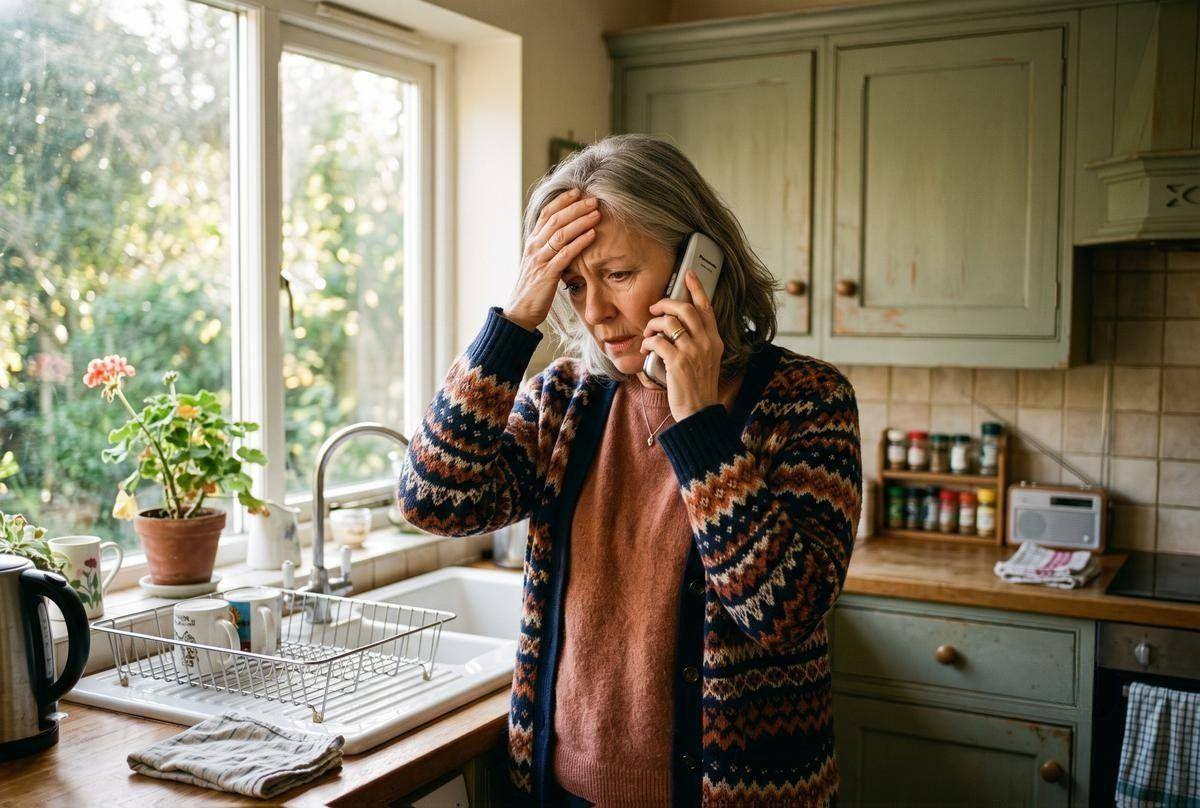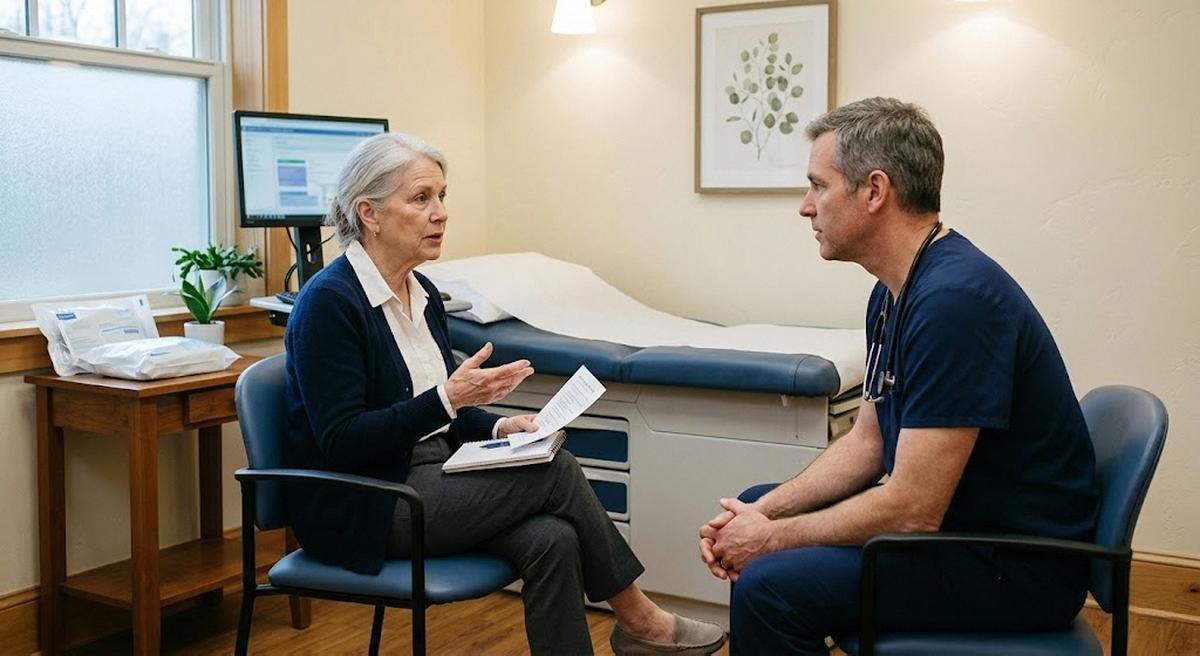
Harriet asked the question on a Tuesday morning in late February, right in the middle of our Seasons of Grace circle. She'd been quiet the whole session, which was unusual for her. Harriet is the kind of woman who arrives with opinions already in formation and a pocketbook full of newspaper clippings to back them up. But she waited until the coffee urn was sputtering empty and most everyone had started reaching for their coats. Then she said, "My doctor told me my tiredness is just part of getting older. But I've been tired before, and this isn't that."
The room went still. Not because it was a shocking thing to say. Because every person in our circle had heard some version of those words from their own doctor. And most of them had believed it.
The Three Words Closing the Door
"It's just aging."
Three words. They sound gentle. They sound reassuring. And sometimes they're accurate, because our bodies do change, joints stiffen, recovery takes longer, sleep shifts. Fair enough.
But when those words become a reflex, when a doctor reaches for them before reaching for a blood panel or a referral, they stop being a diagnosis. They become a wall.
The research backs up what many of us already feel. A 2015 study in the Journal of General Internal Medicine found physicians spent an average of 18.7 minutes with patients 65 and older compared to 22.5 minutes with younger adults. A systematic review cited in the WHO's 2021 Global Report on Ageism found age alone, not health status, not prognosis, determined who received medical procedures or treatments in 85 percent of 149 studies reviewed. About 20 percent of adults over 50 report experiencing age-based discrimination in healthcare settings.
One in five. If those numbers were attached to any other group, we'd call it a crisis.
Having been in this work for most of my adult life, I've watched the pattern play out hundreds of times. A woman mentions bone-deep fatigue to her primary care doctor. He nods, checks a box, tells her it's normal for her age. A man describes waking up gasping at 3 AM. The response: "Sleep changes as we get older." Joint pain, memory fog, sudden weight changes, mood shifts rolling in like weather. All filed under the same easy label.
The cost of easy labels is measured in years. Years of unnecessary suffering from conditions a blood test could have caught.
What Gets Buried Under "Just Aging"
Let me walk through the conditions I've seen most often brushed aside, because the list is longer than most people expect.
Thyroid disorders. The American Thyroid Association estimates up to 20 percent of women over 60 have some form of thyroid dysfunction. Hypothyroidism causes fatigue, weight gain, dry skin, constipation, depression, and cognitive fog. Every single one of those symptoms gets mistaken for aging. A simple TSH blood test catches it. Treatment is a daily pill costing a few dollars a month. Harvard Health has reported up to one in four nursing home residents may have undiagnosed hypothyroidism. One in four.
Vitamin B12 deficiency. Between 10 and 15 percent of adults over 60 are deficient, according to the National Institutes of Health. Symptoms include fatigue, memory problems, balance issues, tingling in the hands and feet, mood changes. The overlap with how people expect aging to feel is almost perfect, which is exactly why it gets missed. B12 deficiency left untreated causes permanent nerve damage. Treated early, it resolves.
Sleep apnea. Roughly 56 percent of adults over 65 have some degree of obstructive sleep apnea, per a 2019 review in Sleep Medicine Reviews. Many don't know it. They just know they're exhausted, can't concentrate, wake up with headaches. Untreated sleep apnea doubles stroke risk and raises the risk of heart failure. If you've been told your sleep troubles are just part of getting older, it's worth asking whether anyone has actually ruled out apnea with a sleep study.
Depression. The CDC reports around 7 percent of adults 65 and older experience a major depressive episode each year, but actual numbers are almost certainly higher because depression in older adults presents differently. Less sadness, more irritability. Less crying, more withdrawal. Physical complaints like stomach trouble, headaches, and vague pain with no clear cause. If your doctor hasn't screened you for depression or anxiety in the past year, ask for it.
Heart disease in women. Women over 65 are more likely than men to die within a year of a heart attack, partly because their symptoms get dismissed. Women's cardiac symptoms frequently include jaw pain, nausea, back pain, and extreme fatigue rather than the classic chest-clutching presentation. Research published in Circulation found women wait an average of 53 minutes longer than men to receive emergency treatment for heart attacks. Fifty-three minutes! The anger I feel about those numbers hasn't faded in all the years I've been reading studies like it.
Autoimmune conditions. Rheumatoid arthritis, polymyalgia rheumatica, and other autoimmune disorders can emerge or worsen after 60. The aching and stiffness they cause get routinely attributed to osteoarthritis or "wear and tear." But autoimmune joint pain responds to very different treatment than degenerative disease, and early intervention changes outcomes.
Urinary issues. Frequency, urgency, incontinence. Treatable with pelvic floor therapy, medication, or a simple procedure. The number of seniors I've known who accepted bladder problems as permanent because no one told them otherwise is genuinely upsetting!
Normal Aging Versus a Problem Worth Solving
I don't want to swing the pendulum too far. Some changes really are age-related. Our bodies do shift, and pretending otherwise isn't helpful either.
Gradual loss of muscle mass after 30, about 3 to 8 percent per decade and accelerating after 60, is real, though resistance training and protein can slow it significantly. Mild changes in sleep patterns, waking a bit earlier, lighter sleep. Taking a beat longer to recall a name, then getting it. Needing reading glasses. Hearing less in noisy rooms.
What isn't normal: sudden or rapid changes. Fatigue unresponsive to rest. Pain disrupting daily life. Memory problems interfering with functioning, not just retrieval speed. Mood shifts lasting weeks. Any symptom making you say what Harriet said: "I've felt this before, and this isn't that."
The line between normal aging and a treatable condition isn't always obvious. But we have doctors for exactly this reason. And when your doctor draws the line without investigating, without running tests or asking follow-up questions, we push.
Jerome Didn't Push. Then He Did.
A retired electrician named Jerome started coming to Seasons of Grace about three years ago, mostly because his wife told him he had to get out of the house or she was going to lose her mind. He was 74 and had been dealing with what he called "the slows." Tired all the time. Foggy-headed. No appetite. Achy in a way he couldn't locate. He'd mentioned it to his doctor more than once and got the standard line: You're 74, what do you expect?
Jerome believed it. For two years he believed it.
Then Maxine, another member of our circle and a retired school principal with very little patience for resignation, said something I haven't forgotten. She looked at Jerome across the room and said, "Did your doctor run bloodwork, or did he just look at your birthday?"
Everybody laughed. Jerome laughed. But the next week he went back and specifically requested a full metabolic panel and thyroid screen. His TSH came back at 11.2, significantly elevated. Classic hypothyroidism. Within six weeks of starting levothyroxine, he told our group, "I feel like somebody turned the lights back on."
Two years of lights-off living. Because nobody looked past his age.
What to Say When You're in the Room
I am not a doctor. Let me be clear about where I stand: I'm the one in the folding chair, not the white coat. But I've spent forty years preparing people for appointments, sitting in waiting rooms with them, and hearing what happened after. Here are phrases worth practicing. Not magic words, but sentences redirecting the conversation from assumption to investigation.
When a symptom gets waved off:
"I hear you, but this feels different from a year ago. Can we run some tests to rule things out?"
When you want specifics:
"What tests would show whether this condition is treatable rather than normal aging?"
When you want it documented:
"I'd like you to note in my chart I reported this symptom and we decided not to test further." Powerful move. Doctors pay attention when a documented refusal to test goes into the medical record.
When you're being rushed:
"I have two more concerns. Can we schedule a longer appointment if we're running out of time today?"
When you feel unheard:
"I respect your experience, but I'd like a second opinion on this."
None of these require raising your voice. You don't have to be confrontational. Specific and steady. Not rude. Self-preservation.
Before You Walk In
The fifteen minutes before a doctor's appointment matter almost as much as the appointment itself. What I tell every person at Seasons of Grace, every time:
Write it down. Not a novel. A list. Symptoms, when they started, how often, how severe on a 1-to-10 scale. Bring the paper and hand it over. Doctors respond differently to written specifics than to verbal generalities.
Bring someone. A daughter, a friend, a neighbor. Not to speak for you but to listen alongside you. Two sets of ears catch what one set misses, and a companion can help you remember the details afterward. I've lost count of the times someone has told me, "They said something important but I can't quite recall what it was."
Ask for a longer slot. When you schedule, say: "I have several things to discuss. Can I book a 30-minute appointment instead of 15?" Many practices accommodate this if you ask.
Know your medications and supplements. All of them, including the ones from the health food store. Drug interactions are more common in older adults taking multiple medications, and a supplement your doctor doesn't know about could be causing the very symptom you came in for.
Request copies. Printed visit summary, test results, referrals. Creates accountability and gives you something to review later.
The Geriatrician Gap
Here is a number worth sitting with. There are roughly 7,300 board-certified geriatricians in the United States for a population of over 56 million adults aged 65 and older. One geriatrician for every 7,700 seniors. By comparison, there's approximately one pediatrician for every 1,200 children.
Geriatricians are trained to understand the difference between aging and disease. They expect complexity: multiple conditions, multiple medications, symptoms overlapping and interacting in ways a fifteen-minute visit can't untangle. A good geriatrician won't dismiss your fatigue any more than a good pediatrician would dismiss a child's fever.
Finding one can be difficult, especially outside of cities. The American Geriatrics Society's Health in Aging Foundation maintains a referral tool at healthinaging.org. Your Area Agency on Aging can also connect you with geriatric specialists. If a geriatrician isn't available where you live, look for an internist or family practice doctor with additional training or a stated interest in older adults. They exist. They are worth the search. Medicare covers geriatric consultations, and most don't require a referral.
One Thing This Week
I could end with an affirmation. I usually do. But right now I want to leave you with something to carry into an actual room.
Before your next doctor's appointment, or this week if you don't have one on the calendar, write down one symptom you've been living with. One you either haven't mentioned or one dismissed the last time you brought it up. Put it on an index card. Describe it the way Harriet did: "I've felt this before, and this isn't that."
Bring the card with you. Or call and make the appointment specifically to discuss it. Ask for the tests. Ask for the note in your chart. Ask the question Maxine asked Jerome: did anyone actually check, or did they just look at your birthday?
Your body has been talking to you for a long time. It knows things. The least we can do — the very least — is make sure someone with a stethoscope is actually, genuinely, finally listening!