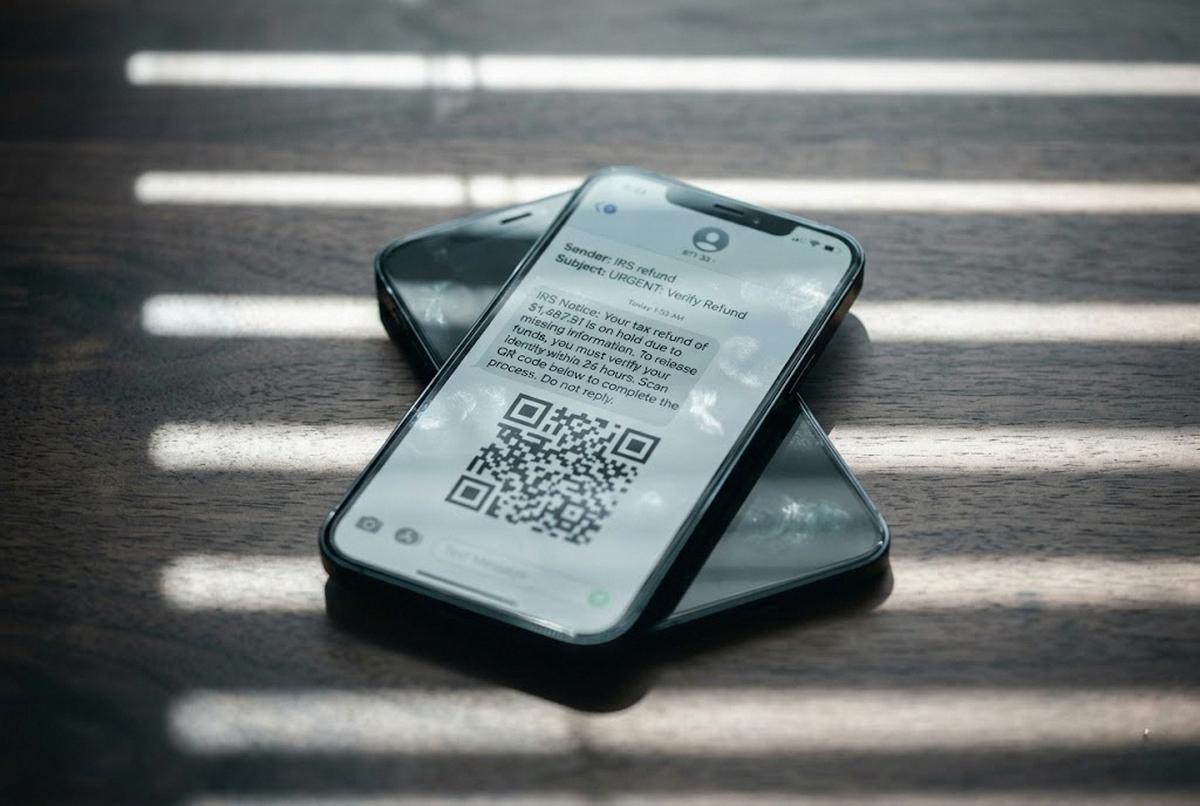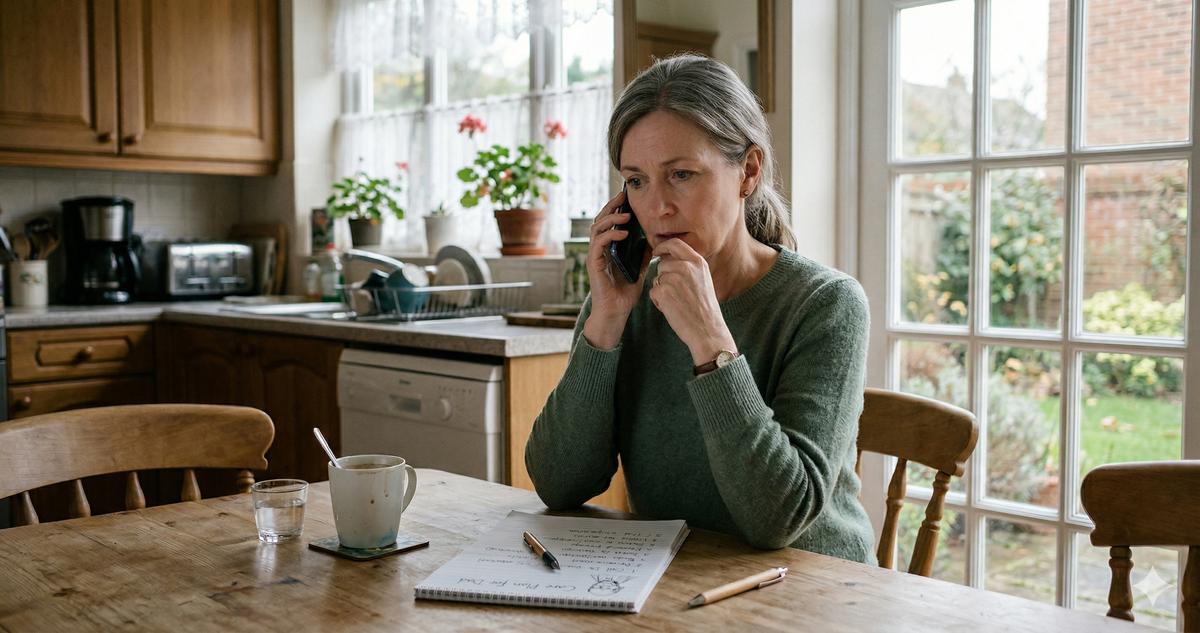
The pendant is on the dresser. Again. My mom took it off Tuesday morning to shower, set it on the corner of her dresser next to her rosary and a stack of mail, and never put it back on. I noticed Saturday when I drove out to fix the printer (the printer is always the reason). Five days of no fall coverage in a house where she gardens alone, climbs a step stool to reach the spice cabinet, and walks down the basement stairs to do laundry. She wasn't being defiant. She just forgot. And when I asked her about it, she said, "It's bulky. It catches on my collar."
This is the failure mode nobody in the medical alert ads talks about. The device only works if you're wearing it. A meaningful slice of seniors stop wearing the pendant within months. Some studies put daily-wear at around two-thirds of owners, which means roughly a third of the people who paid for the thing are not getting any value from it on an average day. My mom isn't unusual. She's the median.
Which gets me to the category I've been quietly testing for the better part of a year: smart home sensors that watch for falls without anything you have to put on.
Why the Wearable Pendant Keeps Failing
The CDC reports the age-adjusted fall death rate among adults 65+ rose 21% between 2018 and 2024, with over 43,000 preventable fall deaths in 2024 alone. About 60% of falls happen at home. The dominant solution (a button on a lanyard) has a compliance gap. Three reasons I hear constantly:
- "I forget to put it back on after I shower." Most pendants aren't waterproof enough for steam.
- "It's a necklace. I'm a man." My dad's words. He clipped his Medical Guardian to his belt instead.
- "I'm in my own house. I don't need it." This is the one that ends up in the obituary.
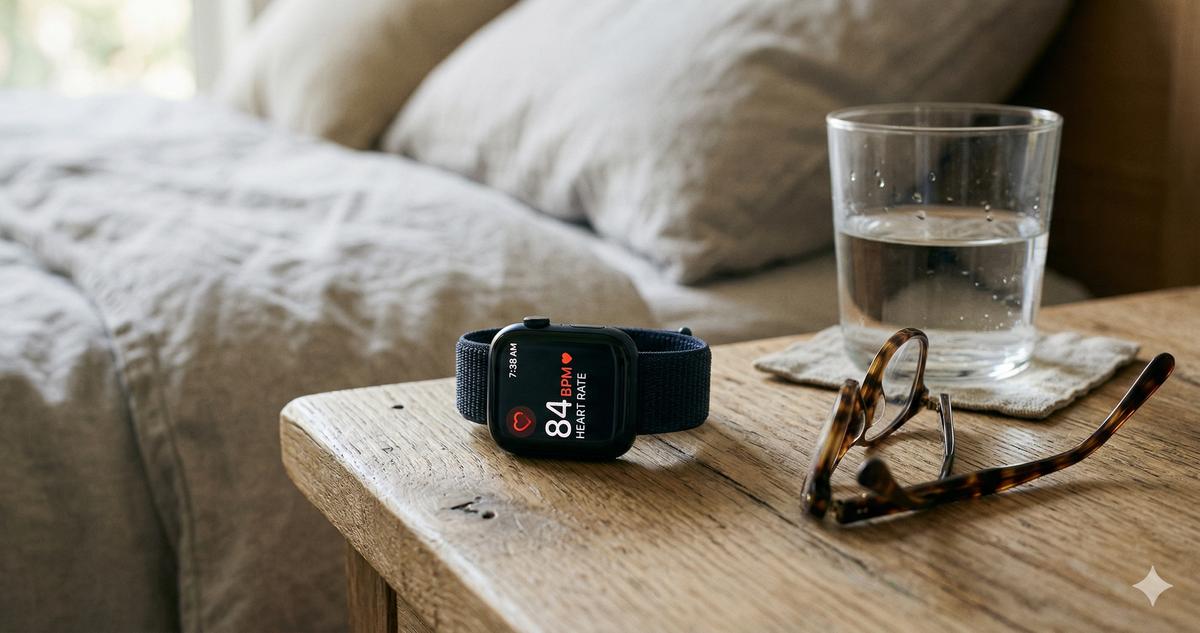
Apple Watch fall detection is good (I've covered Apple Watch health features for seniors at length), but it still needs the watch on the person at the moment of the fall. Same problem, different jewelry. What if the room watched instead?
How Radar-Based Fall Detection Actually Works
I'm a chemical engineer by training, which mostly means I read spec sheets for fun. So when the radar fall-detection category started getting interesting around 2022, I went down a rabbit hole. Here is the engineer-friendly version, stripped of the marketing.
A millimeter-wave radar unit (typical operating frequency: 60 to 64 GHz) emits low-power radio waves and listens for the reflections. The reflections come back in milliseconds, and the device builds a sparse 3D "point cloud," basically a swarm of dots representing where solid objects are in the room. Not pixels. Not a video. Dots in space. The software then watches how those dots move over time. A person walking has a characteristic pattern. A person collapsing to the floor and not moving has a very specific pattern, and that's what triggers the fall alert.
Three things matter:
- No camera. The device cannot see your face, your body, your nightclothes, or whether the bathroom door is open. Vayyar, the Israeli company behind the Walabot HOME and Vayyar Care platforms, has been explicit about this privacy architecture. The technology was designed for bathrooms and bedrooms specifically because cameras are non-starters in those rooms.
- Works through obstructions. Steam, shower curtains, low light, no light. Doesn't matter. RF waves don't care about visibility.
- Whole-room coverage. A single wall- or ceiling-mounted unit covers a typical bathroom or bedroom.
The tradeoffs are real. I'll get to those.
The Three Devices Worth Your Attention
Most of what's marketed as "smart home fall detection" in 2026 is either repackaged motion sensors (not the same thing) or enterprise gear sold to skilled nursing facilities. Three consumer-accessible products are doing the actual radar and ambient-sensor work.
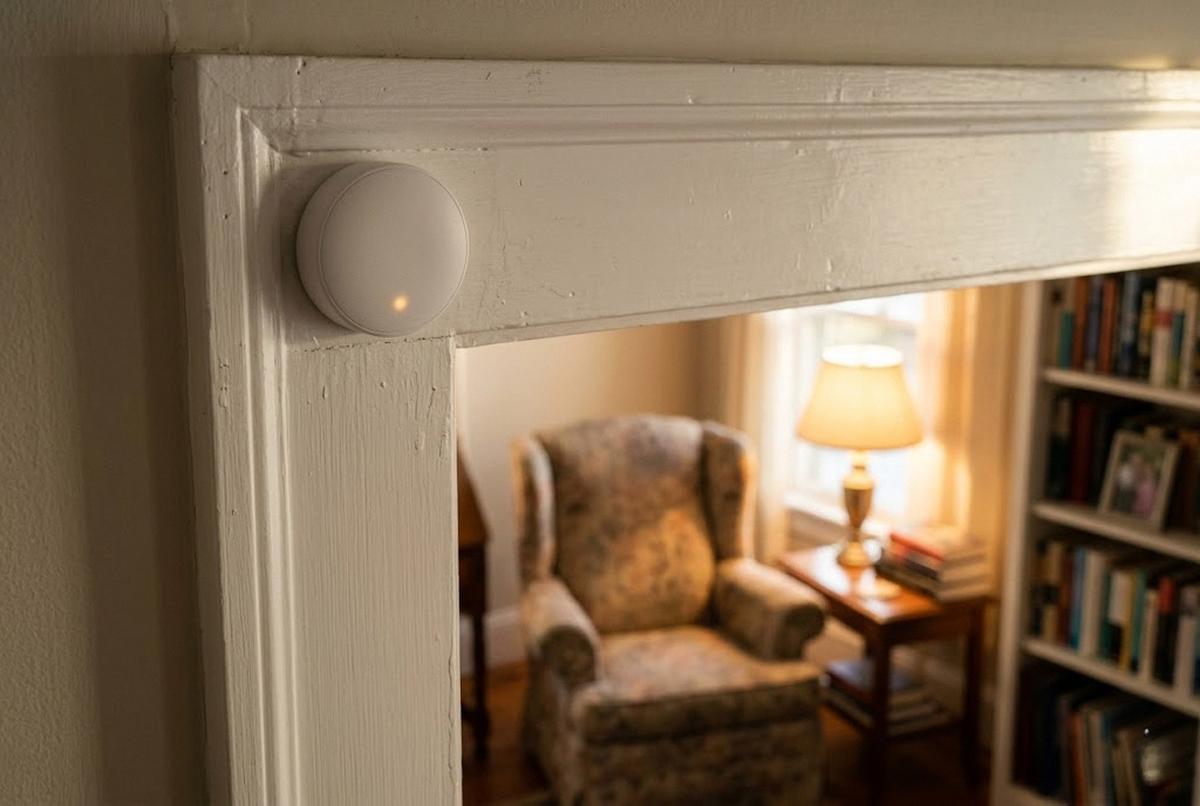
Walabot HOME (Vayyar). Wall-mounted radar unit, roughly the size of a small tablet, designed for the bathroom specifically. One-time hardware cost, no monthly fee on the base version. Plug it in, mount it on the wall, configure Wi-Fi, set your emergency contacts. When it detects a fall, it speaks to the person on the floor ("Are you okay? Help is being called") and dials your contacts if it doesn't get a response. List price has been around $249, with frequent retailer discounts to $179–$199. A monitoring-center upgrade is available if you want professional response.
Vayyar Care. Same underlying 4D imaging radar as Walabot, sold through partner channels (Amazon Alexa Together, K4Connect, TLS Global) and typically deployed at scale in senior living. For a single home, the Walabot HOME is the more practical buy. Vayyar Care is what you'd see if a parent moves into a community that's invested in the technology, so it's worth knowing about for tour questions.
Nobi smart lamp (Belgium). A different shape of solution. Nobi looks like a normal modern ceiling lamp. Inside the housing: AI sensors and an algorithm trained to recognize falls. When it detects one, it lights up the room, asks if the person is okay, and contacts caregivers if there's no response. Nobi has emphasized fall prevention too: the lamp turns on automatically at night when someone gets out of bed, which addresses the "got up at 3 AM in the dark and tripped on the rug" pattern. Pricing is the catch. Nobi is sold primarily as a leased subscription: roughly $240/month for one bedroom, up to $525/month for a bedroom-bathroom-living-room package, plus a $25/month service fee. Outright purchase of the ceiling unit lists around $2,287. It is not a $250 Walabot.
A fourth name worth mentioning: CarePredict is a wrist-worn ambient hybrid that detects falls AND learns activity-of-daily-living patterns to flag changes (eating less, moving less, bathroom visits up). Closer to a wearable than a true ambient sensor, but interesting if you want trend data, not just emergency alerts.
What These Sensors Actually Cost (All-In)
Let me build the spreadsheet I built for myself. First-year totals, real numbers, no marketing math.
- Walabot HOME (one bathroom): ~$199 hardware, $0/month basic. First year: ~$199. The monitoring upgrade adds roughly $20–$25/month.
- Walabot HOME (bathroom + bedroom): Two units = ~$398 hardware. Still no monthly on the base tier.
- Nobi (1 bedroom subscription): ~$240/month × 12 = $2,880 first year. After year one, only the $25/month service fee continues, in theory.
- Nobi (outright purchase, 1 unit): ~$2,287 hardware + $25/month service = ~$2,587 first year, $300/year after.
- CarePredict: ~$450 setup + $69.95/month = ~$1,290 first year.
- Apple Watch Series 10 + cellular (for comparison): $429 device + ~$144/year cellular = ~$573 first year.
- Traditional pendant (for comparison): ~$25–$40/month, no hardware. ~$300–$480/year.
The Walabot is the one I keep coming back to as a starting point. Roughly $200, no monthly, addresses the bathroom (where the falls happen), no charging, no wearing, no remembering. The Nobi is genuinely better technology, and if cost is not the constraint, I would buy one for a parent living alone, especially one with dementia risk. But $2,500+ for the first year of one room is going to price most families out.
A quick note on insurance. Original Medicare does not cover medical alert devices, period. Medicare Advantage plans increasingly offer "OTC" or "flex" allowances covering personal emergency response systems, but coverage for radar units specifically is rare. Call the plan and ask whether the Walabot HOME qualifies as a covered PERS device. I have heard a small number of yes answers and many shrugs. If your parent qualifies for Medicaid HCBS waivers, some states reimburse a Walabot-class device as part of a home modification grant. Ask your state's Area Agency on Aging.
The Limitations Nobody Tells You About
I promised an honest piece, so here is the part I make people read before they spend the money.
Pets. A medium or large dog moving around the room can trigger false detections on radar systems. Vayyar has improved this dramatically. Walabot's algorithm differentiates pets from humans by size and movement patterns, and newer firmware handles a 50-pound dog without issue. A Great Dane the size of a small adult? Edge case.
Multi-occupant rooms. Radar fall detection is designed around one or two people in the field of view. Three or more people moving in the same room (a family gathering, a holiday dinner) increases false-positive risk. Most older adults living alone or with one spouse will not run into this. A multi-generational household will.
Coverage zones. A single Walabot covers one room. Bathroom plus bedroom plus kitchen means three units. Nobi has the same room-by-room math. This is not a single-device whole-home solution.
Install complexity. Walabot mounts to a wall and plugs into power. Easy if there's an outlet near where you want it. Less easy if the bathroom outlet is across the room from the optimal mounting position, which is usually high on a wall opposite the toilet and shower. I ran an extension cord on the first install. It looked terrible. The second time I called an electrician to add a high outlet, $185 in labor, worth it.
Wi-Fi dependency. All of these devices need working Wi-Fi to send alerts. If the home internet is flaky (DSL, old routers, dead zones), the device cannot do its job. Treat the router as part of the safety system. Replace it if it's old.
Slow falls. Same caveat as wearable fall detection. A slow buckling slide to the floor (knees giving out, controlled descent) is harder for any algorithm to catch than an impact fall. Radar handles this better than wrist-worn accelerometers in my testing, but it is not 100%. Nothing is.
These systems do not replace the strength and balance work that prevents the fall from happening in the first place. The detection is the safety net. The prevention is the floor. If you haven't read it, our piece on falls prevention exercises for seniors is the thing I send to every family member who asks me what to buy. The exercises are free. The radar unit is $200. Do both.
Radar vs. Apple Watch
The most common question I get: should I buy my mom an Apple Watch with fall detection or a Walabot for her bathroom?
Yes.
Not a joke. They solve different problems. The Apple Watch goes everywhere with her: the grocery store, the church parking lot, her sister's house in Saginaw. The radar unit covers the bathroom at 3 AM when the watch is on the nightstand charging. Different coverage, different failure modes. If forced to pick one, I lean Walabot for a parent who lives alone with a bathroom-fall risk profile, and Apple Watch for a parent who is more active outside the home. The combined cost (roughly $700 first year for a Walabot plus an Apple Watch SE) is less than one Nobi room and covers about 80% of the realistic risk surface. Granted, this is not the answer the marketing departments want.
What I'm Actually Doing at My Parents' House
My mom's pendant is back on the dresser as I write this. I've stopped fighting it. The Walabot HOME I installed in their hallway bathroom (the one she uses most) has been running for fourteen weeks. It hasn't detected a real fall (good) and has triggered exactly two false alerts (the dog, both times). I tested it once on purpose by lying on the bathroom floor for thirty seconds. It spoke to me. It called my phone. It worked.
I'm not the master of this yet. The category is moving fast and the prices are still too high for the best products. But the answer to "what do I do when my parent won't wear the thing?" is no longer "keep nagging them." The answer is to put the watching in the room itself, and to pair it with the strength training, the lighting fixes, the grab bars, and everything else that adds up to a senior who falls less and gets help faster when they do. For families also looking at companionship tech for an isolated parent, the ElliQ companion robot is a separate conversation, but it sits in the same shelf in my head: passive, room-aware, ambient.
If you're going to start somewhere, start with the bathroom. That's where the falls are. Spend the $200. Plug it in. Then go visit your parents and ask them what's bulky about whatever they're refusing to wear, because the answer is usually fixable, and the answer is almost never that they don't care about being safe. They just want to live in their own home without feeling like a patient. That part, we owe them.