The heat at the Little League field in West Asheville last June was the kind that rises off the metal bleachers in waves. I was sitting two rows up from a woman named Geraldine, seventy-eight, watching her grandson Jaylen play shortstop. She had a thermos of iced tea in her hand and a wide straw hat pulled low. She'd been there since the first inning, cheering when Jaylen made a clean throw to first.
In the third inning she leaned over and asked me what the score was. I told her. Two minutes later she asked again. A minute after that she turned to me, very calmly, and asked whose game we were watching.
Her skin was hot. Not damp. Hot and dry to the touch, the way a stone in the sun is hot. Her shirt collar was bone dry.
I took the thermos out of her hand and called 911 from the bleacher stairs while another grandmother sat with her. Geraldine came home from the hospital three days later. She had been in early heat stroke, and the only reason she has the chance to watch Jaylen play this summer is that the question about the score gave it away.
A Note Before Anything Else
Nothing in this article is a substitute for emergency medical care. If you are with someone right now and any of what follows sounds like the person in front of you, stop reading and call 911. This piece is informational. It is meant to make you faster the next time, not to replace a doctor or a paramedic. Trust your gut. If something feels wrong, the call costs nothing and the wait costs everything.
Why This Hits Older Bodies Harder
The summer body of a sixty-year-old is not the body of a thirty-year-old, and after seventy the gap widens fast. The hypothalamus, the small almond-shaped structure in the brain that regulates body temperature, becomes less responsive with age. Sweat glands produce less. The thirst signal, which used to nudge you toward a glass of water before you needed it, quiets to almost nothing.
The National Institute on Aging puts it directly: older adults are at significantly higher risk for hyperthermia because of all of these layered changes. Add a chronic condition (heart failure, diabetes, kidney disease) and the margin tightens further. Add medication, and several of the body's warning bells get muffled. We covered the medication side in detail in the list of prescriptions that raise heat risk, and that piece pairs directly with this one.
The practical takeaway is simple. An older body in a hot room or a hot car has less time to course-correct than a younger body. The window between fine and not-fine is shorter. The signals are quieter.
Heat Exhaustion: The Warning
Heat exhaustion is your body telling you it is losing the fight but has not yet lost it.
The signs are recognizable if you know what to look for. Heavy sweating, often soaking through a shirt. Skin that is cool, pale, and clammy to the touch (the opposite of what you'd expect on a hot day). A pulse that feels fast and weak under the fingers. Nausea, sometimes a wave of it. Dizziness when standing up. A headache that builds. Muscle cramps in the calves or the thighs. A weakness that arrives heavy, like someone draped a wet blanket across the shoulders.
The person is uncomfortable. They may be irritable. But they are coherent. They can answer questions. They know what year it is. They know whose Little League game they came to watch.
This is the moment to act, fast and calmly. Move them to air conditioning if possible, or deep shade if not. Loosen tight clothing. Get cool (not ice cold) water into them in small sips. Put a damp cool cloth at the back of the neck and the wrists. Have them sit or lie down with their legs elevated.
If the symptoms ease in thirty minutes, you've caught it. If they do not, or if vomiting starts, or if any confusion appears, you are now looking at a different emergency.
Heat Stroke: The Five Signs That Mean Call 911 Now
Heat stroke is what happens when the body has stopped being able to cool itself at all. It is a true medical emergency. The Centers for Disease Control and Prevention classifies it among the most serious heat-related illnesses, and for older adults the thirty-minute window between heat stroke onset and irreversible damage is real and small.
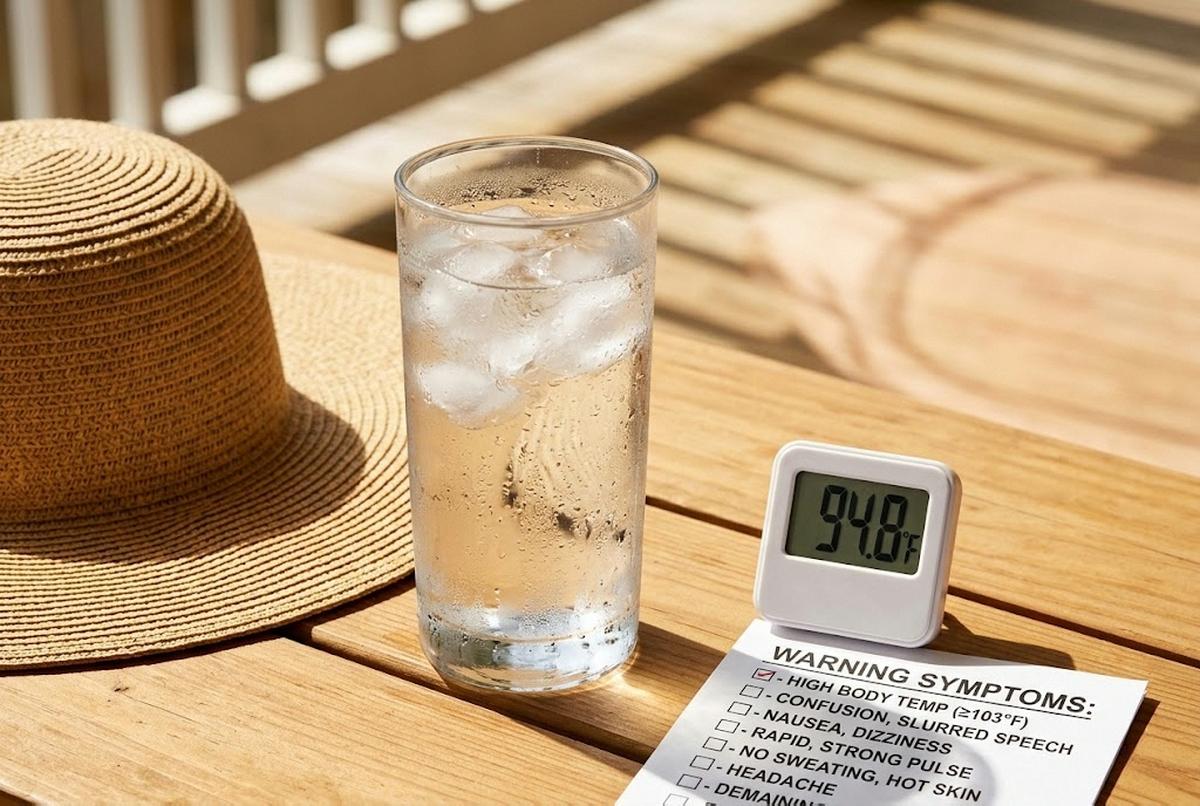
Six signs. Memorize these. Any one of them in a hot context means you call 911.
1. Confusion or strange behavior. This is the one that gave Geraldine away. Asking the same question twice. Not knowing where they are. Slurred speech. Acting drunk when they haven't had anything. The brain runs hot first, and the brain shows it first. If a normally sharp person becomes foggy or disoriented in heat, do not wait.
2. Skin that is hot and dry, or has stopped sweating. This is the body waving a white flag. The cooling system has shut down. The skin may also be flushed deep red. In some cases (especially in someone on certain medications) the skin can still be sweaty. Don't wait for dryness if everything else is pointing the same direction.
3. A body temperature of 103°F or higher. If you have a thermometer and you're getting a reading at or above 103, that is heat stroke until proven otherwise. You don't need a thermometer to call. The other signs are enough.
4. A rapid, strong pulse. This is different from the fast, weak pulse of heat exhaustion. The heart is pounding hard, trying to push hot blood to the surface. Put two fingers on the wrist or the side of the neck. If it feels like it's racing and forceful, that's the signal.
5. Breathing that turns fast and shallow. Respiration speeds up as the body strains to dump heat through the lungs, and breaths get shorter and more rapid. If you see chest movement that looks like panting in a person who is not exerting themselves, treat it as a heat-stroke sign.
6. Loss of consciousness or near-fainting. They slump. They go limp. They can't be roused, or they're in and out. This is the late sign. Do not wait for this one to arrive before calling. The earlier signs are enough on their own.
One more I want to add, even though it's not on the official lists. Vomiting in heat, in an older adult, especially one on medication. That alone gets a 911 call from me, every time. The body is telling you it has crossed a line.
What to Do While You Wait for the Ambulance
The call has been made. Dispatch will tell you to stay on the line. While you do, you start cooling. Every minute matters.
- Move them out of the heat. Inside to air conditioning if you can. If not, the deepest shade available. Out of the car. Out of the sun.
- Get the excess clothing off. Shoes, socks, belts, layers. You do not need to fully undress them. You need to give the body surfaces room to release heat.
- Wet sheets or wet towels, applied to the skin. Soak a sheet in cool tap water and drape it. The CDC's guidance specifically calls for wetting the body with cool water.
- Ice packs at the neck, the armpits, and the groin. Major blood vessels run close to the surface at these three points. Frozen vegetables work. Wrap them in a thin cloth.
- Fan air across the wet skin. Anything that moves air. Evaporation does the cooling.
- Cool water in small sips, but only if they are fully conscious and able to swallow. Never pour water into the mouth of someone confused or unresponsive. (For hydration habits that matter most after seventy, we have a separate piece.)
Do not give them aspirin or acetaminophen for the fever. Heat stroke fever is not the same as infection fever, and those medications can make things worse. Do not put them in an ice bath unless 911 dispatch directs it. Cool sheets, ice at the three points, moving air. That's the protocol.
What 911 Will Ask You
Dispatch is going to ask several questions, and your job is to answer them as clearly as you can while staying with the person. It helps to know what's coming.
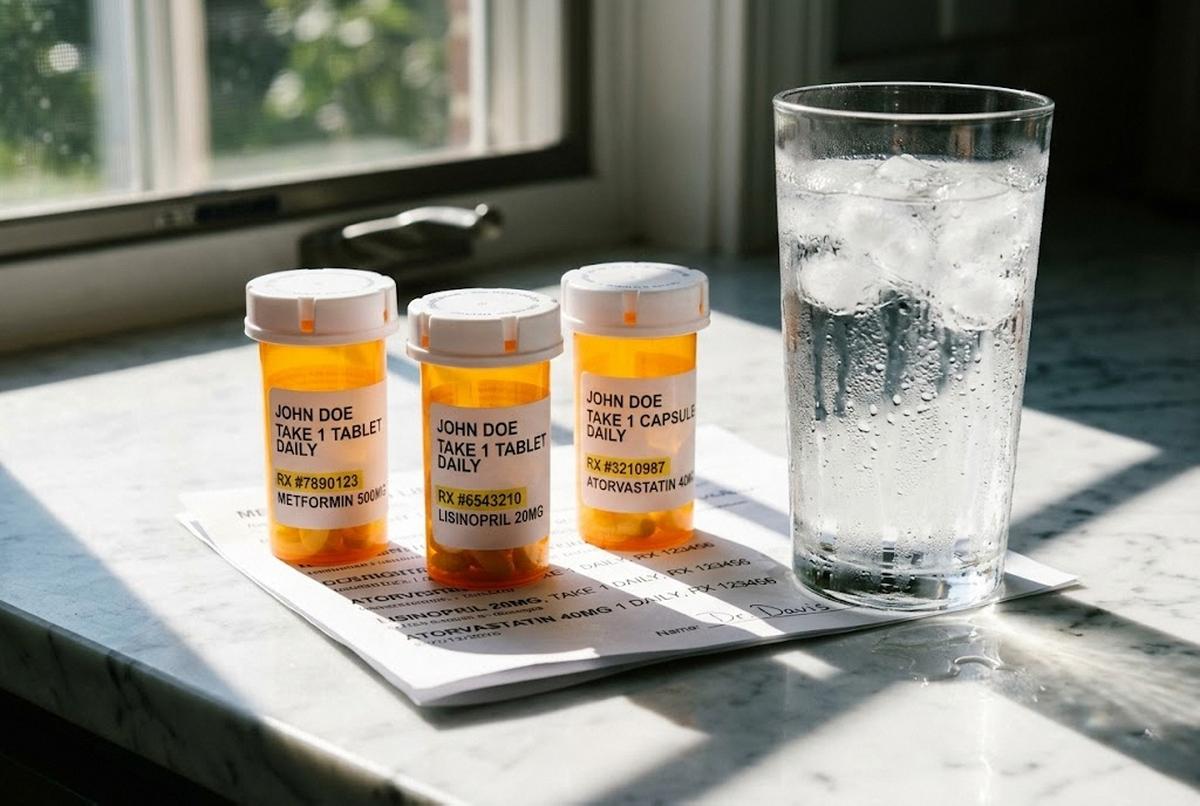
The address. Be specific. The name of the park, the row of bleachers, the apartment number. They'll ask about the person's age and any conditions you know of. Heart problems, diabetes, recent surgeries. Their medications, if you know them or can grab a pill bottle. Are they conscious. Are they breathing. What's their skin like (hot, dry, flushed, sweaty). Have they vomited. Do they recognize you. How long have they been like this.
If there's another person nearby, hand them the phone and stay with the patient yourself. Cooling is the priority. The dispatcher will keep you talking until the ambulance arrives, both to gather information and to keep you steady. You can do this. You don't have to be a paramedic. You just have to be present and willing to follow simple instructions.
A Few Things I've Learned From the Field
Four decades of working with older adults, and a handful of heat events I will not forget, have left me with a few quieter convictions about all of this.
The person is almost always less worried than the family. Heat-stressed older adults often do not feel the alarm their body is sending. They will tell you they are fine. They will be embarrassed at the fuss. Do not let that talk you out of the call. Geraldine told me twice in the parking lot that I was overreacting. The ER doctor told me three times that I had not been.
The other piece. Heat illness rarely arrives at the moment you'd predict. It is not the August afternoon you brace for. It is the early-June Saturday when nobody thought to worry yet, the May day with humidity that snuck in, the air-conditioned house where the AC quietly stopped overnight. The bodies in trouble are often inside, often alone. The CDC's data on heat-related deaths consistently shows the highest mortality among older adults living alone in homes without working air conditioning. This is also why the falls prevention work we've covered matters in summer too. A heat-related dizzy spell in a kitchen is a fall waiting to happen.
Finally, this. People with diabetes managing their blood sugar need to be especially careful, because a low blood sugar episode can mimic the early signs of heat exhaustion almost exactly (sweating, shakiness, confusion). The two emergencies overlap. Treat the suspected heat issue, but a finger-stick check is also worth doing if there's a glucose meter nearby.
When in Doubt, Call
I want to say this plainly because I know how it goes. Older adults, and especially men of a certain generation, will resist a 911 call the way they resist asking for help in any form. They will tell you they're fine. They will tell you not to make a scene. They will be sure they can walk it off.
If you are watching someone you love and your gut is saying something is wrong, your gut is enough. The conversation about when a doctor brushes things off as just aging applies here in miniature. The brush-off is dangerous. Trust the change you're seeing. Trust the question they asked twice. Trust the dry skin in a hot room.
A 911 call for heat illness in an older adult is never a wasted call. Paramedics would rather come and find a person doing better than they expected than arrive too late. They have told me this themselves, more than once, in living rooms and on porches across western North Carolina. The system is designed for exactly this judgment call. Make it.
Sitting With What This Asks of Us
We are aging into a hotter world. The summers in the Blue Ridge are warmer and longer than they were when I moved here in 1996. The heat advisories arrive in May now, sometimes earlier. The forecasts for this coming summer call for above-average temperatures across most of the country.
What I want you to leave with is not fear. Fear is not useful. What I want is the quiet confidence of a person who has read the signs once and will recognize them faster the second time. Heat exhaustion is the warning. Heat stroke is the emergency. The six signs are confusion, hot dry skin, a temperature of 103, a strong pounding pulse, fast shallow breathing, and fainting. While you wait, you cool. While you cool, you talk to dispatch.
Geraldine is back at the Little League field this year. Jaylen is twelve now and starting at second base. She brings two thermoses instead of one. Her daughter sits with her every game. The hat is wider. The shade tent is a new addition. None of us said much about last June, but everyone is paying attention in a way we weren't before.
That's the gift in this kind of close call. Not the scare. The attention. The small adjustments. The willingness to make the call you didn't want to make.
May your summer be cool where it counts. May the people you love check in on you and you on them. May the breeze find you in the shade. We were not meant to face this kind of heat alone, and the good news, the real good news, is that we don't have to.