Father's Day is one week away. Sunday, June 21. You will probably take Dad to dinner. He will probably order the ribeye, medium-rare, the way he has ordered it for forty years. And somewhere between the bread basket and the check, you will have a chance to ask him a question you have been putting off for a decade.
I want to make the case that you should ask it.
In 35 years of financial planning, the single most expensive mistake I watched families make was not a bad investment, a missed Social Security filing, or a botched Roth conversion. It was silence. The conversation that never happened, until it could not happen — until Dad had a stroke, or a fall, or a diagnosis, and the documents that would have made everything orderly did not exist.
A 2024 Caring.com survey found that only 32% of Americans have a will. The number drops in households where one spouse handled "the money stuff" for forty years and the other one — and the adult kids — never asked. AARP's 2020 caregiving research found that 73% of family caregivers say they wish they had started the financial and legal conversation earlier. The barrier is almost never information. It's the conversation itself. (We've written before about how to talk to your parents about their finances without starting a fight — that piece is the broader playbook. This one is the Father's Day-specific version.)
Father's Day is, awkwardly and conveniently, the best opening of the year. He is already in a sentimental mood. You are already at dinner. The next time you will both sit still together for two hours might be Thanksgiving. So let's plan the conversation properly — what to say, what to ask, what to listen for, and what to do with whatever you learn.
The Four Documents Every Senior Father Needs
Before the conversation, you need to know what you are conversation toward. There are four documents. That's it. If your father has these four, executed properly, and someone trustworthy knows where they are, his estate is in better shape than roughly two-thirds of American households.
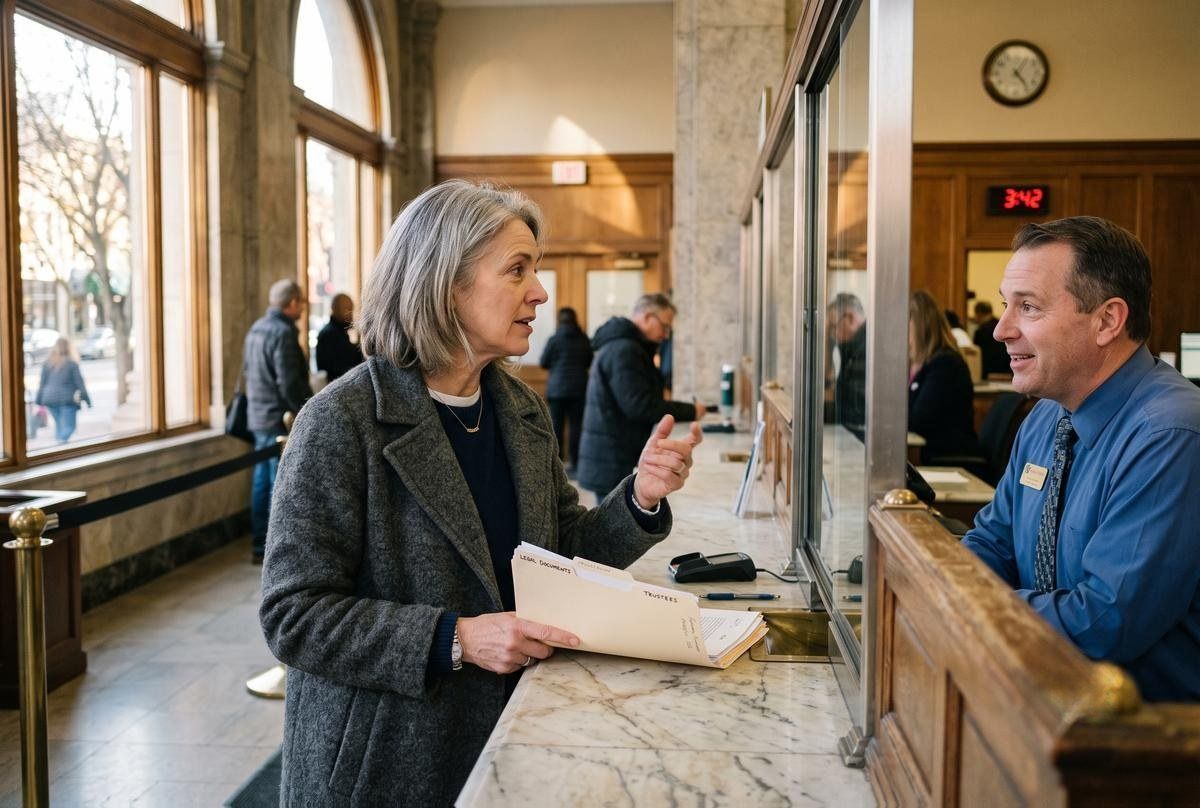
1. A current will. A will directs who inherits his probate assets — generally, anything held only in his name without a beneficiary designation. The American Bar Association estimates that 55% of American adults die without one. The cost to draft a basic will with a local estate attorney runs $300 to $1,200 in most markets. Online services like Trust & Will or LegalZoom range from $89 to $499. A handwritten ("holographic") will is legal in about half of states, but I would not recommend one. The savings are not worth the litigation risk.
2. A durable power of attorney for finances. This is the document that lets a trusted person — usually a spouse or adult child — pay his bills, manage his accounts, file his taxes, and sign documents on his behalf if he becomes incapacitated. Without it, your family has to petition probate court for conservatorship, which in my experience runs $3,000 to $8,000 in legal fees and six to twelve weeks. "Durable" means it survives incapacity. A non-durable POA is essentially worthless for the situation you actually need it for.
3. A healthcare proxy (also called a medical power of attorney). This names the person who will make medical decisions for him if he can't speak for himself. Every state has its own form. Most are free from the state bar association or the state department of health. We have a state-by-state guide to medical power of attorney and advance directives with links to the specific form for his state.
4. A HIPAA release. This is the one most families miss. The 1996 Health Insurance Portability and Accountability Act prohibits hospitals and doctors from releasing medical information to anyone — including spouses and adult children — without written authorization. A HIPAA release form, signed by your father, lets the people he names actually talk to his doctors. Without it, you may not even be able to find out what hospital he is in.
Pair these four with a current beneficiary form check on every retirement account and life insurance policy — which we covered in detail in the beneficiary form audit — and his estate is functionally complete. Most of my clients who think they "have estate planning handled" have a 15-year-old will and three of the four documents. The HIPAA release is almost always the one missing.
Why Father's Day Is the Right Opening
A daughter once told me, after we'd spent an hour untangling her father's incomplete estate, "I tried to bring it up at Christmas. He changed the subject. I tried at his birthday. He told me to stop being morbid. I should have just kept asking." Her father had been diagnosed with mild cognitive impairment that spring. By the time they walked into my office, he was three months past the threshold where an attorney could ethically have him sign legal documents.
Father's Day disarms the standard objection. He cannot tell you that you're being morbid on the one day specifically dedicated to thinking about him. He cannot tell you to stop worrying when you have planned a dinner around him. The cultural script gives you cover. Use it.
The steak dinner is also a useful container. Two hours. No phones, ideally. Enough wine to soften the edges, not enough to derail. Public enough that nobody will raise their voice, private enough that nobody is eavesdropping. A booth at a steakhouse on a Sunday night in June is, in my professional opinion, one of the better venues for a difficult family conversation that exists.
The Question Scripts That Don't Feel Like an Ambush
The wrong way to start is with a document. Do not lead with "Dad, do you have a will?" That sounds like an interrogation, and his answer will be defensive whether or not he has one.
The right way is to start with a logistical hypothetical. The scripts I have given clients for 25 years all share one feature: they make the question about you not knowing something, rather than him failing to do something.
Try these. Pick one. Not all five.
"Dad, if I had to call your bank tomorrow because something happened, would I even know which bank to call?"
"If you ended up in the hospital next week, who would the doctors talk to? Is that on paper somewhere?"
"I realized the other day that I have no idea where you keep your important papers. If I needed to find your insurance policy, where would I look?"
"I'm doing my own estate planning this year and it's been kind of eye-opening. Can I ask what you and Mom did when you set yours up?"
"Have you ever sat with an attorney about this stuff? I've been thinking I should, and honestly, I'd love your advice on what was useful."
Notice the structure. Each question puts you in the position of needing information, or seeking advice, or admitting your own gap. None of them put your father in the position of being scolded for not having something done. The last one is my favorite — it inverts the dynamic completely. He is the elder. You are asking him to teach you. Most fathers, even the stubborn ones, will engage with that.
If he stonewalls — and some will — you have a fallback. Don't push. Say something like, "Okay. Just tell me one thing: is there a folder somewhere that has the important papers? If something ever happened, where would I start looking?" That single piece of information is worth almost as much as a will. It's the thread you can pull later.
What to Listen For
The conversation isn't really about the documents. It's about whether the documents still reflect his life, and whether the people he named are still the right people. A will from 1998 might list an executor who passed away in 2014, a contingent IRA beneficiary who divorced out of the family in 2008. I've seen that exact pattern produce a six-figure inheritance for an ex-relative who hadn't spoken to anyone in 17 years.
Listen for these:
- Names of people no longer in his life — ex-spouses, deceased siblings, estranged children.
- Account names that don't match reality — "Your mother and I have everything at Wachovia." Wachovia became Wells Fargo in 2008.
- "It's all in the safe," without specifics. Press gently. Which safe? Where? Who has the combination?
- Confidence that turns vague. "I've got it all handled" said three times in five minutes usually means the will is handled but not the POA, HIPAA release, or digital accounts.
- Resistance to naming one decision-maker. Some fathers want to split authority between children to avoid playing favorites. Well-intentioned, almost always a mistake. Healthcare proxies and financial POAs work better with one primary and one named alternate.
The Digital and Password Layer Most Estates Forget
This is the conversation that wasn't happening 15 years ago and is now urgent. Your father almost certainly has 30 to 50 online accounts — banking, brokerage, email, Amazon, social media, photo storage, his Medicare login, the patient portal at his cardiologist's office. If he dies tomorrow, most of those are locked behind passwords nobody else knows.
The Revised Uniform Fiduciary Access to Digital Assets Act (RUFADAA), adopted by 49 states and D.C., gives a properly named executor authority over digital assets only if the will explicitly grants it. Most older wills do not.
Three concrete fixes you can suggest at dinner:
- Apple Legacy Contact. If he has an iPhone, this takes about three minutes to set up: Settings → his name → Sign-In & Security → Legacy Contact. He picks up to five people who can request access to his iCloud data after his death. The access key prints as a QR code. Without this, Apple will not release his photos, messages, or files to anyone — not even with a death certificate. Period.
- Google Inactive Account Manager. At myaccount.google.com/inactive. He sets a timeout (six months works for most), names trusted contacts, and chooses what they can access. Eight minutes.
- A password manager with family sharing. 1Password Families ($4.99/month) or Bitwarden Families ($3.33/month) both let him keep his passwords organized and grant emergency access to a trusted person. We covered this in depth in our piece on digital estate planning for online accounts.
If he tells you his passwords are "in a notebook in the desk" — and many fathers will tell you exactly that — don't react. The notebook is better than nothing. Your job is to know it exists and where it lives.
Long-Term Care: The Conversation Inside the Conversation
This is the hardest piece, and the one most likely to derail the dinner if you push it. So I am going to be direct with you about how to handle it.
The cost of a private room in a nursing home in 2026 averages roughly $116,000 per year, according to the 2024 CareScout Cost of Care Survey (which took over publication from Genworth after Genworth's final 2021 release), with significant regional variation — closer to $180,000 in the Northeast, $90,000 in much of the South. Assisted living averages $64,000. Home health aides run $33 an hour for skilled care. A father who needs three years of skilled nursing can wipe out $300,000 in savings before Medicaid eligibility kicks in.
Medicare does not cover long-term custodial care. It covers up to 100 days of skilled rehabilitation after a hospital stay, with full coverage for 20 days and a substantial copay after that. After day 100, you are on your own.
The four ways to pay for long-term care, in rough order of preference:
- Long-term care insurance, if he bought it before age 65 and the carrier is still solvent. Many policies sold in the 1990s and 2000s have had premium increases of 50% to 90% as carriers underestimated longevity. We have a detailed walkthrough of what long-term care insurance actually covers.
- A hybrid life-LTC policy. These pay a long-term care benefit while alive, or a death benefit to heirs if the LTC benefit isn't used. They solve the "use it or lose it" objection that kills traditional LTCI sales. Premiums are higher but the asset is preserved.
- VA Aid and Attendance, if he is a wartime veteran or the surviving spouse of one. The 2026 monthly maximum for a single veteran is roughly $2,358. Underclaimed — the VA's own data suggests fewer than one in five eligible veterans applies for it.
- Medicaid spend-down. This is the default if no other plan exists. Federal Medicaid rules include a five-year look-back period: any assets gifted in the five years before applying are presumed to be a Medicaid-evasion transfer and trigger a penalty period of ineligibility. This is why "just give the house to the kids" advice from a neighbor at the bowling alley is so dangerous. The penalty can run years.
You are not going to solve all of this at dinner. What you want to know by the end of the meal is whether he has thought about it, whether there is a policy, and whether anyone has run the numbers. If the answer to all three is no, the next conversation — not at dinner — is with an elder law attorney.
The Specific Signs the Conversation Cannot Wait Another Year
In most families, this is a multi-year conversation. You start it. You let it sit. You come back to it next Christmas. You make incremental progress.
But some situations don't have another year. If any of the following are true, the conversation cannot wait — it has to happen this Father's Day, and follow-up has to happen before Labor Day.
- A new diagnosis. Mild cognitive impairment, early Alzheimer's, Parkinson's, any cancer with a serious treatment plan. The window for legally executing documents narrows quickly. Capacity to sign a will or POA can be lost in months.
- Word-finding problems or new confusion. Especially if it has been noticed by more than one family member. Have him evaluated, and have the documents drafted in parallel. Don't wait for the diagnosis to formalize.
- Recent hospitalization. Any inpatient stay over 48 hours, especially if it involved sedation or anesthesia, often surfaces underlying issues nobody had named yet.
- An unmarried partner. Cohabiting partners have effectively zero default legal rights in most states — no inheritance, no medical decision authority, often no funeral authority. Without explicit documents, his partner will be excluded by his adult children whether or not they intend to.
- Blended family with adult stepchildren. Default state intestacy law often does not match the family's understanding. A 30-year second marriage can produce an estate division that surprises everyone if there is no will.
- A small business he still runs or owns shares in. Operating agreements, buy-sell provisions, key-person planning — these have to be addressed while he is still legally able to sign.
If two or more of those are true, treat this as urgent. I have watched families miss the window by less than 90 days. There is no recovering from that.
The Estate Tax Exemption Cliff He May Not Have Heard About
For most middle-class families this section is not load-bearing, but for any father whose net worth runs into the seven or eight figures, the federal estate tax exemption is in a strange place right now. The 2017 Tax Cuts and Jobs Act roughly doubled the lifetime estate and gift tax exemption to about $13.99 million per individual in 2025, with a scheduled sunset at the end of that year. Congress moved on the issue in 2025, and the current rules carry the higher exemption forward — but planners I trust still treat the long-term exemption level as politically unstable, because future Congresses can lower it without much warning. If your father's estate is anywhere near the threshold, a 2026 conversation with an estate attorney about Spousal Lifetime Access Trusts, lifetime gifting, or basis-step-up planning is worth scheduling regardless of what the headlines say next month. The cliff is real even when the date moves.
Where to Send Him for the Real Work
You are not the lawyer. Your job is to start the conversation and connect him to the right professional. Three reputable resources:
The state bar lawyer-referral service. Every state bar has one. Most charge $25 to $50 for a 30-minute initial consultation with a vetted attorney. The referral itself is free.
The National Academy of Elder Law Attorneys (NAELA). At naela.org/findlawyer, search by state and ZIP for attorneys whose primary practice is elder law. For Medicaid planning or complex long-term care, you want a specialist, not a general estate attorney.
MyDirectives.com. A free online tool from the nonprofit ADVault that walks any adult through a digital advance directive that meets standards in all 50 states. Useful for the HIPAA release and healthcare proxy.
For long-term care funding counseling, the Eldercare Locator at eldercare.acl.gov connects him to the local Area Agency on Aging — free, including help with VA Aid and Attendance applications.
What a Successful Conversation Looks Like
It does not look like a completed estate plan. It looks like an opening.
A successful version ends with three things. You know whether the four documents exist — even roughly. You know where the papers are: a folder, a cabinet, a safe deposit box, an attorney's office. And there is a follow-up scheduled — specific, dated, on the calendar.
That's it. He doesn't have to decide anything at dinner. He has to agree that the conversation continues.
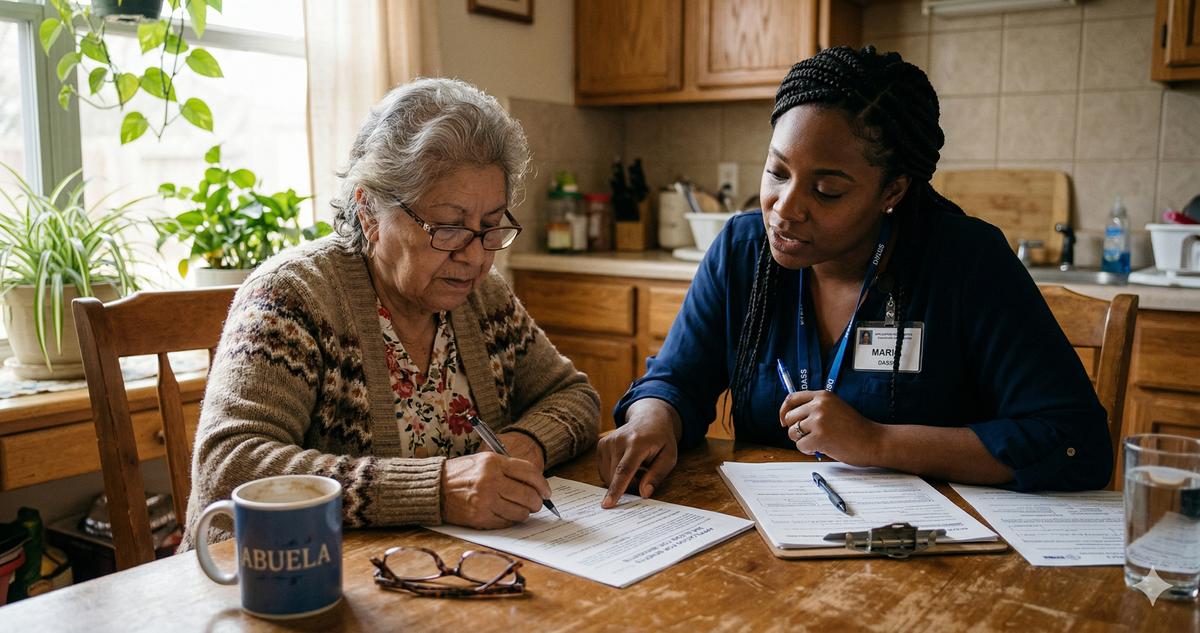
A former client of mine, a retired electrician in his early seventies, used to tell his daughter every December that they'd "talk about the estate stuff in the spring." Three springs went by. The fourth year, his daughter asked him over Father's Day dinner whether he could just tell her where the file folder was. Just the folder. He thought about it, sipped his bourbon, and said, "Top drawer of the desk in the basement." That was the whole answer. Six months later, he had a will, a durable POA, a healthcare proxy, and a HIPAA release — drafted by an elder law attorney his daughter found through the state bar. None of it would have happened without the dinner.
If he agrees to the follow-up — and most fathers will, once the initial discomfort passes — you've done your job. The lawyer's appointment, the signed documents, the beneficiary form audit, the Apple Legacy Contact, the call with Mom: those are the next ten Sundays, not this one. This Sunday is about getting the door open.
And if you're still wondering what to actually give him for the day, we have a separate piece on Father's Day gifts for aging dads that actually matter. The conversation, candidly, is the gift. The wrapped present is just the prop.
A Note on the One You Cannot Plan
My father Arthur was a machinist at Pratt & Whitney for 38 years. He refused to discuss his finances with me until 2015, when he tripped over a curb in the parking lot at a shop reunion and broke his wrist. Sitting in the Hartford Hospital ER at 10 PM, with a Velcro splint and a hospital bracelet, he finally said, "Maybe we should talk about some things." I had been trying to have that conversation for six years.
I got lucky. Arthur lived another four years after that night, and we did the work — will, POA, healthcare directive, HIPAA, beneficiary forms, the Brookdale paperwork when my mother needed assisted living. He died in 2019 in a bed he had chosen, with documents in a folder I could find, named to people he trusted. Every single document was up to date. Every account had the right beneficiary. None of it was an accident.
But I think about the six years before the ER. The Christmases I changed the subject. The birthdays I told myself it wasn't the right time. The Father's Day dinners where I had the chance and didn't take it.
If your father is healthy, present, and across a table from you next Sunday, you are in the version of this story I had to wait six years for. Don't wait. Order the ribeye, pour the wine, and ask him the question.
He is more ready for it than you think.